Page content
View related multimedia and linksHammers
Hammers have been used for thousand of years to drive nails and wooden pins, to pound together wooden parts, and to position fittings like barrel hoops. Eighteenth-century toolmakers produced many types of hammers.
Specialized hammers of many types were made for particular jobs. Different sizes and designs suited them for tasks ranging from delicately driving in brads to secure small moldings to pounding home the large wooden pegs used to hold together building and ship frames.
Claw hammers were common. Like many hammers, they were dual-purpose tools. The face was used to drive nails, while the claw was used to pull them.
The peens of riveting hammers were used to spread the ends of rivets or to drive brads in tight spaces.
Shipbuilders' pin mauls were used to drive and countersink spikes and wooden pins.
Lathing hammers had a blade for splitting and cutting lath (wooden strips over which plaster was laid) and a hammer for nailing it into place.
Multimedia and related links
-
Slideshows
- more...
-
Podcasts
- View descriptions
-
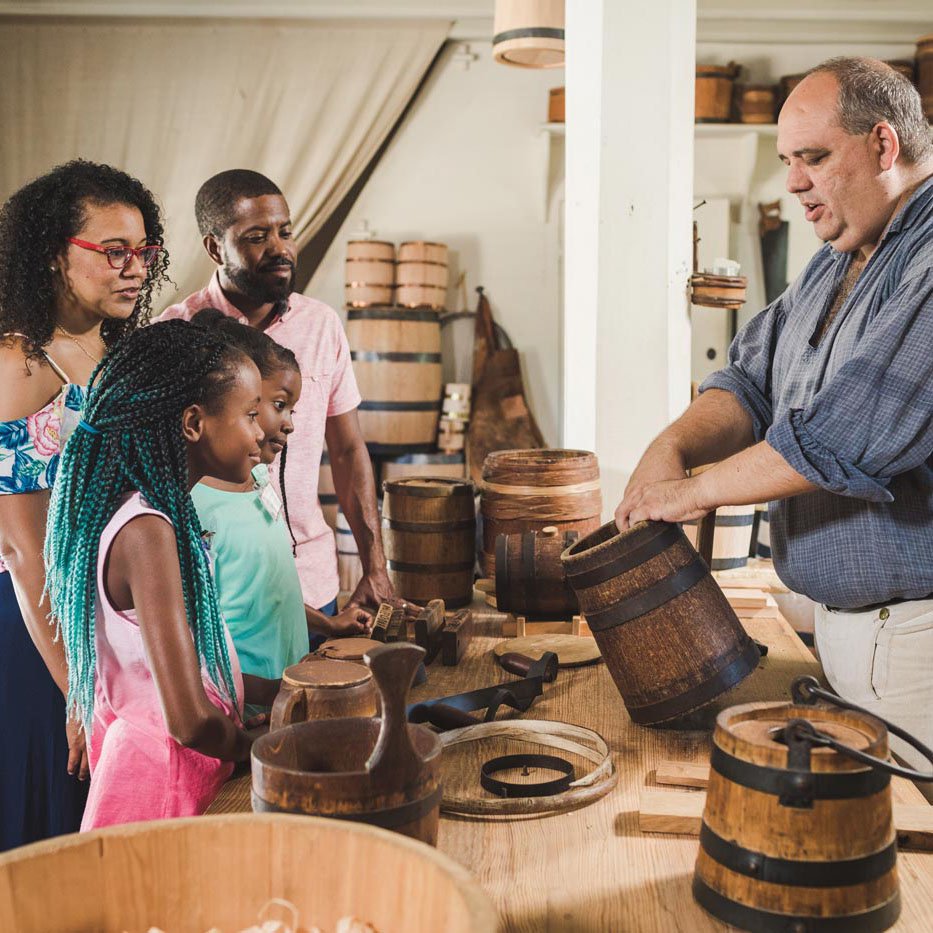
Coopering
Apprentice cooper Marshall Scheetz discusses the art and science of making barrels. July 18, 2005
Audio podcast: Listen (mp3) | Transcript
Image enhanced: View (m4a) | Transcript
- more...
- Quicktime 7 (free) is required to view the enhanced and video podcasts.
- Subscribe to our podcast RSS feeds:
Audio | Image enhanced | Video
-
Games & Interactive
-
Games
-
Midnight Messenger
Help Li Ming deliver the silver tea pot to the ship.
-
Activities
-
Cooper-ation
Help Ben find the cooper's tools so he can complete a cask.
-
Brickmaker Buildup
First place each important step in its correct order - then watch the fascinating art of brickmaking in action.
- more...
-
Journal articles
-
Tools for the Times
Modern Shop Reproduces Antique Implements
-
Tools of the Trades
A Photo Essay
-
Powering the Eighteenth Century
-
Peter Redstone Builds a Barton Portable
“You really can fall in love with the sound of harpsichord”
- more articles...