Page content
Resize textResize textResize text largerEmail pagePrint pageShare this page
View related multimedia and links
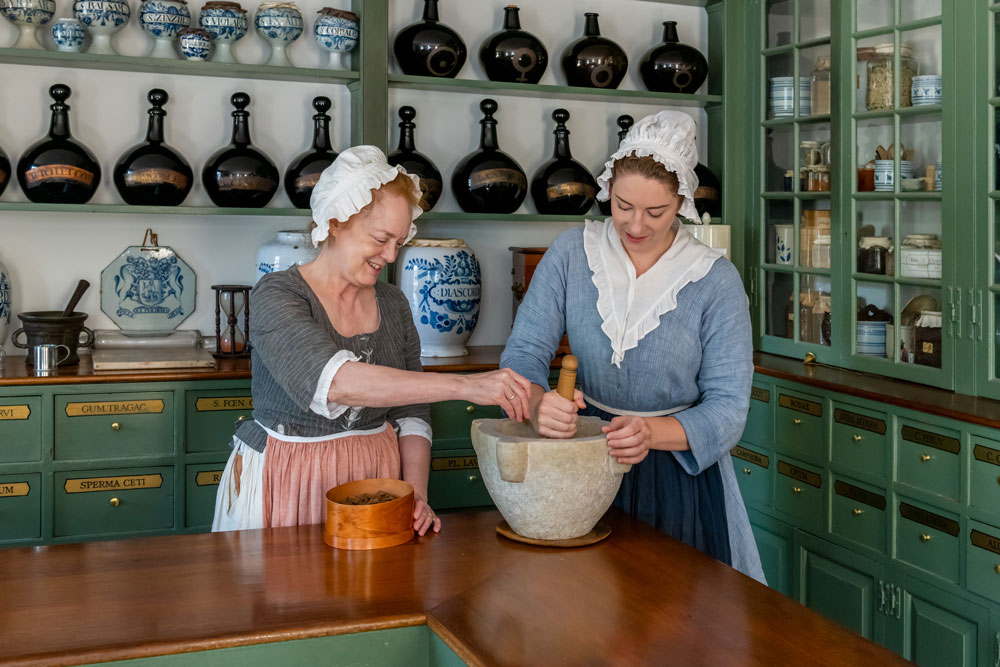
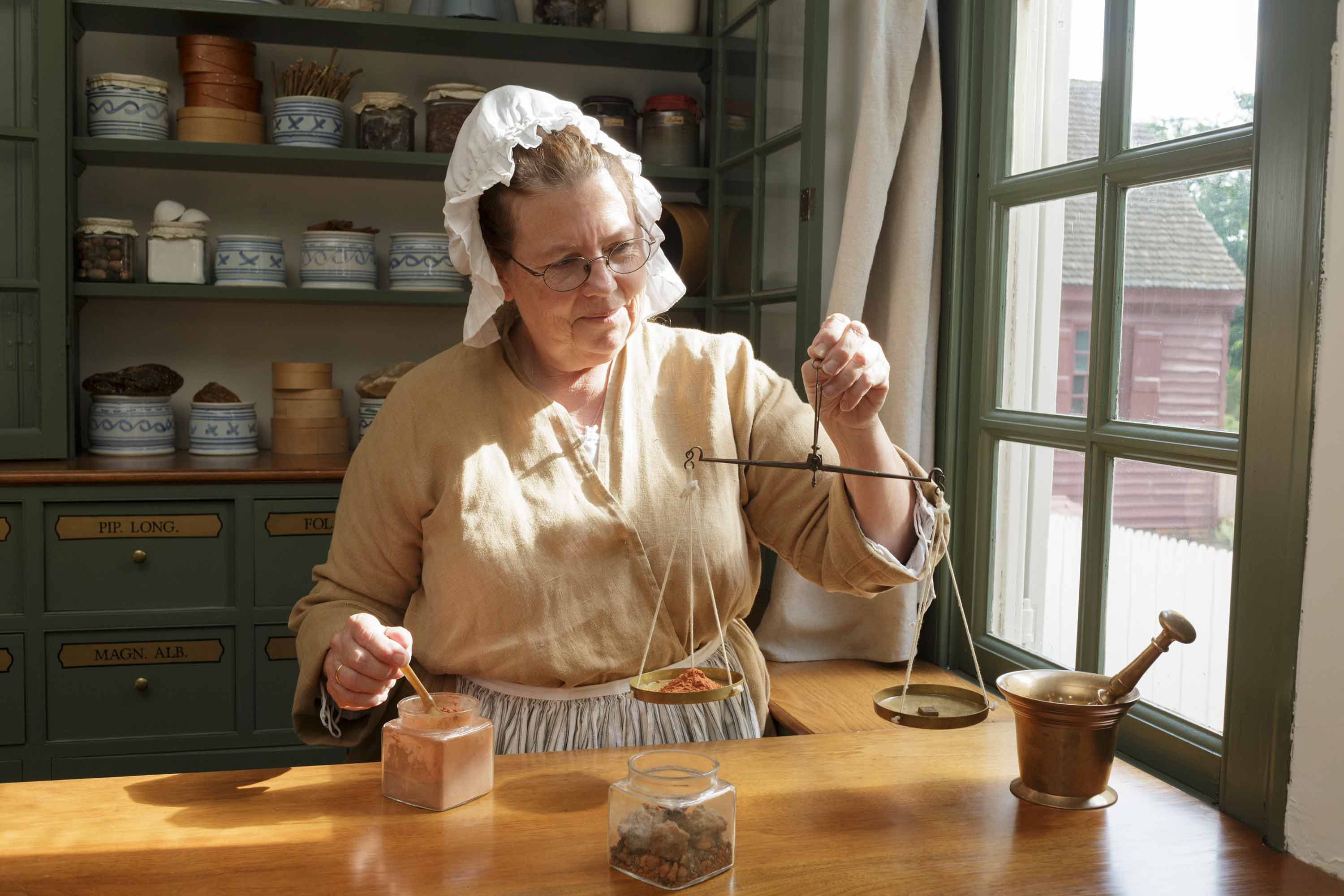
Inside the Pasteur & Galt Apothecary Shop, an interpreter prepares a remedy.

Inside the Pasteur & Galt Apothecary Shop, an interpreter prepares a remedy.

Interpreters at the Benjamin Powell 
                    House portray an apothecary setting a man's broken leg while 
                    his wife and infant twins look on.

Interpreters at the Benjamin Powell House portray an apothecary setting a man's broken leg while his wife and infant twins look on.

Apothecary

More than a druggist

In colonial times, the apothecary was more than simply a druggist. An apothecary often:

  • Provided medical treatment
  • Prescribed medicine
  • Trained apprentices
  • Performed surgery
  • Served as man-midwives

Apothecary practiced as doctor

A colonial apothecary practiced as doctor. Records kept by 18th-century Williamsburg's apothecaries show that they made house calls to treat patients, made and prescribed medicines, and trained apprentices. Some apothecaries were also trained as surgeons and man-midwives.

Medicinal leeches swim in a jar at 
the apothecary.

Medicinal leeches swim in a jar at the apothecary.

The mortar and pestle sign hanging in front of the Pasteur & Galt Apothecary Shop indicates the nature of the business within.

The mortar and pestle sign hanging in front of the Pasteur & Galt Apothecary Shop indicates the nature of the business within.

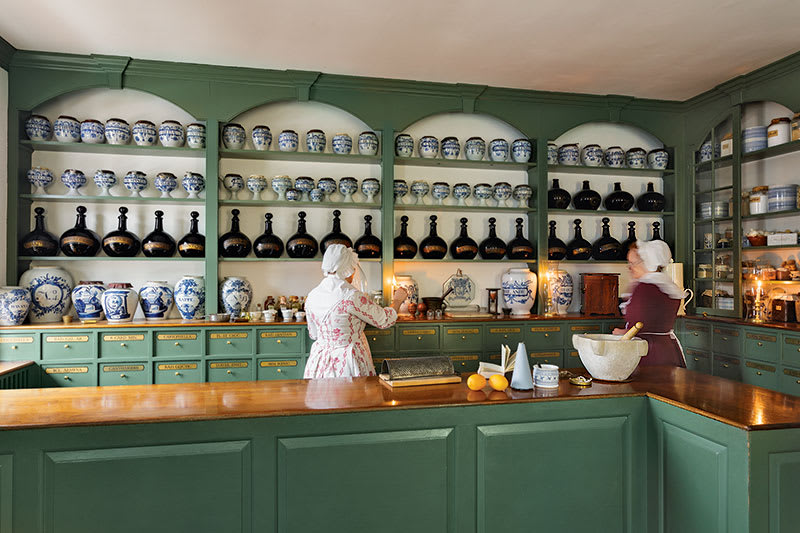
The Pasteur & Galt Apothecary Shop on Duke of Gloucester Street is the site where two apothecary-surgeons practiced. The shop features copies of Dr. Galt's certificates in medical theory, midwifery, and surgery, for training completed at Saint Thomas' Hospital in London. A large collection of British delft drug jars for storing medications line one wall, and antique implements for compounding and dispensing drugs are also displayed, with some items original to the site. Medications made from recipes in 18th-century professional pharmacy books are also shown.

Some modern treatments based upon old remedies

Some of the ingredients that were used in colonial remedies are the basis for modern medications. They included chalk for heartburn, calamine for skin irritations, and cinchona bark for fevers. Later it was discovered that cinchona bark contains quinine for malaria and quinidine for cardiac conditions.

Expensive treatment led people to self-diagnose and treat

Medical treatment was expensive and individuals frequently diagnosed their own problems and compounded medications guided by tradition, folklore, or domestic medical books. Headaches were often treated by vinegar of roses, a home remedy made of rose petals steeped in vinegar and applied topically.

Williamsburg apothecaries also sold cooking spices, candles, salad oil, anchovies, toothbrushes, and tobacco, making them true precursors of today's drugstores.

Learn more:


Multimedia and related links

  • slideshows
  • podcasts
  • interactive icon
  • downloads
  • videos
  • audio
  • Podcasts

  • View descriptions
  • For What Ails You

    For poxes, headaches, and fevers, the apothecary has a preparation to ease your symptoms. Medical historian Susan Pryor details the treatments. May 19, 2008

    Audio podcast: Listen (mp3) | Transcript
    Image enhanced: View (m4a) | Transcript

  • Prelude to Victory

    "Prelude to Victory" celebrates the anniversary of the Battle of Yorktown with three days of special programs that recall September 26, 27, and 28, 1781. September 24, 2007

    Audio podcast: Listen (mp3) | Transcript
    Image enhanced: View (m4a) | Transcript

  • Fashion and Function

    A corset's engineered strictness defines the shape of the 18th-century woman. Journeywoman Brooke Welborn explains the trend. May 5, 2008

    Audio podcast: Listen (mp3) | Transcript
    Image enhanced: View (m4a) | Transcript

  • Researching Revolutionary Citizens

    Actor-interpreter Corinne Dame talks about the continual research necessary to give a living and accurate portrayal of Williamsburg's 18th-century citizens. September 18, 2006

    Audio podcast: Listen (mp3) | Transcript
    Image enhanced: View (m4a) | Transcript

  • The Gunpowder Plot

    Add your shouts to the clamor for revolution in Colonial Williamsburg's evening program, "The Gunpowder Plot." Author Gina DeAngelis explains. September 17, 2007

    Audio podcast: Listen (mp3) | Transcript
    Image enhanced: View (m4a) | Transcript

  • Emissaries of Peace

    Adept negotiators in pursuit of peace, the Cherokee tribe endures through centuries of change. Colonial Williamsburg director and producer Linda Randulfe talks about the November 8 Electronic Field Trip, "Emissaries of Peace." November 5, 2007

    Audio podcast: Listen (mp3) | Transcript
    Image enhanced: View (m4a) | Transcript

  • more...
  • Quicktime 7 (free) is required to view the enhanced and video podcasts.