Page content
Resize textResize textResize text largerEmail pagePrint pageShare this page
View related multimedia and links

Carpenter

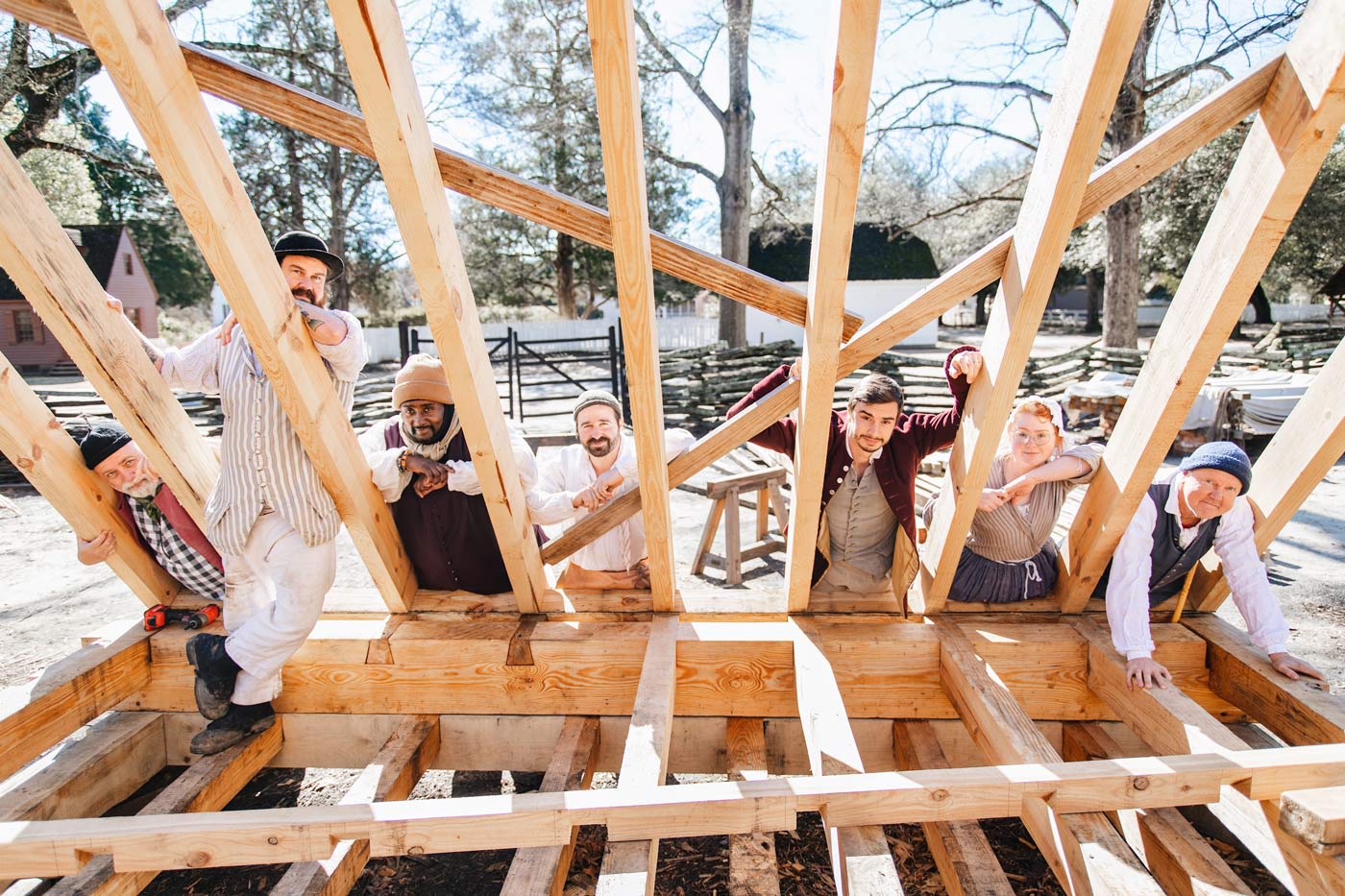
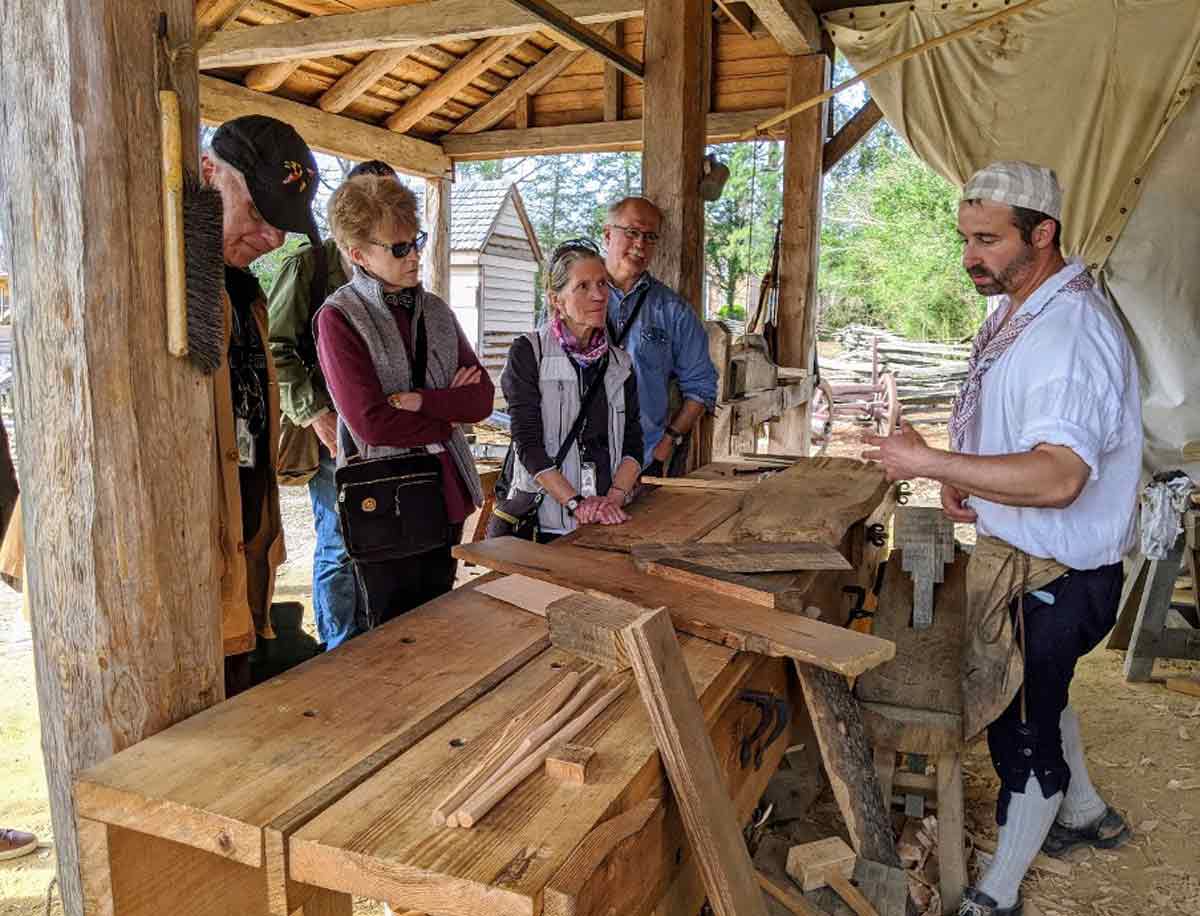
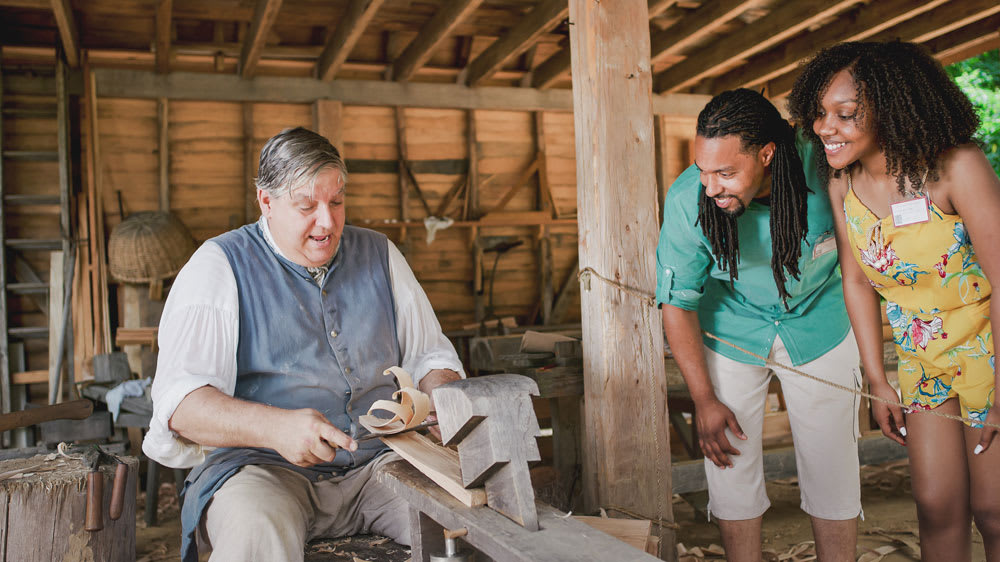
In a century when most structures were built from wood, no tradesman was more useful than the carpenter. The main business of the colonial carpenter was to cut and join timber and board into sturdy wooden homes and shops. As Williamsburg blossomed, the demand for new homes, shops, outbuildings stables, sheds, and their repair grew at a rapid pace.

Carpenters built city of Williamsburg

Carpenters lay shingles on the roof of a shed near Shields Tavern in the Historic Area.

Carpenters lay shingles on the roof of a shed near Shields Tavern in the Historic Area.

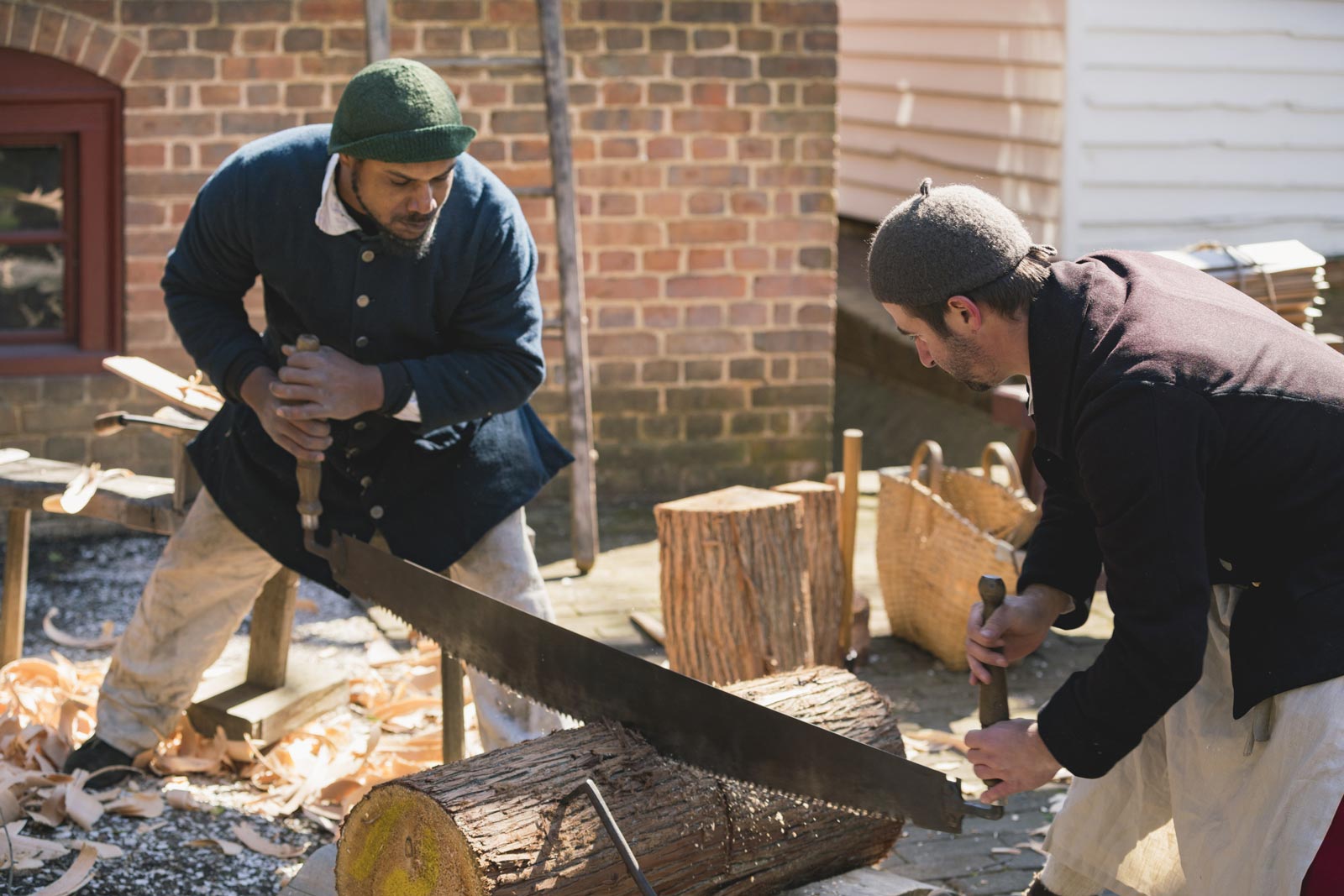
Hand-sawn beams are the order of the day.

The city was literally hammered together in the 1700s by men like Benjamin Powell, John Wheatley, James Morris, Christopher Ford, and dozens of other carpenters whose names appear on the ledgers of building trades customers. Much of the work was accomplished by slaves that such builders owned or hired. Large numbers of slaves – skilled and unskilled – helped construct the colonial capital. Carpenters were also hired to do repair work build additions to existing structures, or to make smokehouses, dairies, necessaries, and other outbuildings. Brick structures, too, required finishing work and routine maintenance.

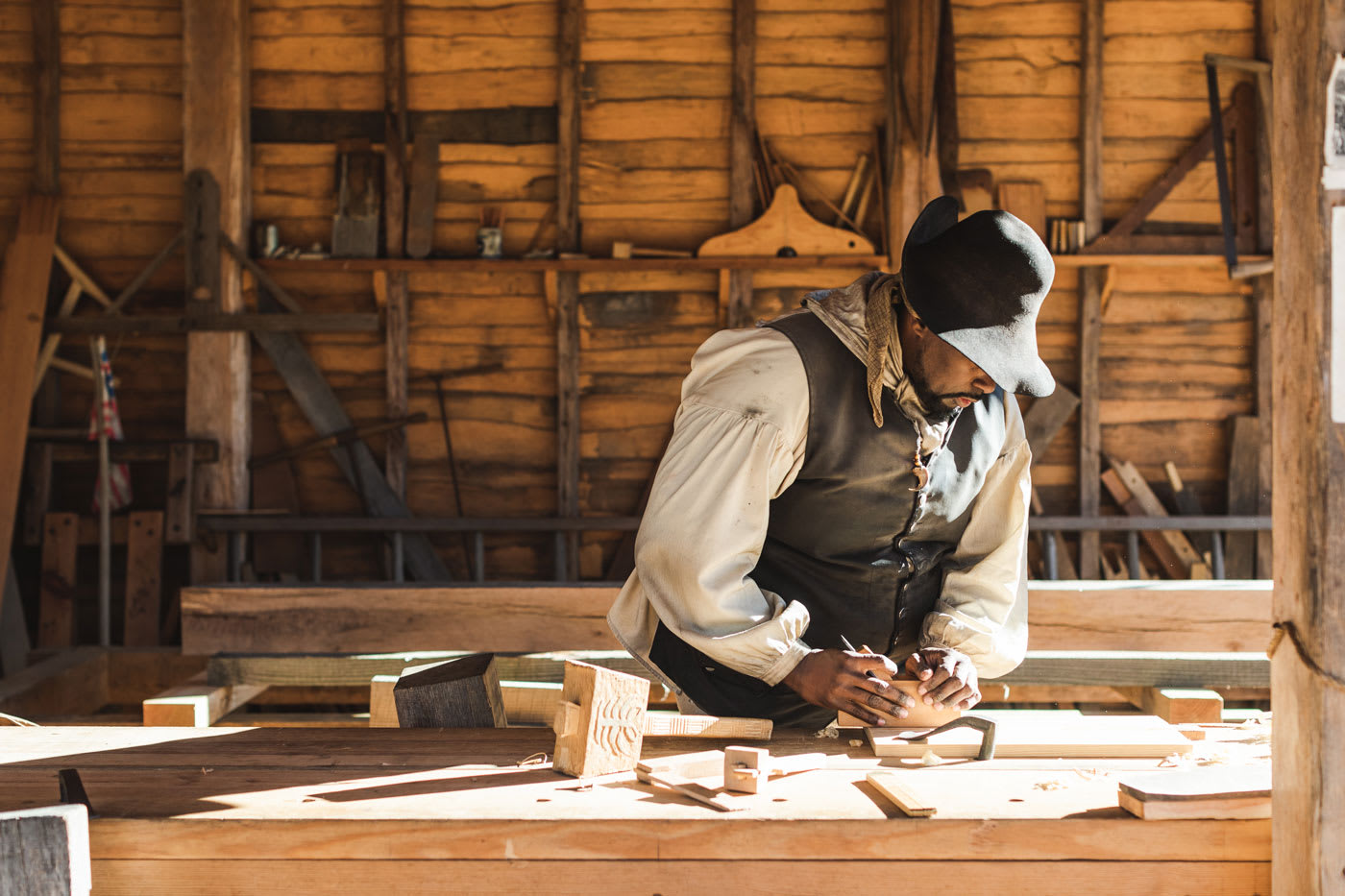
The carpenter worked from a building's foundation to its roof ridge. He laid floors, chiseled mortise-and-tenon joints, framed walls, raised rafters, carved moldings, hung doors, and nailed weatherboard. Carpenters sometimes acquired building materials from less-skilled laborers, frequently using planks cut from logs by a sawyer and shingles made by slaves at a building site.

Common carpentry tools included:

  • saw
  • broadax
  • hammer
  • awl
  • mallet
  • plane
  • scribe
  • drawknife
  • gimlet
  • froe

Carpenters built with:

  • oak
  • locust
  • tulip
  • poplar
  • yellow pine
  • cypress
  • juniper
  • oak chestnut

Colonial carpentry survives in original 18th-century buildings

Durable examples of the work of carpenters may be seen in the 88 original 18th-century buildings in Colonial Williamsburg. None, perhaps, is finer than the Peyton Randolph House, where carpenters reconstructed the site's outbuildings. Currently, the Historic Trades Carpenters are using 18th-century tools and techniques at Great Hopes Plantation.

Learn more:


Multimedia and related links

  • slideshows
  • podcasts
  • Interactive

  • Related Information