Page content
View related multimedia and linksMilliner
Millinery shops owned by women
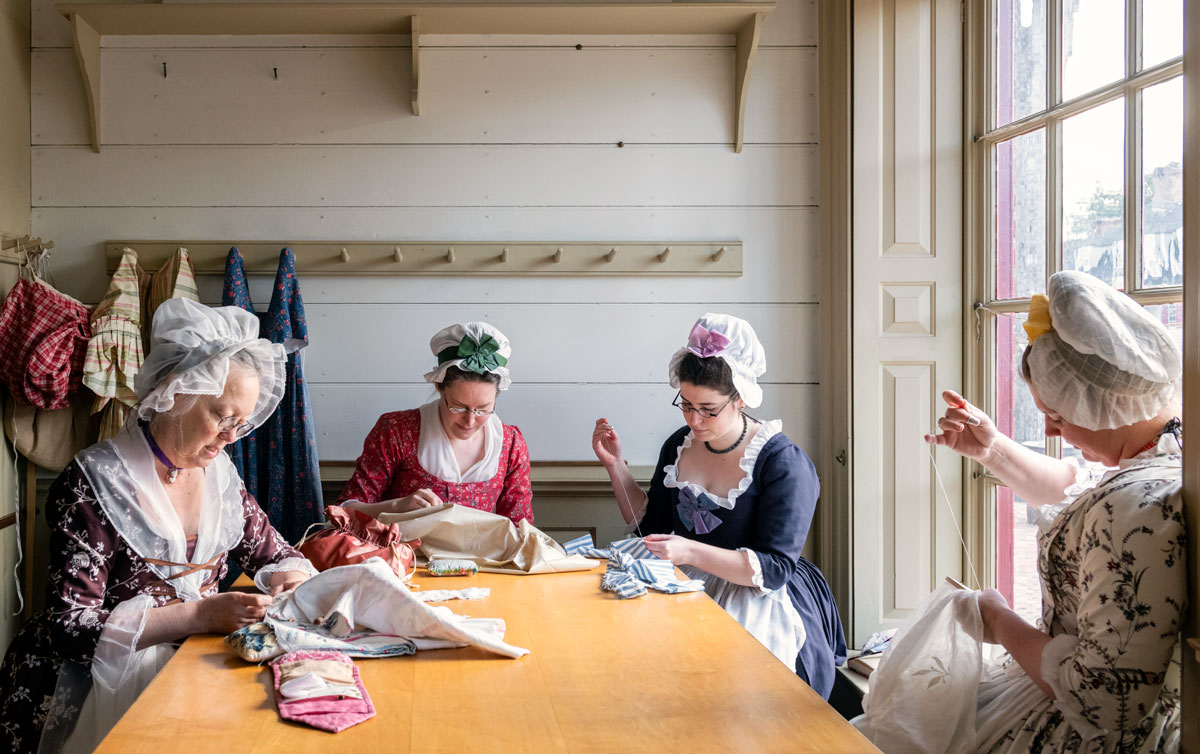
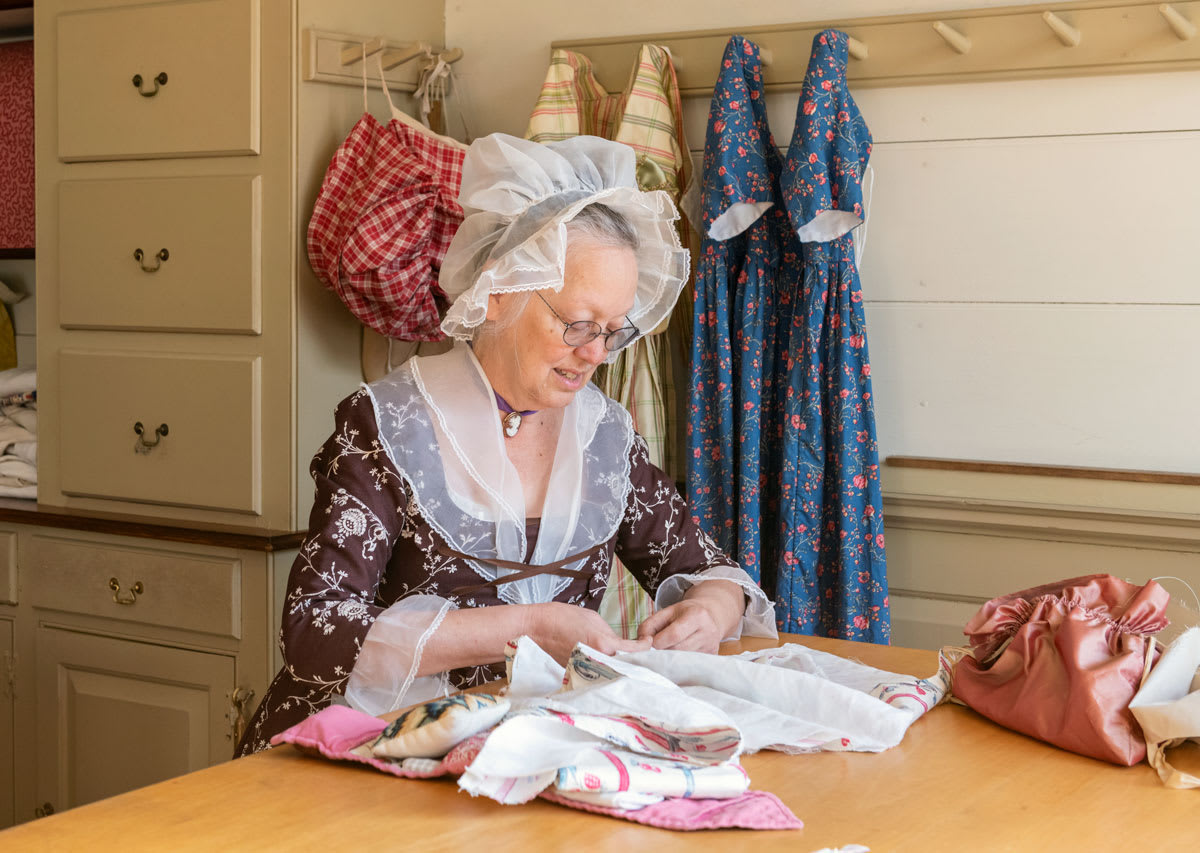
In the 18th century, millinery shops were almost always owned by women. From fabric sold in the shop, milliners would make items such as:
- shirts
- shifts
- aprons
- neckerchiefs
- caps
- cloaks
- hoods
- hats
- muffs
- ruffles
- trim for gowns
Milliners imported goods from London
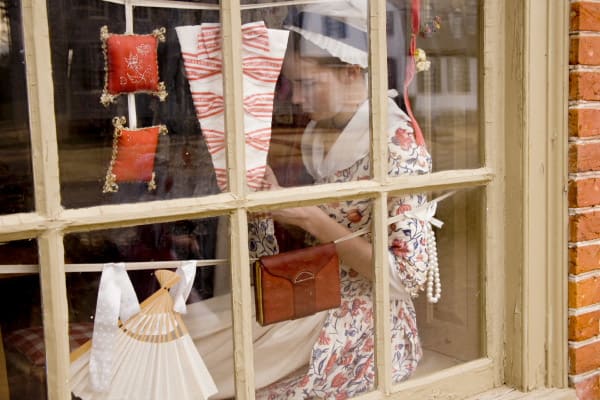
In addition to being a trades woman who made fashion accessories, the milliner was also a businesswoman who sold a wide range of fashionable imported goods. It was not uncommon for a milliner in the colonies to advertise that she had just imported from London the very latest in mercery, haberdashery, jewelry, hosiery, shoes "and other items too tedious to mention."
The other primary 18th-centurywoman's trade was that of mantua making – or gown making. On occasion, the apprenticeship for milliners also included learning the skills of mantua making. Independent of a millinery shop, the gown maker was on par with the tailor – both were skilled in cutting, fitting, and sewing but usually were not able to sell fabric to their customers. In the 18th century, fabric accounted for the largest part of the cost of clothing.
Millinery trade interpreted today in Margaret Hunter shop
At the Margaret Hunter Shop in Colonial Williamsburg today, interpreters portray the millinery business with changing 18th-century fashions, their importance in colonial society, and the economics of importing. In addition, interpreters practice using the accurate trade methods and technologies appropriate to the various trades of millinery, mantua making, tailoring, and stay making.
Milliners sewed and sold – among other things – cloaks, mantles, hats, hoods, caps, gloves, petticoats, hoops, riding costumes, and dresses for masquerades – all in the latest fashion.
"In a word, they furnish everything to the Ladies that can contribute to set off their Beauty, increase their Vanity, or render them ridiculous."
Learn more:
- "The Millinery Shop"
- Book: "What Clothes Reveal The Language of Clothing in Colonial and Federal America: The Colonial Williamsburg Collection"
- Anatomy of a Gown
- Introduction to 18th-Century Clothing
- Women's Clothing
- Men's Clothing
- Children's Clothing
Multimedia and related links
-
Podcasts
- View descriptions
-
Fashion and Function
A corset's engineered strictness defines the shape of the 18th-century woman. Journeywoman Brooke Welborn explains the trend. May 5, 2008
Audio podcast: Listen (mp3) | Transcript
Image enhanced: View (m4a) | Transcript
-
Clothing Speaks
Clothing says what words do not, in the 18th century as well as the 21st. Textiles and costumes curator Linda Baumgarten explains. January 29, 2007
Audio podcast: Listen (mp3) | Transcript
Image enhanced: View (m4a) | Transcript
-
Milliner and Mantua Maker
Janea Whitacre has been creating beautiful dresses in the Margaret Hunter Shop for 24 years. August 7, 2006
Audio podcast: Listen (mp3) | Transcript
Image enhanced: View (m4a) | Transcript
-
Prelude to Victory
"Prelude to Victory" celebrates the anniversary of the Battle of Yorktown with three days of special programs that recall September 26, 27, and 28, 1781. September 24, 2007
Audio podcast: Listen (mp3) | Transcript
Image enhanced: View (m4a) | Transcript
-
Fashion and Function
A corset's engineered strictness defines the shape of the 18th-century woman. Journeywoman Brooke Welborn explains the trend. May 5, 2008
Audio podcast: Listen (mp3) | Transcript
Image enhanced: View (m4a) | Transcript
-
Researching Revolutionary Citizens
Actor-interpreter Corinne Dame talks about the continual research necessary to give a living and accurate portrayal of Williamsburg's 18th-century citizens. September 18, 2006
Audio podcast: Listen (mp3) | Transcript
Image enhanced: View (m4a) | Transcript
- more...
- Quicktime 7 (free) is required to view the enhanced and video podcasts.
- Subscribe to our podcast RSS feeds:
Audio | Image enhanced | Video
-
Journal articles
-
The Millinery Shop
-
President's Message
A Remarkable Experience
-
Laundries
Largest Buildings in the Eighteenth Century Backyard
-
"The Greatest Practical Approach to Exactness."
The Problem of Apportionment and Washington's First Veto
- more articles...


Daily jigsaw puzzles