|
Experience the Life
: Christmas
: Colonial Christmas Customs

By Emma L. Powers
Lou is an historian in the department of Historical Research at Colonial Williamsburg. This article is reprinted from The Colonial Williamsburg Interpreter, vol. 16, no. 4, winter 1995-96.
186K image
Christmas in colonial Virginia was very different from our twentieth-century
celebration. Eighteenth-century customs don't take long to recount: church,
dinner, dancing, some evergreens, visiting--and more and better of these very
same for those who could afford more. It's certainly a short list, I tell myself,
as I plan meals, go shopping, bake cookies, write three hundred cards, stuff
stockings, and dog-ear or recycle the hundreds of catalogs that begin arriving
at my house in October.
Attend church, stick some holly on the windowpanes, fix a great dinner, go
to one party, visit or be visited. It sounds so refreshingly easy and simple and quick.
But I'd miss a tree with lots of lights and all my favorite ornaments collected over the
years. And if there were only one special meal, how could I hope to eat my fill of turkey
and goose, both mince pie and fruitcake, shrimp as well as oysters? Materialist that I
am, I would surely be disappointed if there were no packages to open on the morning of
December 25.
Our present Christmas customs derive from a wide array of inspirations,
nearly as various and numerous as the immigrants who settled this vast country. Most
of the ways Americans celebrate the midwinter holiday came about in the nineteenth
century, but we're extraordinarily attached to our traditions and feel sure that they must
be very old and supremely significant. What follows is a capsule history of some of our
most loved Christmas customs. Perhaps both residents and visitors will enjoy learning
the background of one or more of these rites. I offer them in the spirit of the season:
with best wishes for continuing health and happiness to all!
Christmas, a children's holiday? No eighteenth-century sources highlight the
importance of children at Christmastime--or of Christmas to children in particular. For instance, Philip Vickers Fithian's December 18, 1773, diary entry about exciting holiday events mentions:
"the Balls, the Fox-hunts, the fine entertainments. . ." None was meant for kids, and the
youngsters were cordially not invited to attend. Sally Cary Fairfax was old enough to
keep a journal and old enough to attend a ball at Christmas 1771, so she was not one of
the "tiny tots with their eyes all aglow." The emphasis on Christmas as a magical time
for children came about in the nineteenth century. We must thank the Dutch and
Germans in particular for centering Christmas in the home and within the family circle.
Gift giving. Williamsburg shopkeepers of the eighteenth century placed ads noting
items appropriate as holiday gifts, but New Year's was as likely a time as December 25
for bestowing gifts. Cash tips, little books, and sweets in small quantities were given by
masters or parents to dependents, whether slaves, servants, apprentices, or children. It
seems to have worked in only one direction: children and others did not give gifts to
their superiors. Gift-giving traditions from several European countries also worked in
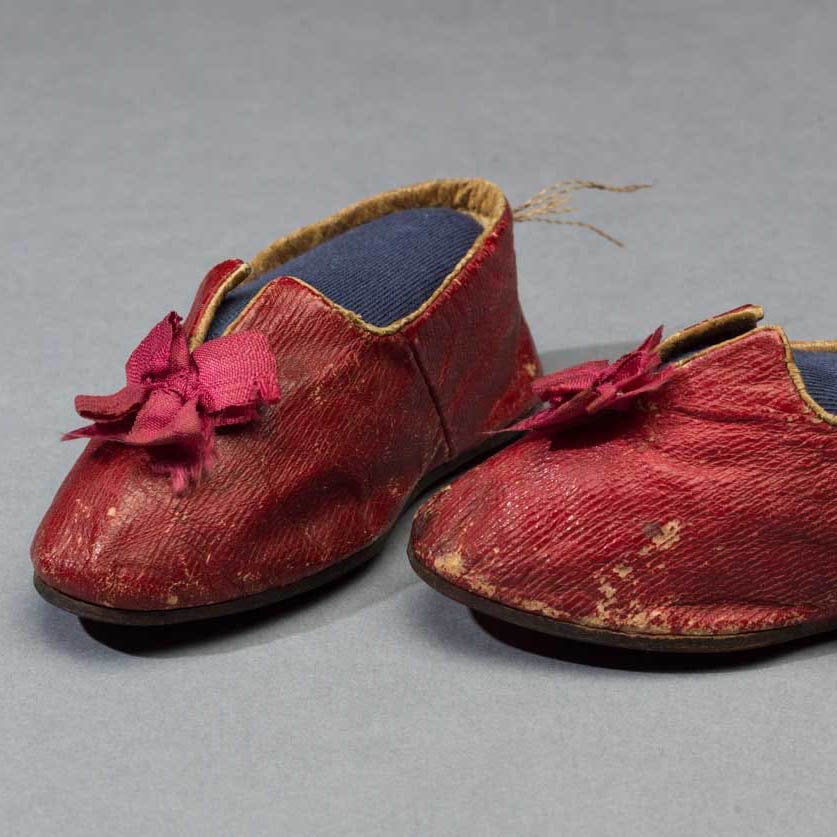
this one-way fashion; for example, St. Nicholas filled children's wooden shoes with fruit
and candy in both old and New Amsterdam. (Eventually, of course, "stockings hung by
the chimney with care" replaced wooden shoes.) We must attribute the exchange of
gifts among equals and from dependents to superiors to good old American influences.
Both twentieth-century affluence and diligent marketing has made it the norm in the last
fifty years or so.
Santa Claus too is an American invention, although an amalgam of
American, Dutch, and English traditions: partly the lean, ascetic Saint Nicholas, he is
also related to the bacchanalian Father Christmas. While many countries and ethnic
groups have a Christmastime gift bringer, the "right jolly old elf" dressed in red and fur
and driving his sleigh and reindeer sprang from the pen and imagination of New Yorker
Clement Clark Moore. In his 1823 poem "A Visit from Saint Nicholas," Moore created
the new look for the Christmas gift-giver. Cartoonist Thomas Nast completed the vision
with his 1860s drawings that still define how we see Santa.
Christmas cards. Printers have been cashing in on Christmas since the eighteenth
century--at least in London and other large cities. Schoolboys (and I do mean only the
young males) filled in with their best penmanship pages pre-printed with special holiday
borders. "Christmas pieces" they were called. But the Christmas card per se was a
nineteenth-century English invention.
Garlands and greens. Decorations for the midwinter holidays consisted of whatever
natural materials looked attractive at the bleakest time of year--evergreens, berries,
forced blossoms--and the necessary candles and fires. In ancient times, Romans
celebrated their Saturnalia with displays of lights and hardy greenery formed into
wreaths and sprays. Christian churches have long been decorated for Christmas. The
tradition goes back so far that no one knows for certain when or where it began.
No early Virginia sources tell us how, or even if, colonists decorated their
homes for the holidays, so we must rely on eighteenth-century English prints. Of the
precious few--only half a dozen--that show interior Christmas decorations, a large cluster
of mistletoe is always the major feature for obvious reasons. Otherwise, plain sprigs of
holly or bay fill vases and other containers of all sorts or stand flat against windowpanes.
(I cannot tell for sure how these last were attached; perhaps the stems were merely
stuck between the glass and the wooden muntins.)
Christmas trees. If we had to choose the one outstanding symbol of Christmas, of
course it must be the gaily decorated evergreen tree with a star at the very top. German
in origin, "Tannenbaum":; gained acceptance in England and the United States only very
slowly. The first written reference to a Christmas tree dates from the seventeenth
century when a candle-lighted tree astonished residents of Strasbourg. I have found
nothing recorded in the eighteenth century about holiday trees in Europe or North
America. By the nineteenth century a few of the " German toys" use Charles
Dickens's phrase) appeared in London. But these foreign oddities were not yet
accepted. When a print of Queen Victoria and Prince Albert's very domestic circle
around a decorated tree at Windsor Castle appeared in the Illustrated London News in
1848, the custom truly caught on.
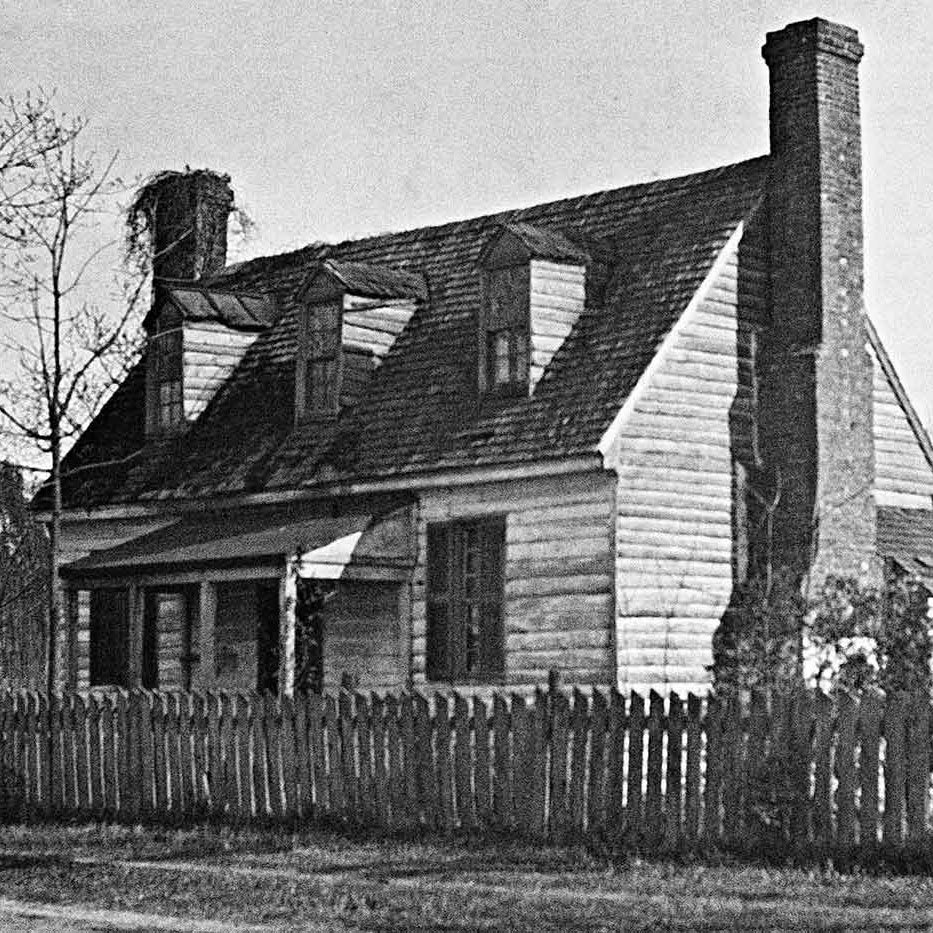
At about the same time, Charles Minnegerode, a German professor at the
College of William and Mary, trimmed a small evergreen to delight the children at the St.
George Tucker House. Martha Vandergrift, aged 95, recalled the grand occasion, and
her story appeared in the Richmond News Leader on December 25, 1928. Presumably
Mrs. Vandergrift remembered the tree and who decorated it more clearly than she did
the date. The newspaper gave 1845 as the time, three years after Minnegerode's arrival
in Williamsburg. Perhaps the first Christmas tree cheered the Tucker household as
early as 1842.
Christmas foods and beverages. Everyone wants more and better things to eat and
drink for a celebration. Finances nearly always control the possibilities. In eighteenth-
century Virginia, of course, the rich had more on the table at Christmas and on any other
day, too, but even the gentry faced limits in winter. December was the right time for
slaughtering, so fresh meat of all sorts they had, as well as some seafood. Preserving
fruits and vegetables was problematic for a December holiday. Then as now, beef,
goose, ham, and turkey counted as holiday favorites; some households also insisted on
fish, oysters, mincemeat pies, and brandied peaches. No one dish epitomized the
Christmas feast in colonial Virginia.
Wines, brandy, rum punches, and other alcoholic beverages went
plentifully around the table on December 25 in well-to-do households. Others had less
because they could afford less. Slave owners gave out portions of rum and other liquors
to their workers at Christmastime, partly as a holiday treat (one the slaves may have
come to expect and even demand) and partly to keep slaves at the home quarter during
their few days off work. People with a quantity of alcohol in them were more likely to
stay close to home than to run away or travel long distances to visit family.
Length of the Christmas season. Eighteenth-century Anglicans prepared to celebrate
the Nativity during Advent, a penitential season in the church's calendar. December 25,
not a movable feast, began a festive season of considerable duration. The twelve days
of Christmas lasted until January 6, also called Twelfth Day or Epiphany. Colonial
Virginians thought Twelfth Night a good occasion for balls, parties, and weddings.
There seems to have been no special notice of New Year's Eve in colonial days.
(Maybe that is to be expected since Times Square was not yet built and Guy Lombardo
had not been born.) Most music historians agree that the song "The Twelve Days of
Christmas" with all its confusing rigmarole of lords a-leaping and swans a-swimming was
meant to teach children their numbers and has no strong holiday connection.
In the late 1990s the Christmas season seems to begin right after
Halloween and comes to a screeching halt by Christmas dinner (or with the first tears or
first worn-out battery, whichever comes first). We emphasize the build-up, the
preparation, the anticipation. Celebrants in the eighteenth century saw Christmas Day
itself as only the first day of festivities. Probably because customs then were fewer and
preparations simpler, colonial Virginians looked to the twelve days beyond December 25
as a way to extend and more fully savor the most joyful season of the year.

|  |