Page content
View related multimedia and linksJohn Randolph, "The Tory"

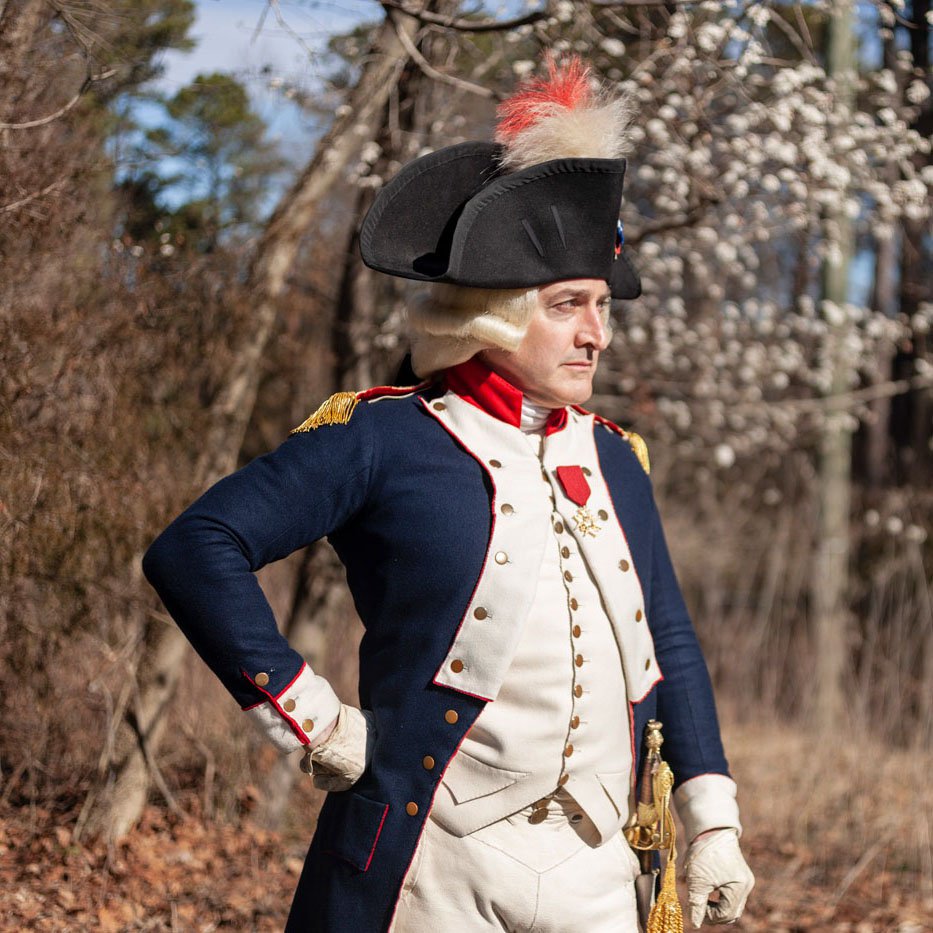
Peyton Randolph and his Loyalist brother John, portrayed by Charles Redd and Jack Flintom.
- Born ca. 1727 in Williamsburg, Virginia
- Studied law in England
- Member of House of Burgesses
- Attorney General for Virginia Colony
- Died 1784 in London, England
- Buried in Virginia
Early Years
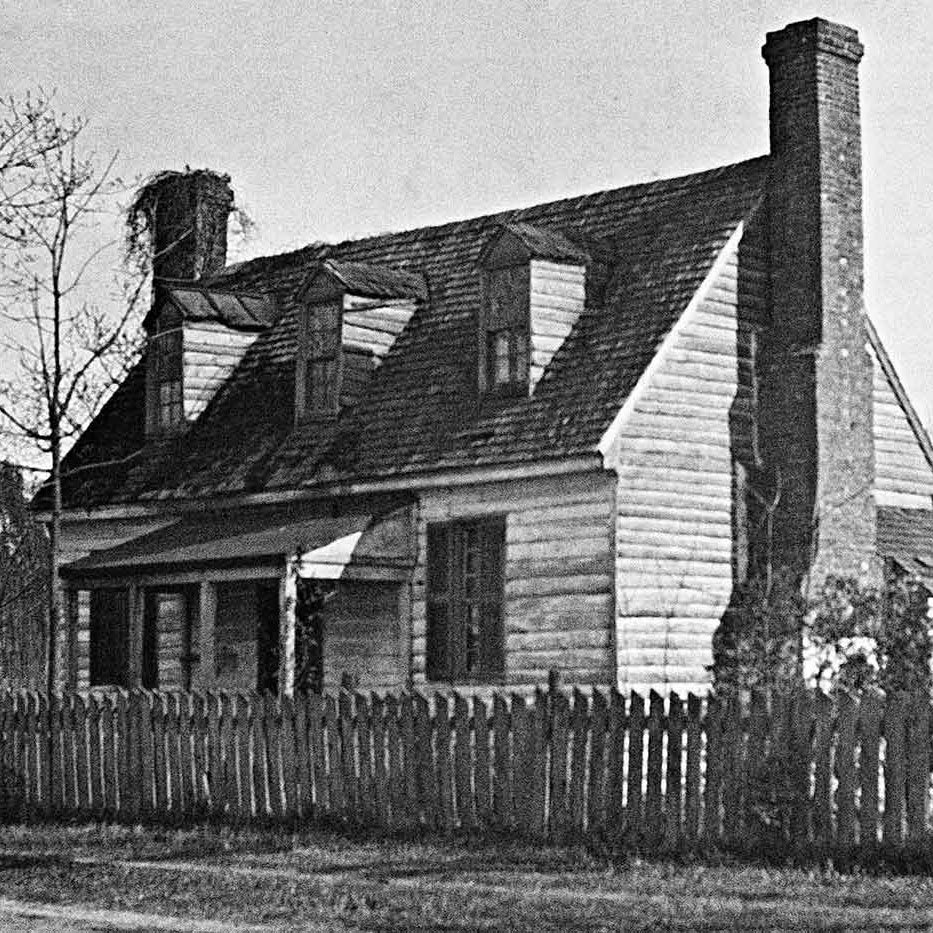
John Randolph was born in 1727 or 1728, probably at what is now called the Peyton Randolph House on Market Square, and his heritage was thoroughly Virginian. Educated at the College of William & Mary, he traveled to London in 1745 to study law at the Middle Temple at the Inns of Court in London, and returned to Williamsburg to practice in 1749.
Civic duties
Among Virginia's best-trained attorneys, John Randolph climbed the rungs of civic responsibility toward authority and power. He had become a member of the city's common council, then a burgess for the College of William & Mary. When his older brother Peyton Randolph was elected speaker of the House of Burgesses, John succeeded him as the colony's attorney general. He could not, however, follow Peyton down the road to rebellion.
At odds with brother’s political views
John Randolph’s brother Peyton Randolph followed the call of duty to the chair of the Continental Congress, but conscience summoned John Randolph "home" to England. As the day approached when he would quit America and its Revolution, he wrote a farewell letter to his cousin Thomas Jefferson. "We both of us seem to be steering opposite courses," he said, "the success of either lies in the womb of Time."
The third child of Sir John and Lady Susannah Randolph, John was convinced British-Americans owed more loyalty to the Crown than to the Massachusetts hotheads or to firebrands like his friend Patrick Henry. Historians have tagged him with the nickname John "The Tory." By the summer of 1775, an anonymous piece in the Virginia Gazette insulted John Randolph for his Loyalist views and "dependence on l[or]d D[unmor]e."
View Virginia Gazette, July 27, 1775, Page 3, bottom of column two and top of column three (Will open in new window)
If Randolph's associates in Williamsburg disagreed with his views, they nevertheless admired his integrity. Most Virginians referred to England as home; John Randolph meant it.
Returns to England
While Peyton chaired the First Continental Congress in Philadelphia, John sat in Williamsburg, a confidant of the pugnacious Governor Dunmore. As Peyton prepared to leave for the Second Continental Congress, John was closing up his house, Tazewell Hall. Renowned for its hospitality, Tazewell Hall sat at the southern end of South England Street commanding a 99-acre estate. It was a popular literary and social center frequented by the elite of the community. Its master had been a close friend of Governor Fauquier and Lord Botetourt.
John Randolph arranged passage across the Atlantic for himself, his wife, Ariana, and their two daughters, Susannah and Ariana. His son, Edmund, stayed behind; Edmund joined the American army and served as aide-de-camp to General George Washington.
Enjoyed music and gardening
Gardening and music were among John Randolph's avocations. About 1765 he wrote what is believed to be the earliest American book on kitchen gardening, A Treatise on Gardening by A Citizen of Virginia. Cousin Thomas Jefferson thought Randolph's violin was the finest in the colony and John, in turn, admired Tom's library. In 1771, they struck a lighthearted bargain. If Randolph died first, Jefferson was to have the fiddle; if Jefferson died first, Randolph was to have £100 worth of Jefferson's books. George Wythe and Patrick Henry witnessed the agreement.
In August 1775, Jefferson sent their mutual friend Carter Braxton to Williamsburg with £13 pounds and posted a letter saying he meant it for the instrument. The reply was Randolph's farewell, though the men corresponded after Randolph reached England.
The state government confiscated loyalist properties as the Revolution wore on, and an embittered Randolph spent years fruitlessly trying to reclaim his.
Died in England; buried in Virginia
John Randolph died at Brampton, England, in 1784. In death, as he could not in conscience do in life, Randolph returned to Williamsburg. He is interred beside his father and brother in the family vault in the chapel at the College of William and Mary.
For further reading:
- Peyton Randolph House
- College of William and Mary
- Peyton Randolph
- Thomas Jefferson
- Sir John Randolph
- Lady Susannah Beverley Randolph
- Patrick Henry
- Ariana Jenings Randolph
- Susannah Beverley Randolph
- Edmund Randolph
- Gardening
Multimedia and related links
-
Slideshows
- more...
-
Podcasts
- View descriptions
-
Love and Revolution
Divergent views on politics and religion fuel a feud between two prominent Williamsburg families. Museum educator Anne Willis tells the story of their children's unlikely marriage. June 9, 2008
Audio podcast: Listen (mp3) | Transcript
Image enhanced: View (m4a) | Transcript
-
A Loyal Subject
Loyal subjects of the king walked among Williamsburg's revolutionaries. Colonial Williamsburg's Jack Flintom interprets John Randolph's allegiance to King George III. July 23, 2007
Audio podcast: Listen (mp3) | Transcript
Image enhanced: View (m4a) | Transcript
-
An Actor in the Revolutionary City
Melanie Collins answers the question, "Are you hot in those clothes?" and many more as she talks about the spark she finds each day as an actor-interpreter in Revolutionary City. September 4, 2006
Audio podcast: Listen (mp3) | Transcript
Image enhanced: View (m4a) | Transcript
-
Carolyn Wilson on Interpreting an American Lady
Carolyn Wilson talks about her passion for what it means to be an American citizen and her love for interpreting Betty Randolph in Colonial Williamsburg's Historic Area. August 15, 2005
Audio podcast: Listen (mp3) | Transcript
Image enhanced: View (m4a) | Transcript
-
Carolyn Wilson on Betty Randolph and Independence
In the pursuit of American independence, Betty Randolph played the role of lady and wife, enabling husband Peyton to fight for freedom. June 21, 2005
Audio podcast: Listen (mp3) | Transcript
Image enhanced: View (m4a) | Transcript
-
We Hold These Truths
The foundation of American democracy rests on one mighty sheet of parchment. Hear interpreter Bill Barker read the Declaration of Independence. June 29, 2009
Audio podcast: Listen (mp3) | Transcript
Image enhanced: View (m4a) | Transcript
Video podcast: Watch (mov) | Transcript
- more...
- Quicktime 7 (free) is required to view the enhanced and video podcasts.
- Subscribe to our podcast RSS feeds:
Audio | Image enhanced | Video
-
Games & Interactive
-
Interactive
-
Word of the Day

Impress your friends with your command of the queen's English with this daily feature.
-
Games
-
Daily jigsaw
Piece together scenes from the Historic Area.
-
Activities
-
A Day in the Life
Online activities from the video series
- more...
-
Downloads
-
Wallpapers
-
Thomas Jefferson
-
Bruton Parish Church
- more...
-
Audio
-
Thoughts on War
A collection of thoughts from colonial interpreters on war. Visit this feature.
- more audio...
-
Journal articles
-
"Treason is but trusted like the fox" - Shakespeare
Whatever Happened to Benedict Arnold?
-
Unwelcome in Williamsburg
The Saga of Merchant Daniel Fisher
-
The Governour's Lady
Mistresses of the Palace
-
Lord Mayor Wilkes
Liberty & No. 45
- more articles...