|
See the Places
: Historic Sites & Buildings
: Slave Quarter at Carter's Grove

Update: Carter's Grove will be closed for an assessment of the property, grounds, and programs beginning January 2, 2003. Interpretation of rural slave family life will relocate to the Historic Area.
Visitors confront chattel slavery and the black
experience in rural 18th-century Virginia at a compound of four rough wooden
cabins at Carter's Grove called the slave quarter.
Tidewater staple crop farming, especially
the cultivation of tobacco, required intensive labor, and in Virginia
hands were scarce. By the 1660s, slave ships were landing captive
Africans in force to supply plantation needs.
The importation of slaves continued
into the 1720s--especially from today's eastern Nigeria and western
Cameroon. By 1765, most Virginia slaves had been born in the
colony.
Tax records show Nathaniel Burwell,
who came into possession of Carter's Grove and its 1,400 acres
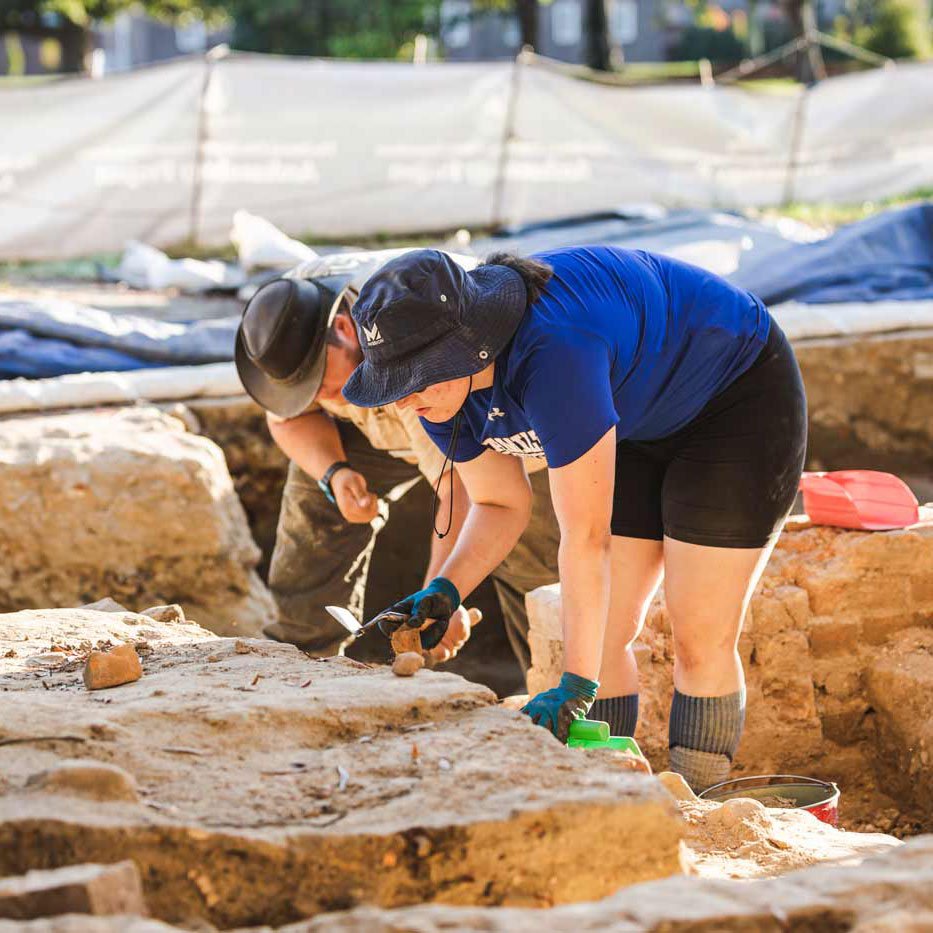
in 1771, kept 47 slaves there in 1783. Archaeological excavations
in 1970 discovered evidence of slave housing--mainly cellar pits
used for storage of food and personal items--between today's reception
center and the mansion. Investigation the following year led
to reconstruction.
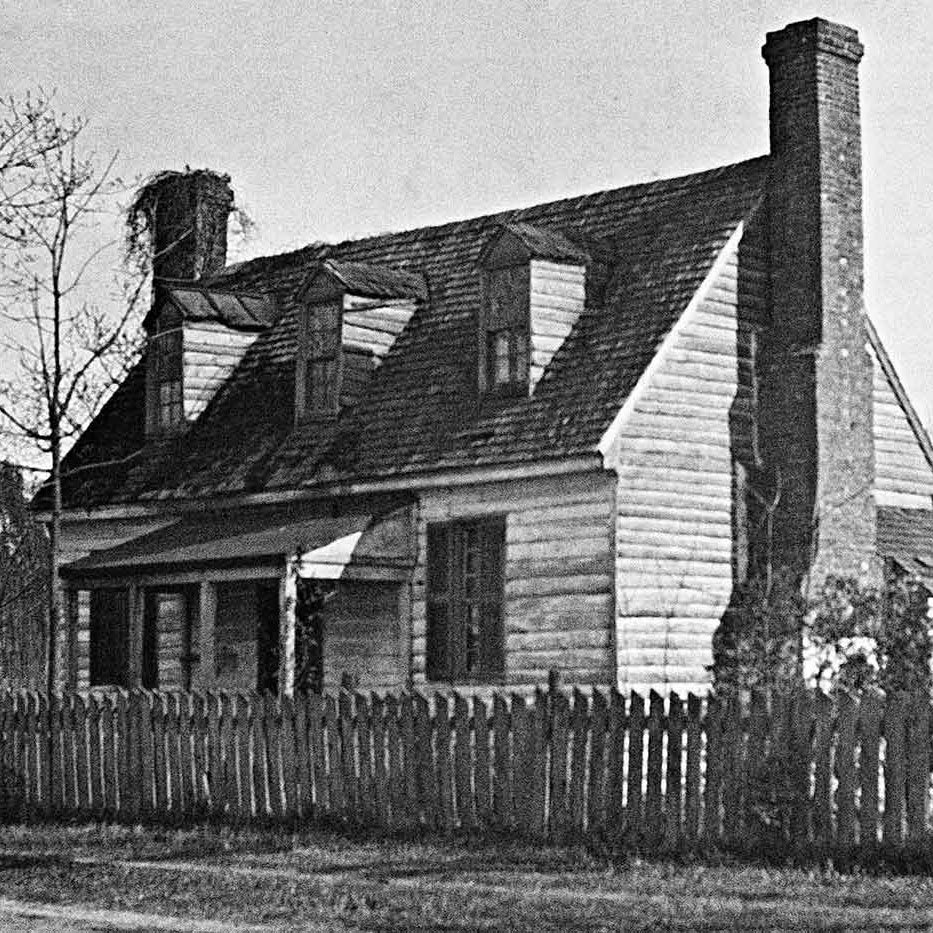
Two double houses, a corn crib, a
single-family dwelling, small garden plots, and chicken pens and
runs all are arranged about a small courtyard. Roughly framed
and fashioned of unhewn logs chinked with mud, the buildings are
roofed with tarred clapboards. Stark contrasts to the stately
mansion beyond, the dwellings are, nevertheless, much like those
the vast majority of Virginians, white and black, slave or free,
occupied in the 1700s.
Like most slave owners, Burwell allotted each adult slave
a peck of corn each week, clothing, tools, and bedding as well
as shelter. Hunting, fishing, gardening, chicken raising, and
bartering supplemented the quarter's food supply. Slaves also
might barter or sell items fashioned in their hours outside the
fields. A black foreman seems to have lived among them and supervised
them.
The exhibit opened with the goals
of exploring black and white relations in the American colonies,
the economic forces that encouraged the creation of the slave
system and sustained it, the institutionalization of racism, daily
slave life, African cultural backgrounds, the development of African American
culture, and slavery's long-term effects.
Interpretation focuses on the last
two decades before independence, stressing the richness and complexity
of African American culture and discussing the slave's meager
possessions. There is, as well, emphasis on the development of
extended families and the sense of a slave community that embraced
other quarters.

|  |