Congratulations on finishing Loyalty or Liberty! During the Revolution, there were many people spying for both the Patriots and the British. Read about them below!
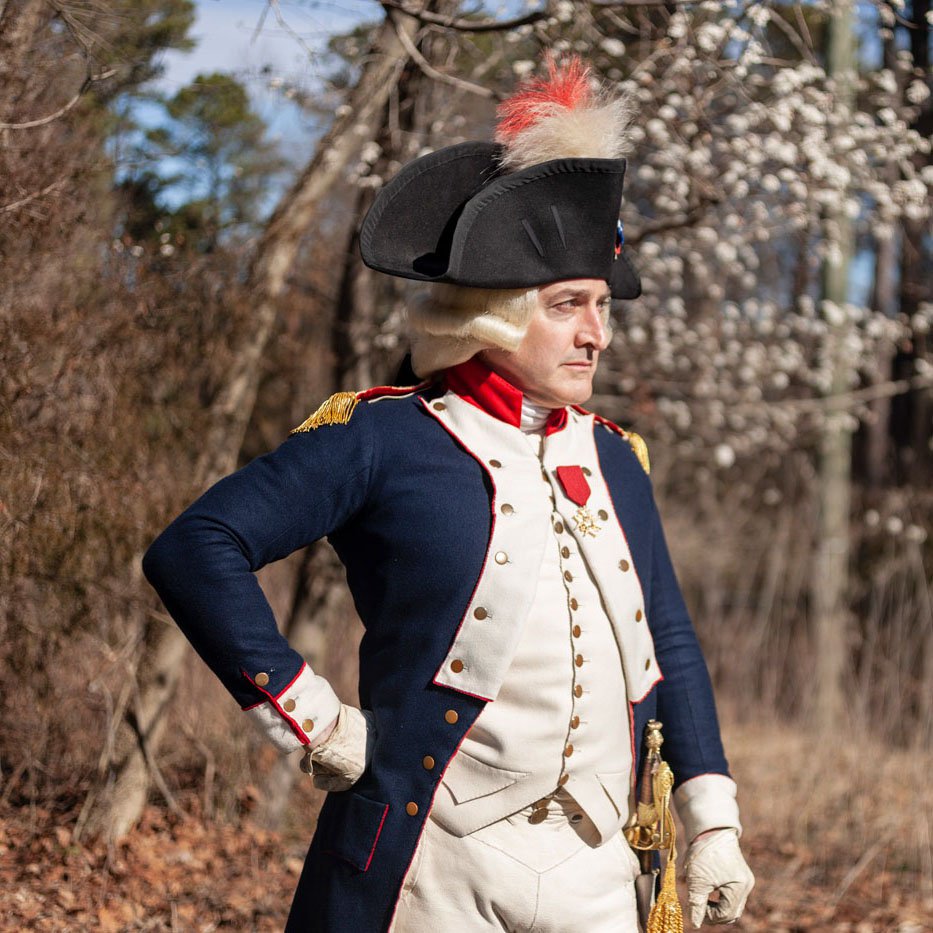
James Armistead was a slave from New Kent County, Virginia. In 1781, his master gave him permission to join the Marquis de Lafayette, who had come from France to help the Patriots defeat the British. Since James Armistead knew the Virginia countryside well, Lafayette asked him to spy for the Americans.
Lafayette sent Armistead to Portsmouth to deliver secret messages and return with stolen information. The British were impressed with the young man and began paying him to spy for the British on the Americans! When General Cornwallis surrendered at Yorktown, he was undoubtedly surprised to find Armistead in the American's camp.
James Armistead felt such loyalty and respect for the Marquis de Lafayette that he changed his name to James Armistead Lafayette. The Virginia government was so pleased with his service for the Patriot cause that it gave him his freedom.
Lydia Darragh was living in Philadelphia when the war began. Lydia was born in Dublin, Ireland in 1729. She married her tutor, William Darragh, in 1753 and the couple emigrated to America, Lydia and William were Quakers. William continued to work as a tutor and Lydia took up the profession of nurse, midwife and mortician.
The British, under the command of General William Howe, took the city of Philadelphia in September of 1777. Two months later, in December, General Howe's adjutant came to Lydia's house and told her that the officers wished to use a room in her house for meetings. They even requested that she send her family to bed early in order to have privacy for their meetings. The American army was encamped sixteen miles away at Whitemarsh, north of Philadelphia.
One night in December, as the Darragh family slept, General Howe officers again used her home to plan a secret attack on the Americans. Little did they know that Lydia was not sleeping. Instead she was outside of the door with her ear to the keyhole. As the meeting ended, Lydia crept back to bed but was unable to sleep because she knew that General Washington should be warned.
The next day, without even telling her husband that she had secret information, she announced that the family needed more flour and that she would walk to the mill. Lydia went to General Howe's headquarters and got a pass to leave the city and set out on the five mile walk to Pearson's Mill in Frankford. She went to the mill and left her flour sack there and continued on foot to find the American lines.
As Lydia walked toward Whitemarsh. she ran into one of General Washington's patrols. She revealed her knowledge of the British attack plan to an officer of the American army and was taken to a nearby house. Lydia ate and rested and then returned to the mill to pick up her flour. She walked with her sack of flour through the British lines and returned to her house.
Lydia anxiously awaited the day set for the attack. Did General Washington have her information? Would he be ready for the British attack? She watched the British troops march out of town. After four anxious days, they returned looking dejected. She had been successful. The American army had been expecting the British attack.
Unfortunately for Lydia, the British officers suspected a member of her family was the cause of their defeat. They took the terrified Lydia into a locked room and began the questioning. Despite the pressure, Lydia remained calm and the adjutant accepted her stories. Lydia continued her help with the cause of independence by nursing the sick who were displaced by the warfare near Philadelphia. She gained a fine reputation during the war, but later in her life she was suspended from the monthly meeting of Friends for ignoring their warnings about participating in the war. She was able to rise above these conflicts and when she died in 1789 she was buried in a Friends' cemetery near her home.
Elizabeth Thompson: British Spy Elizabeth Thompson was born in England. She and her husband came to Charleston in the colony of South Carolina in 1769. Elizabeth was a mantuamaker. She made gowns for ladies. She and her husband opened a millinery shop soon after arriving in the colony.
Their business depended on trade with England. When the conflict with England became more severe, Elizabeth's husband was asked to take an oath of allegiance to the new government. He was asked to support the patriots. His love for his mother country prevented him from making such a declaration and in 1776 he left America and returned to England. Elizabeth stayed behind to see to what was left of the business. She was threatened by the patriots, and her slaves were confiscated, but she remained unharmed. At the beginning of the war, patriot General Benjamin Lincoln was stationed in Charleston with a force of men.
In 1776 the British forcibly attempted to take the city of Charleston, but they were unsuccessful. The prisons of the city of Charleston began to be used for captured British soldiers. Elizabeth Thompson allowed the officers of the British army who had been captured to be held at her house. She also began assisting the soldiers who were in the city's prisons. Eventually she began to carry messages from the officers to men in the American army who were British spies. On one occasion she boldly traveled through the American camp to carry letters to the redcoats. Elizabeth disguised one of the British officers staying in her home and took him out for a ride in her carriage. She drove him past the American lines so that he could "view their works and report to the British commander.
In May of 1779 the city of Charleston was taken after a forty-five day siege by the Bntlsh army. To English sympathizers, including Elizabeth, this was welcome relief. When the war ended, Elizabeth joined her husband and made an attempt to claim a British pension. After all, she had assisted the friends of the King in America.
Dicey Langston was only sixteen when the revolution began. She was born in 1760 on her father's plantation in South Carolina. Dicey's mother died when she was a little girl. She was raised by her father and brothers and grew up a tomboy. She was skilled at riding a horse and shooting a rifle. When the fighting broke out, Dicey's brothers left the plantation to fight with the Continental army. The area they lived in was very loyal to King George in England. Some of Dicey's relatives that she visited regularly were Loyalists. Dicey's brothers camped in the forest near the plantation so that the plantation would not suffer the consequences of their patriotism.
When Dicey visited her Loyalist relatives, she listened very carefully to their conversations for any news of enemy movements. Later she would go and report her information to her brothers. Dicey's relatives soon became suspicious of her and they threatened her father with harm if he did not restrain her. Mr. Langston forbade Dicey from visiting her brother's camp in the future. Dicey reluctantly agreed. Only a few weeks passed before Dicey was again passing information. She had heard of a ruthless group of Loyalists operating in the area called the Bloody Scouts. This group planned to raid a village called Little Eden, which was near Dicey's brothers' camp.
Fearing for her brothers' lives, Dicey knew she had to get word to them. She decided that she must travel by foot and at night in order to go undetected. She set off late one night when the entire household was asleep. She avoided the roads and kept to the fields and forest. She made steady progress until she came to a creek swollen with the spring rains. Dicey bravely waded into the creek but, as she got to the center of the creek, the swift water carried her downstream, turning her around and around.
When she finally regained her footing, she was not sure which side of the creek was which. She choose to follow her instinct and stepped carefully through the creek in what she hoped was the right direction. After a great distance, she reached her brothers' camp and delivered her message. The men in the camp had just returned from a expedition and were hungry and exhausted. Dicey built them a fire and made hoecakes for them to eat. Each of them took some of the bread with them and set off to warn the settlers.
Meanwhile. Dicey made the treacherous trip through the forest and creeks again and returned home just before dawn. When the Bloody Scouts rode into the village of Little Eden, there was not a soul to be tound. When they found the camp cleared out, the Scouts were certain that Dicey had gotten a message to them and they were furious. They came to the Langston home with pistols aimed at Dicey's father.
Dicey quickly jumped between her father and his attacker and the men left her home. Throughout the war, Dicey was the soul protector of the plantation. She continued her patriotic work by standing up to the bands of Loyalists who terrorized her home. When the war was over, Dicey married Thomas Springfield, a local patriot leader, and they both lived to advanced age.
What would you have done as a spy during the Revolution. Share your answers with the Forum!
Back to Loyalty or Liberty Home Page
Back to Electronic Field Trip Home Page
Copyright 1998 Colonial Williamsburg Foundation