Closed currently
-
Monday
9:00 a.m. - 5:00 p.m.
-
Tuesday
Closed
-
Wednesday
9:00 a.m. - 5:00 p.m.
-
Thursday
9:00 a.m. - 5:00 p.m.
-
Friday
9:00 a.m. - 5:00 p.m.
-
Saturday
9:00 a.m. - 5:00 p.m.
-
Sunday
9:00 a.m. - 5:00 p.m.
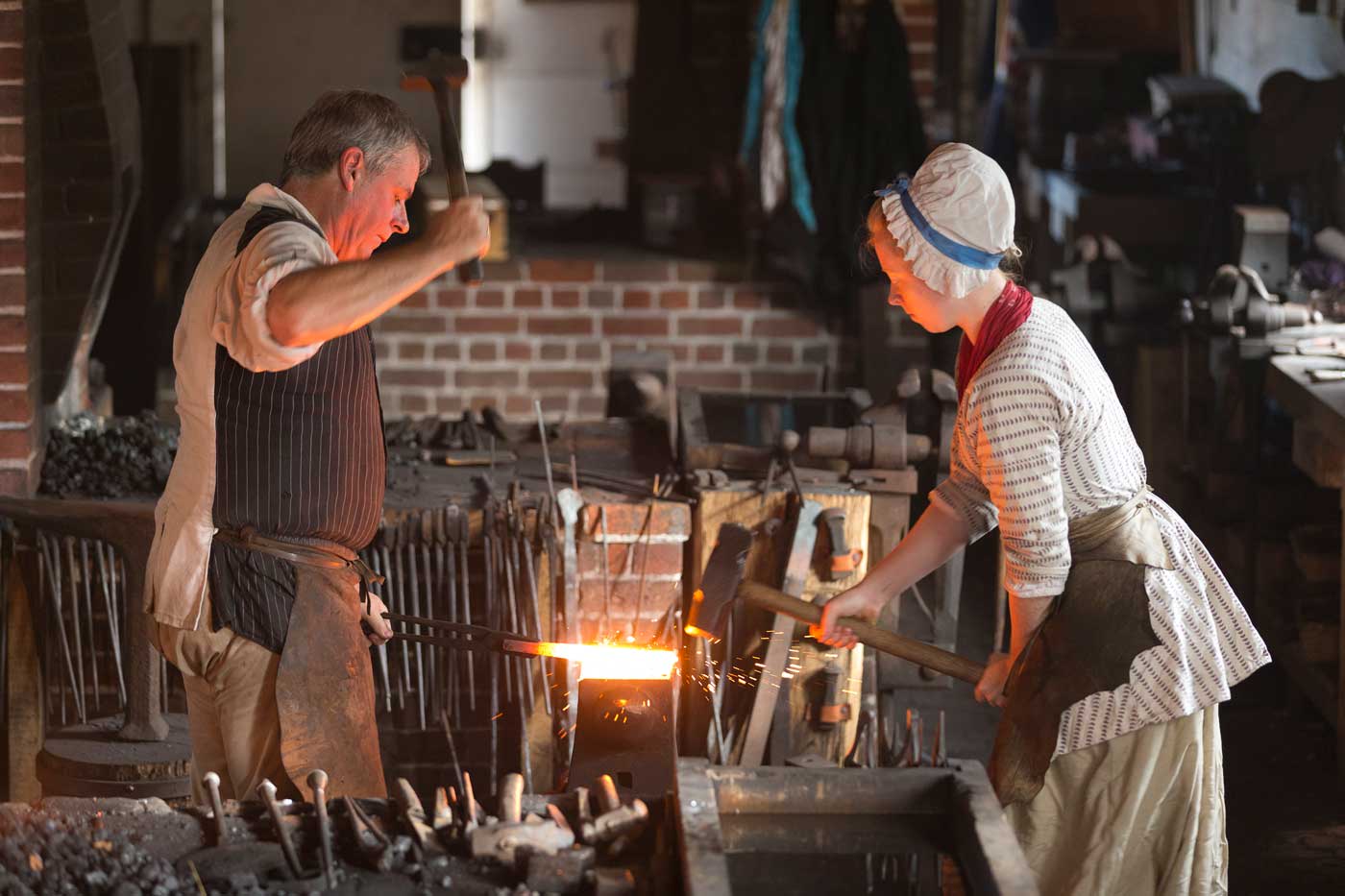
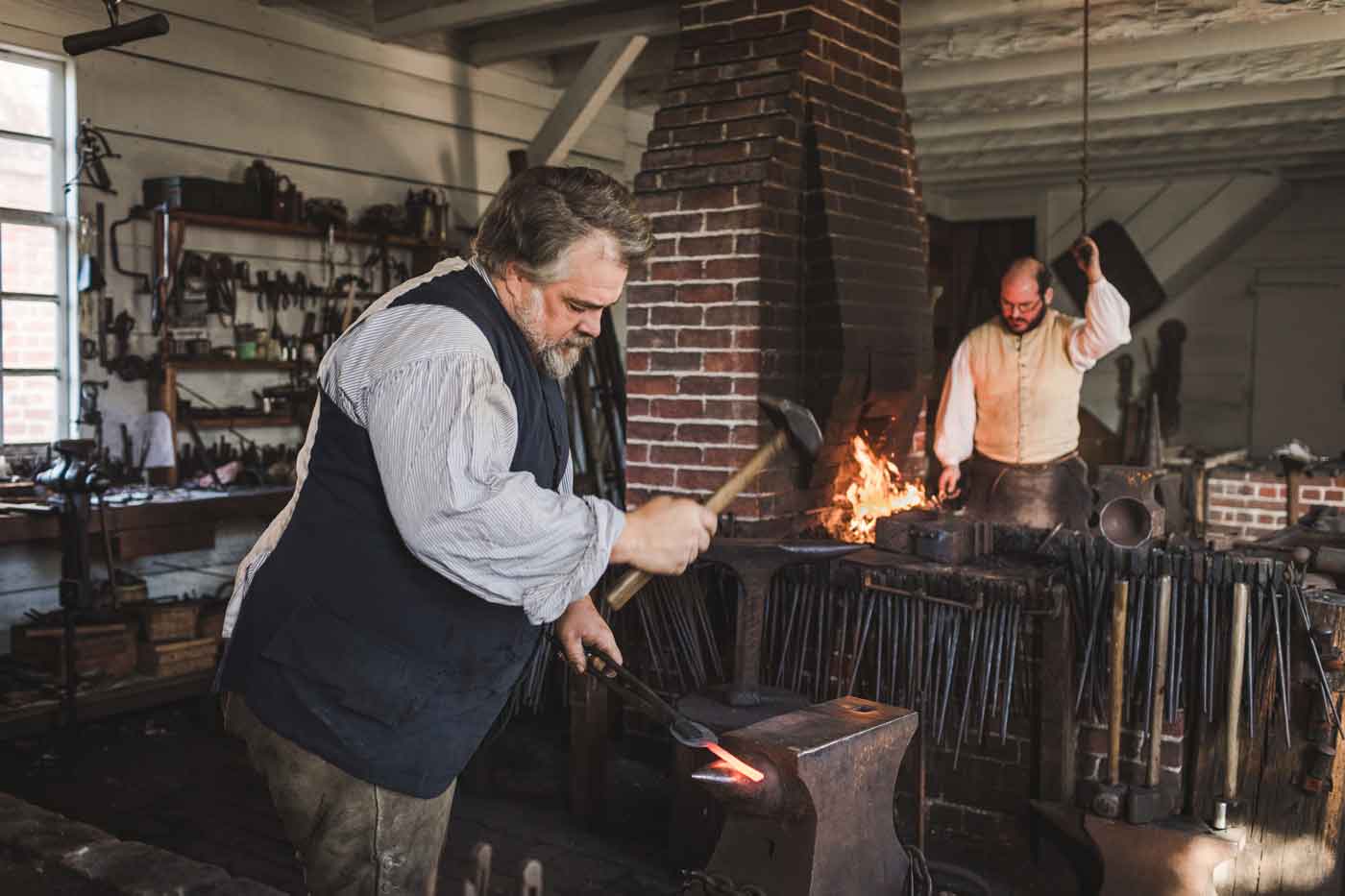
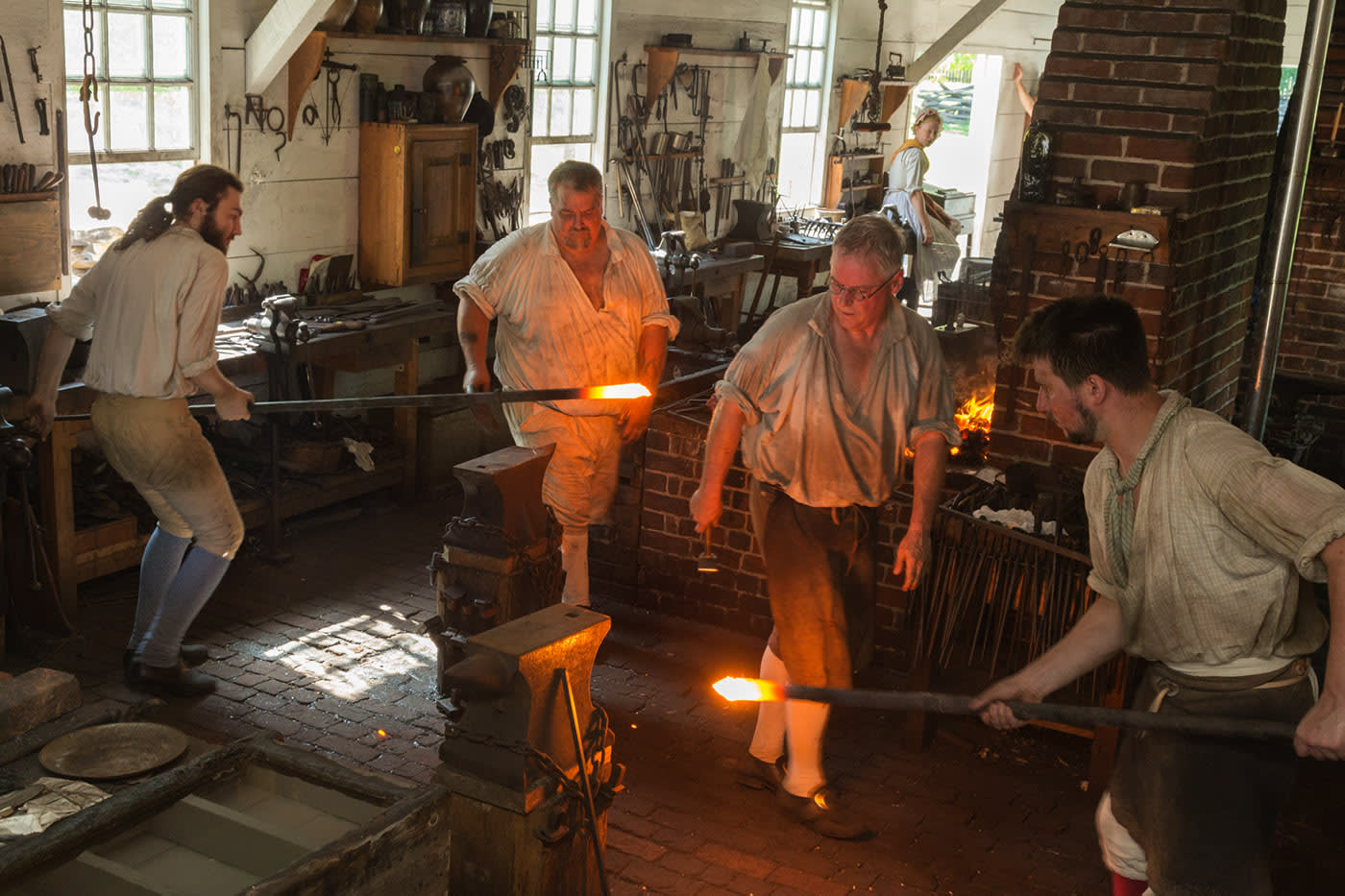
The Revolutionary War wasn't won through battles alone. To keep pace with the might of British industry, Virginia desperately needed a new armoury. Watch our blacksmiths take red-hot iron from the fires of their forges and hammer it into a variety of tools, hardware, and weapons.

Learn More
Watch A Video
Blacksmiths begin their day by lighting fires in the forges outfitted with bellows and a hood to carry away smoke. Once the fires are roaring, they heat bars of iron and use sledges weighing up to 12 pounds to hammer the heated bars into various shapes. The Blacksmiths work with other trades to make tools and other materials, such as nails for the Carpenters.
DIY-ers & Makers Itinerary
See the time before power tools and meet our world-class artisans in the Historic Trades. Must see for DIY and makers of all ages!
Learn More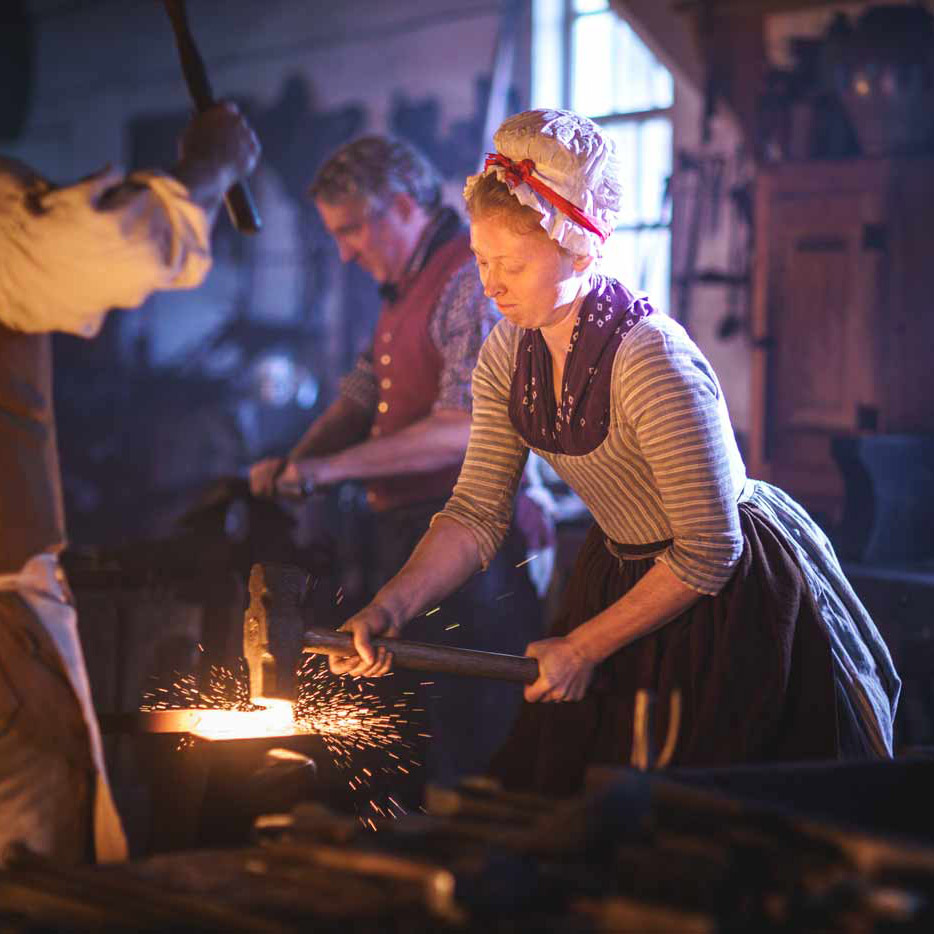
Related Events
-
Special Event: Conservation in Action
Arms conservator Isabelle will be on hand to discuss her work on the Magazine Project and the conservation of firearms.
CW Admission
-
Special Event: Darryl Reeves Master Blacksmith
Stop by the Public Armory for talks and demonstrations by Master Blacksmith Darryl Reeves, a third-generation metal worker from New Orleans' Seventh Ward and apprentice Karina Roca
Open to the Public
Historic Trades
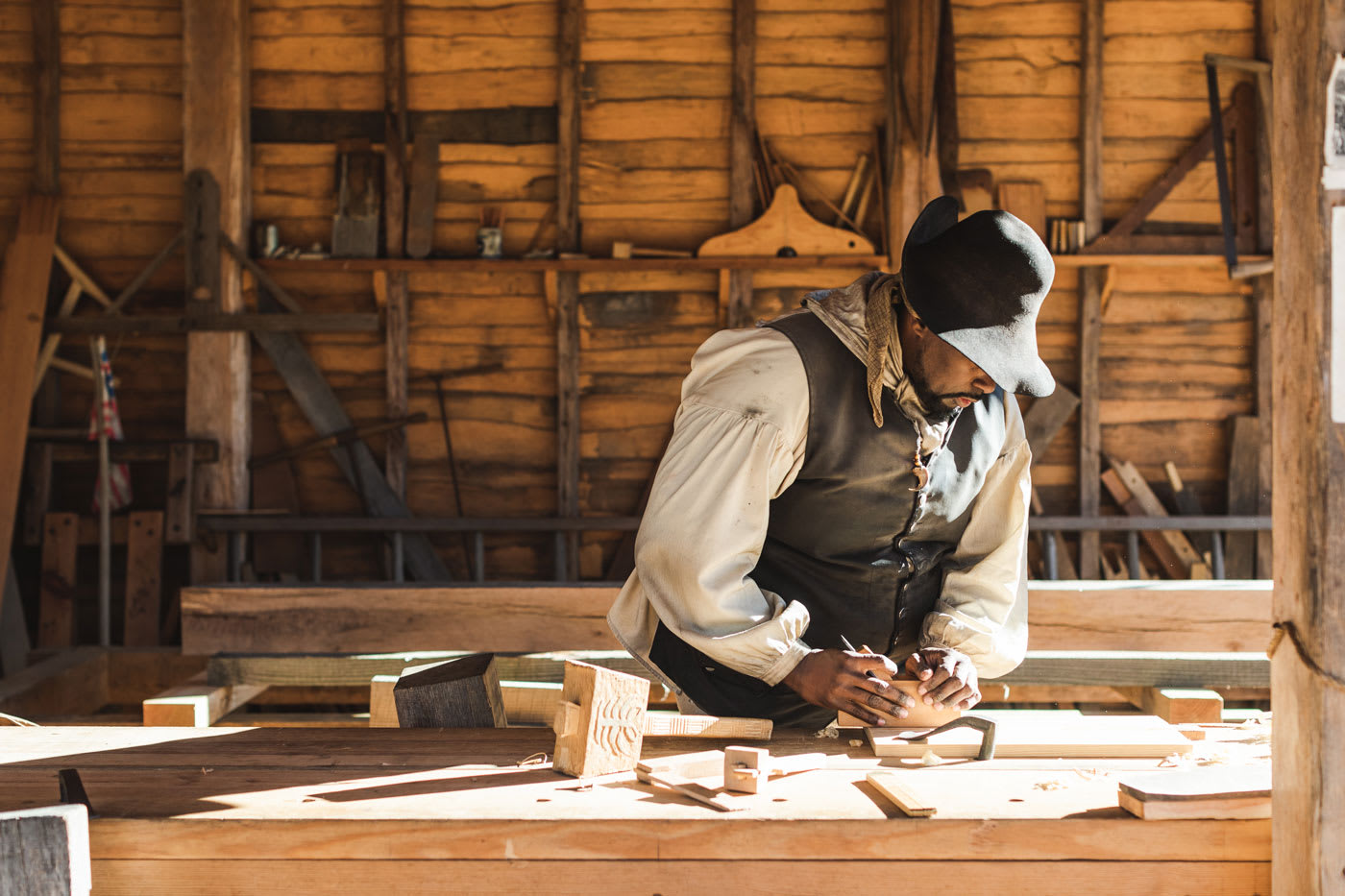
Discover craftsmanship in more than 20 trades, where modern-day practitioners use 18th-century tools and techniques to apprentice in — and eventually master — blacksmithing, woodworking or gunsmithing, just to name a few.
View All