Page content
View related multimedia and linksCarpenter
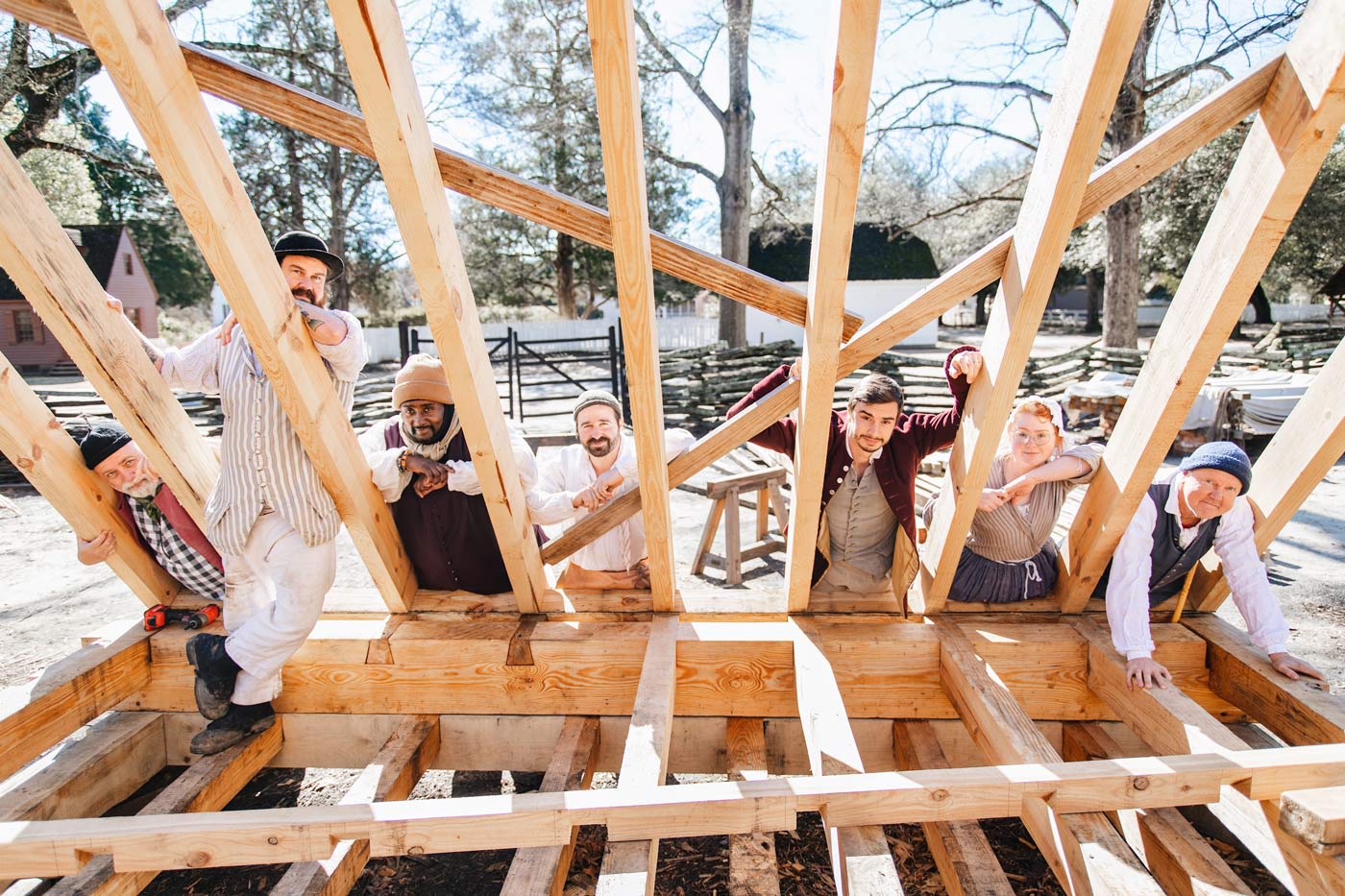
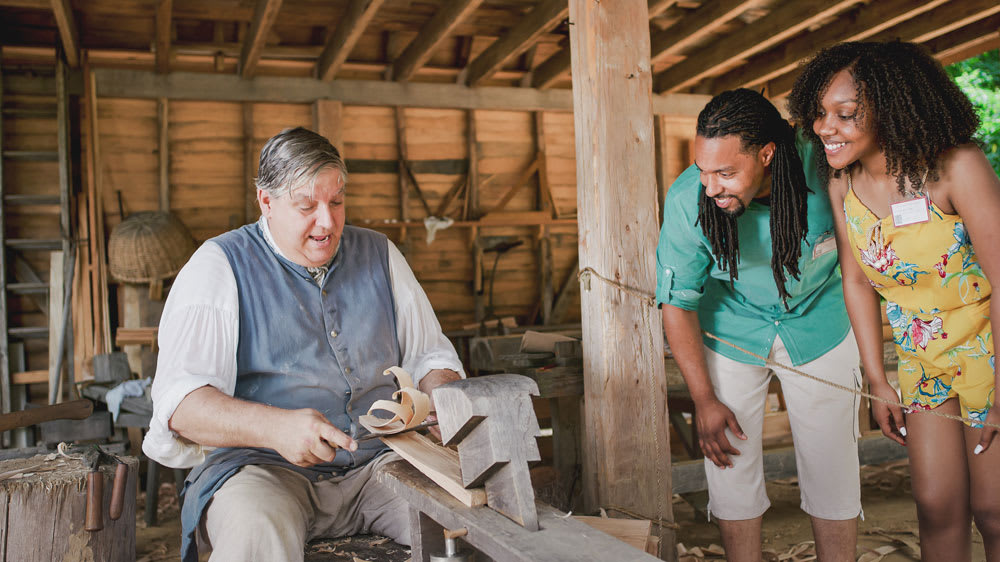
In a century when most structures were built from wood, no tradesman was more useful than the carpenter. The main business of the colonial carpenter was to cut and join timber and board into sturdy wooden homes and shops. As Williamsburg blossomed, the demand for new homes, shops, outbuildings stables, sheds, and their repair grew at a rapid pace.Carpenters built city of Williamsburg
The city was literally hammered together in the 1700s by men like Benjamin Powell, John Wheatley, James Morris, Christopher Ford, and dozens of other carpenters whose names appear on the ledgers of building trades customers. Much of the work was accomplished by slaves that such builders owned or hired. Large numbers of slaves – skilled and unskilled – helped construct the colonial capital. Carpenters were also hired to do repair work build additions to existing structures, or to make smokehouses, dairies, necessaries, and other outbuildings. Brick structures, too, required finishing work and routine maintenance.
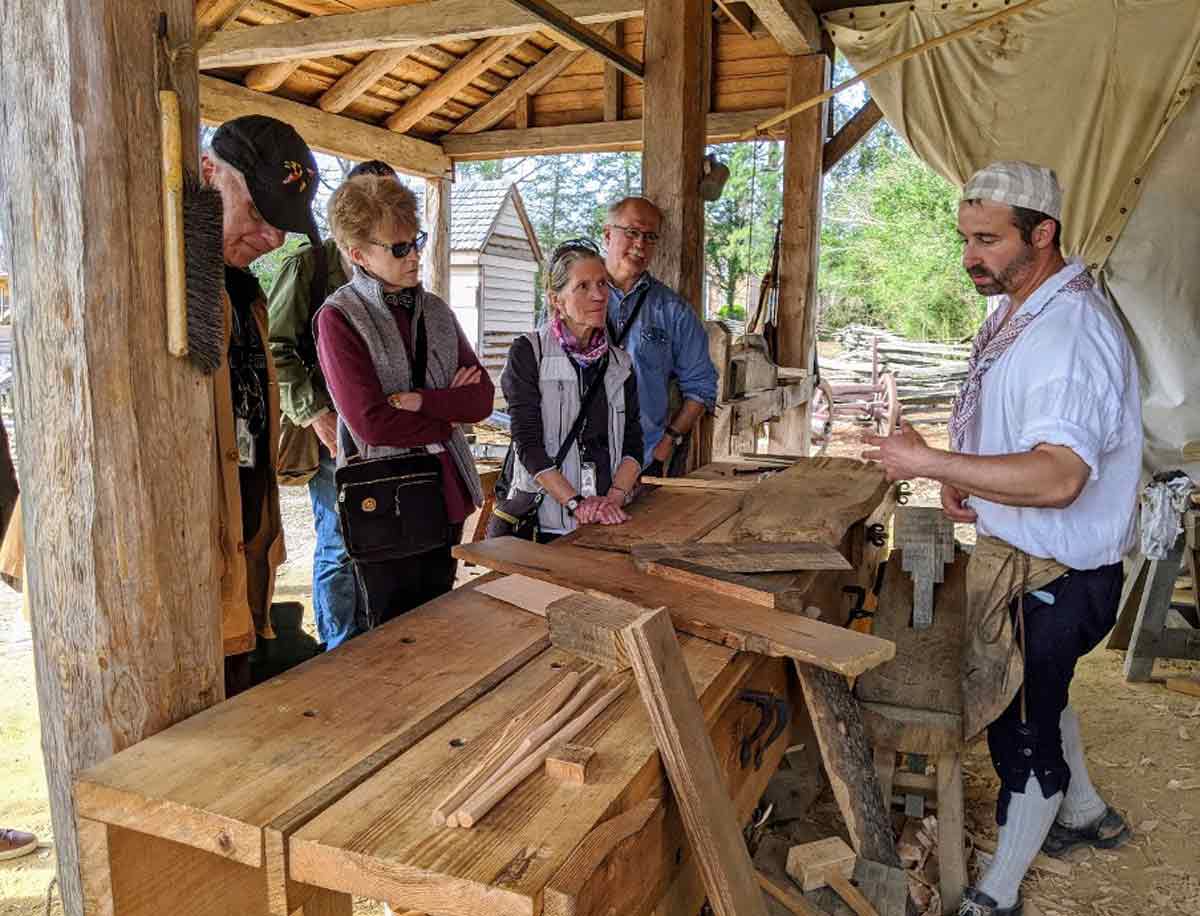
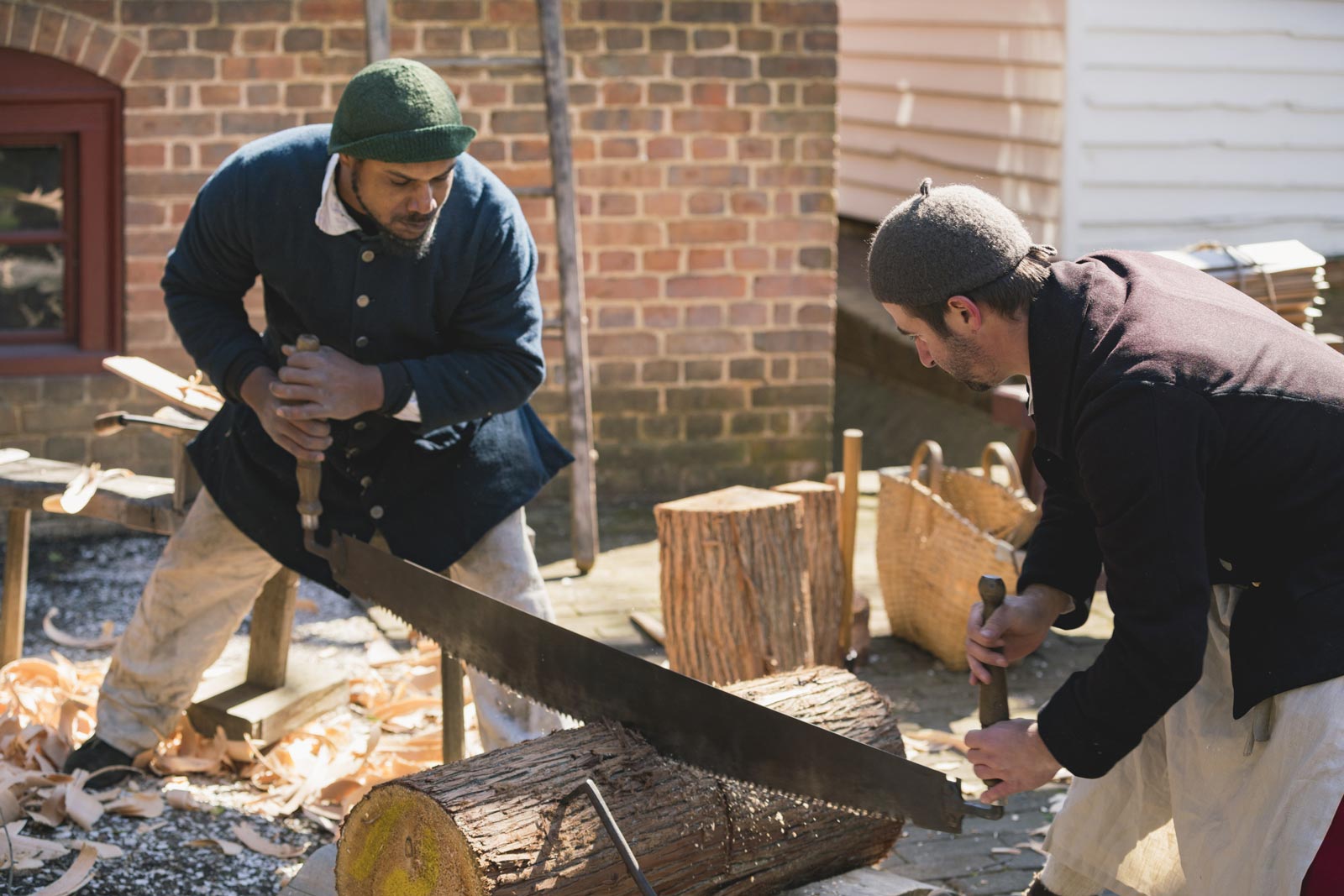
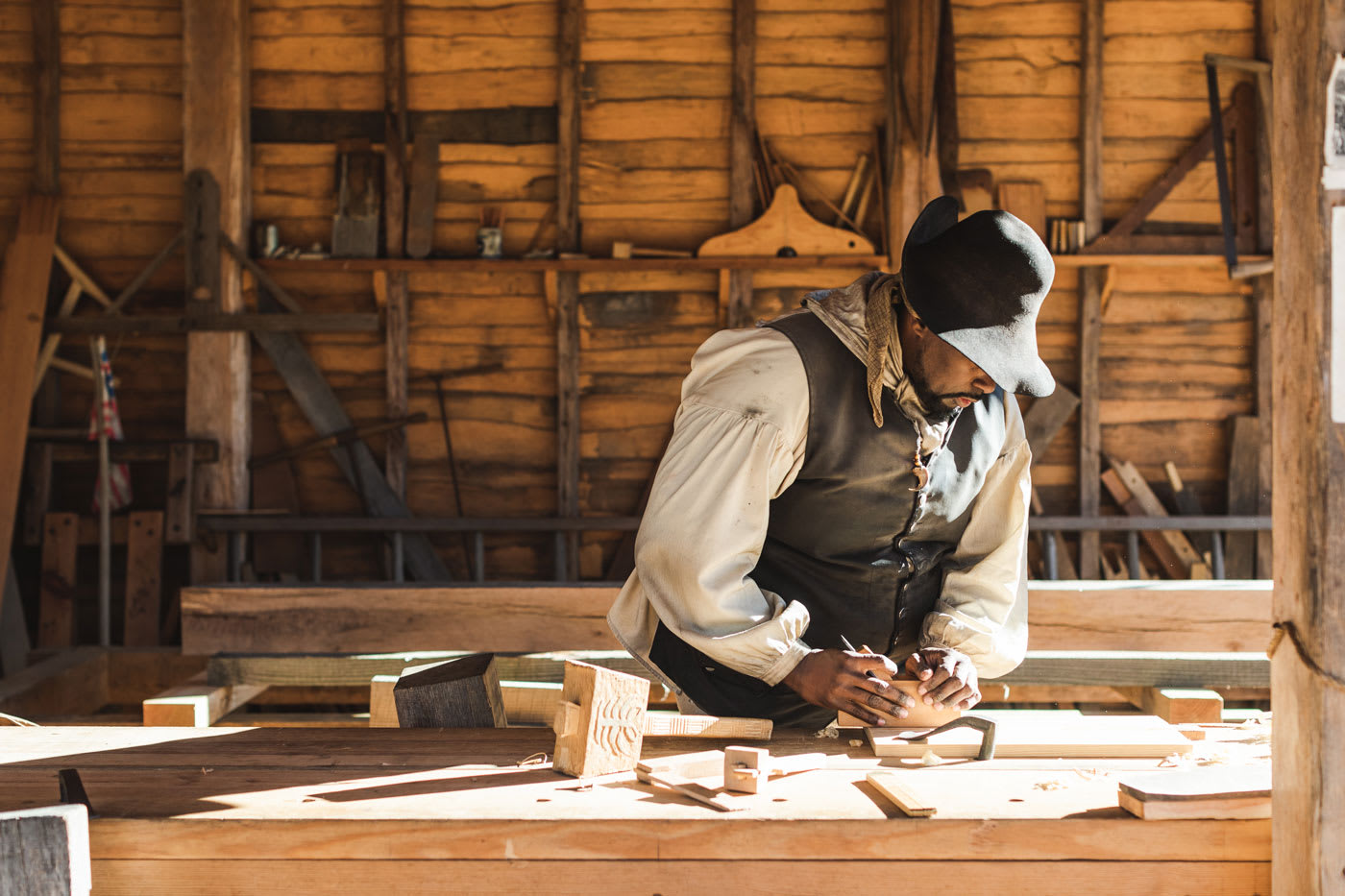
The carpenter worked from a building's foundation to its roof ridge. He laid floors, chiseled mortise-and-tenon joints, framed walls, raised rafters, carved moldings, hung doors, and nailed weatherboard. Carpenters sometimes acquired building materials from less-skilled laborers, frequently using planks cut from logs by a sawyer and shingles made by slaves at a building site.
Common carpentry tools included:
- saw
- broadax
- hammer
- awl
- mallet
- plane
- scribe
- drawknife
- gimlet
- froe
Carpenters built with:
- oak
- locust
- tulip
- poplar
- yellow pine
- cypress
- juniper
- oak chestnut
Colonial carpentry survives in original 18th-century buildings
Durable examples of the work of carpenters may be seen in the 88 original 18th-century buildings in Colonial Williamsburg. None, perhaps, is finer than the Peyton Randolph House, where carpenters reconstructed the site's outbuildings. Currently, the Historic Trades Carpenters are using 18th-century tools and techniques at Great Hopes Plantation.
Learn more:Multimedia and related links
-
Podcasts
- View descriptions
-
The Age of Wood
Making the job up as he goes along is one of Garland Wood's favorite aspects of his job as carpenter at Colonial Williamsburg. August 6, 2007
Audio podcast: Listen (mp3) | Transcript
Image enhanced: View (m4a) | Transcript
-
75 Years of Costume Design
Colonial Williamsburg marks 75 years of costumed interpretation in 2009. Costume Design Center Director Brenda Rosseau describes the metamorphosis from 1934. November 2, 2009
Audio podcast: Listen (mp3) | Transcript
Image enhanced: View (m4a) | Transcript
Video podcast: Watch (mov) | Transcript
-
Ghosts Amongst Us
Centuries-old phantoms linger in Colonial Williamsburg's Historic Area. Hear a tale from the "Ghosts Amongst Us" evening tour. October 26, 2009
Audio podcast: Listen (mp3) | Transcript
Image enhanced: View (m4a) | Transcript
-
Bruton Parish Churchyard
Individuals of all classes rest in the peace of the Bruton Parish graveyard. Church guide Anne Conkling describes one of America's oldest cemeteries. October 19, 2009
Audio podcast: Listen (mp3) | Transcript
Image enhanced: View (m4a) | Transcript
-
Horses in Williamsburg
Horses lend their speed and strength to the American colonies. Head coachman Joyce Henry shares the horse's role in early Virginia. October 12, 2009
Audio podcast: Listen (mp3) | Transcript
Image enhanced: View (m4a) | Transcript
Video podcast: Watch (mov) | Transcript
-
Bees in the Colonies
The humble honeybee sweetens the American story. Apiarist Bill Krebs says bees have been here since the beginning. October 5, 2009
Audio podcast: Listen (mp3) | Transcript
Image enhanced: View (m4a) | Transcript
- more...
- Quicktime 7 (free) is required to view the enhanced and video podcasts.
- Subscribe to our podcast RSS feeds:
Audio | Image enhanced | Video
-
Journal articles
-
Colonial Williamsburg Carpenters Construct Buildings of the Past
Reproduction Structures Offer Guests Look at Trade, Hands-on Experience
-
Colonial Williamsburg Fourth of July
-
America the Scenic
-
Coping with Cold
- more articles...