Page content
View related multimedia and linksShoemaker
Shoemaking tradition continues
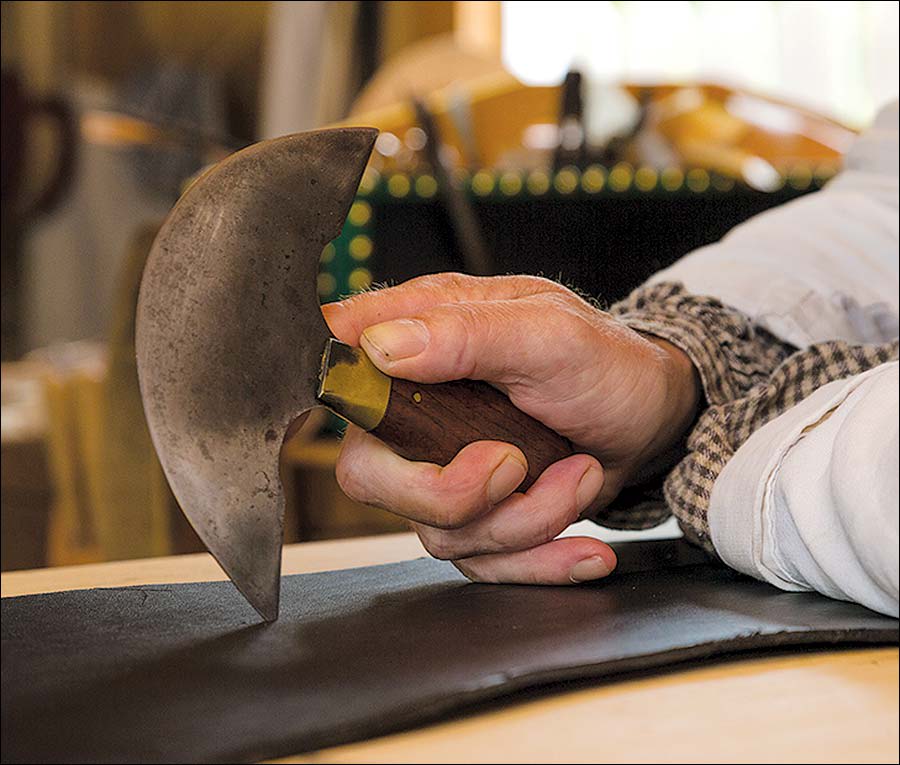
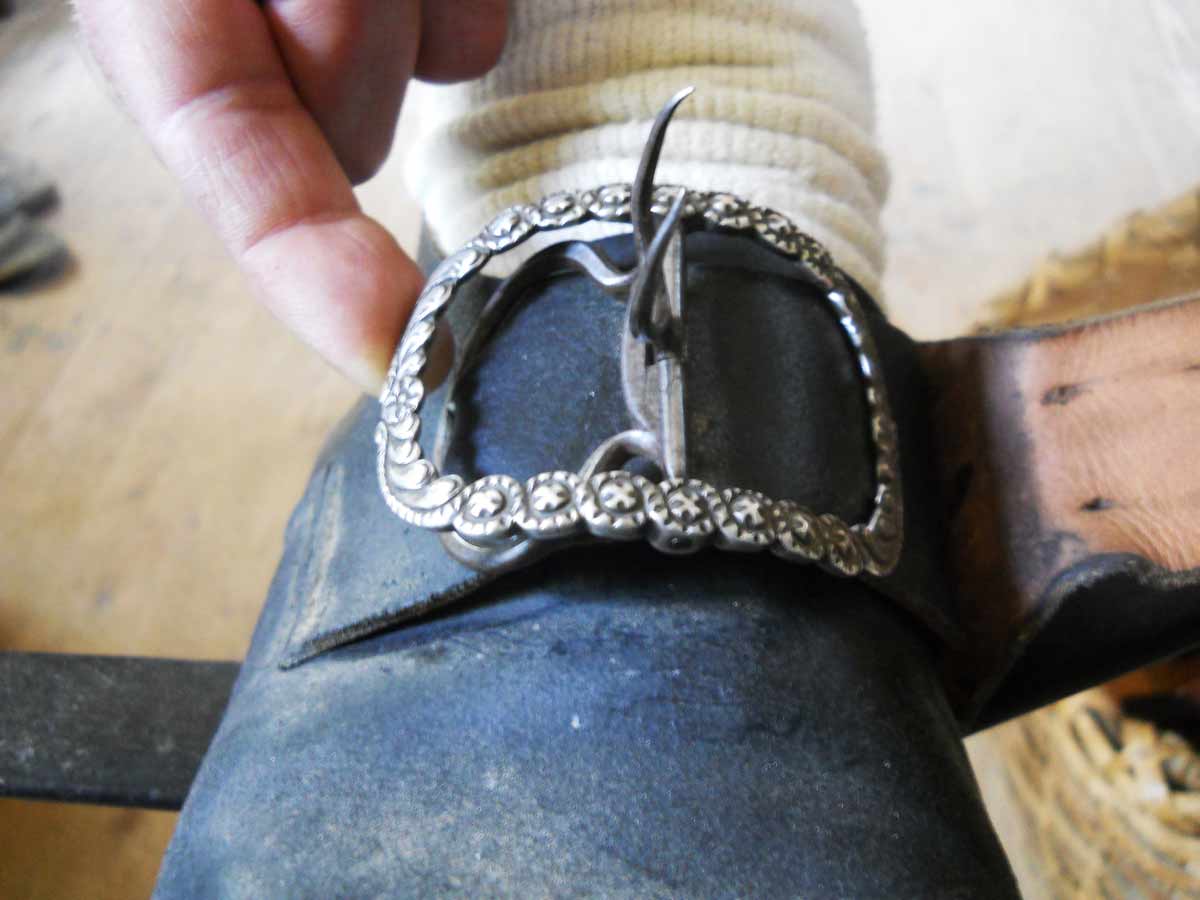
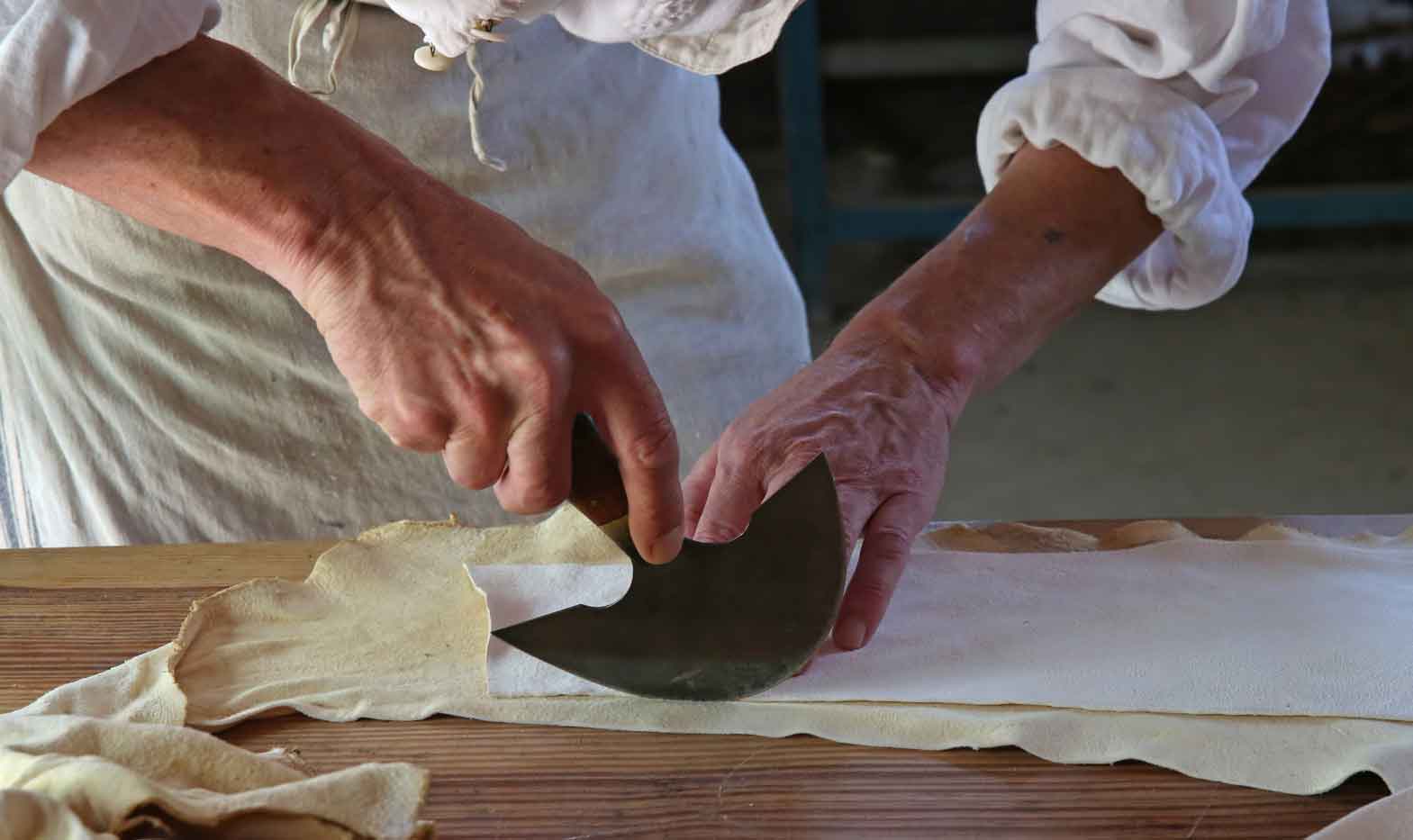
One of the most commonly-practiced trades in 18th-century Virginia, historical shoemaking is preserved at the Shoemaker's Shop, open for visitors today. Techniques are rediscovered in the study of 18th-century shoes and evidence in the shop's apprenticehip program.
Shoemakers arrived in America in 1610
The first shoemakers arrived in America at Jamestown in 1610, and the trade was thriving as early as 1616. In 1661, the Virginia Assembly directed that each county must erect one or more tanneries and shoe manufactories. It also imposed tariffs on leather and shoes exported from Virginia to control speculation and profiteering in the local shoe trade, and stipulated that the fees collected go to finance the founding of the College of William and Mary.
Today, the shoemaker's shop in Williamsburg represents the firm of George Wilson, who moved to Williamsburg from Norfolk, Virginia in the late 1760s. In Norfolk, Wilson's sister-in-law was the proprietor of the shoe factory of Mary Wilson and Company. In 1773, George Wilson specialized in "Boots and Shoes for Gentlemen," which he boldly advertised in the Virginia Gazette. Boot making was the most sophisticated and prestigious branch of the trade. Following a centuries-old tradition, the making of boots and shoes for men and the making of shoes for women were separate pursuits.
Competition fierce among shoemakers
Wilson's shop competed with between 10 and 12 other Williamsburg shoemakers, all operating in the city at the same dates. Together the local shoemakers struggled with competition from merchants in the colony who imported ready-made shoes from factories in London, Northampton and Bristol in England. In addition, several local wholesale factories mass-produced shoes in Norfolk and Petersburg, Virginia.
Selection and purchase of shoes changed little over the years
When a man came into George Wilson's shop in 1773 to buy a pair of shoes, he selected from a stock of "sale shoes" in popular-styled, already-sized shoes – just like today. If his feet were an unusual size, he could order a pair made to suit his taste and fit his foot. Custom-made shoes required a day's wait. Boots for riding were the specialty of the firm, and Wilson advertised seasonally, offering imported leather and boot legs from London and also offering work for journeymen shoemakers who could make boots.
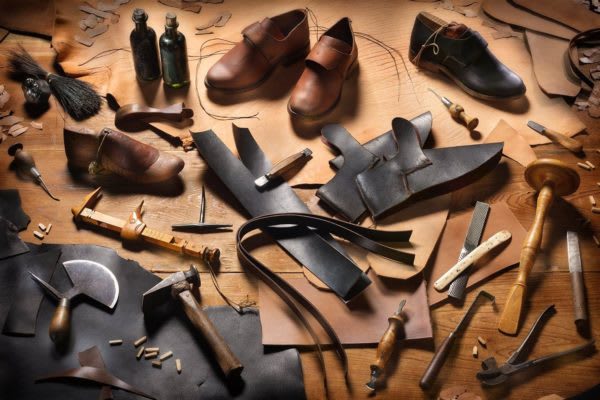
Various leathers and tools made by specialty trades and imported from England were readily available for sale from merchants' stores in Williamsburg, it was no trouble finding supplies in the city. With strange-sounding names such as "helling sticks," "petty-boys," and "St. Hugh's Bones," a shoemaker's complete tool kit included relatively few items and could be purchased for about the same price as a common pair of shoes – the same as one day's wages for a journeyman shoemaker working for Wilson.
Multimedia and related links
-
Podcasts
- View descriptions
-
Shoemaker
The always wry Al Saguto discusses making 18th-century shoes in the shoemaker shop. January 2, 2006
Audio podcast: Listen (mp3) | Transcript
Image enhanced: View (m4a) | Transcript
-
The Cherokee Nation
The modern Cherokee Nation is enjoying a renaissance in language and culture. Living History Demonstrator Paula Nelson shares the resurgence. November 16, 2009
Audio podcast: Listen (mp3) | Transcript
Image enhanced: View (m4a) | Transcript
-
Beer and Whiskey in Williamsburg
Whiskey and beer are the safe alternatives to water in colonial Virginia. Historic Foodways' Frank Clark describes the benefits of brewing. November 9, 2009
Audio podcast: Listen (mp3) | Transcript
Image enhanced: View (m4a) | Transcript
-
75 Years of Costume Design
Colonial Williamsburg marks 75 years of costumed interpretation in 2009. Costume Design Center Director Brenda Rosseau describes the metamorphosis from 1934. November 2, 2009
Audio podcast: Listen (mp3) | Transcript
Image enhanced: View (m4a) | Transcript
Video podcast: Watch (mov) | Transcript
-
Ghosts Amongst Us
Centuries-old phantoms linger in Colonial Williamsburg's Historic Area. Hear a tale from the "Ghosts Amongst Us" evening tour. October 26, 2009
Audio podcast: Listen (mp3) | Transcript
Image enhanced: View (m4a) | Transcript
-
Bruton Parish Churchyard
Individuals of all classes rest in the peace of the Bruton Parish graveyard. Church guide Anne Conkling describes one of America's oldest cemeteries. October 19, 2009
Audio podcast: Listen (mp3) | Transcript
Image enhanced: View (m4a) | Transcript
- more...
- Quicktime 7 (free) is required to view the enhanced and video podcasts.
- Subscribe to our podcast RSS feeds:
Audio | Image enhanced | Video


Shop Online