Page content
View related multimedia and links
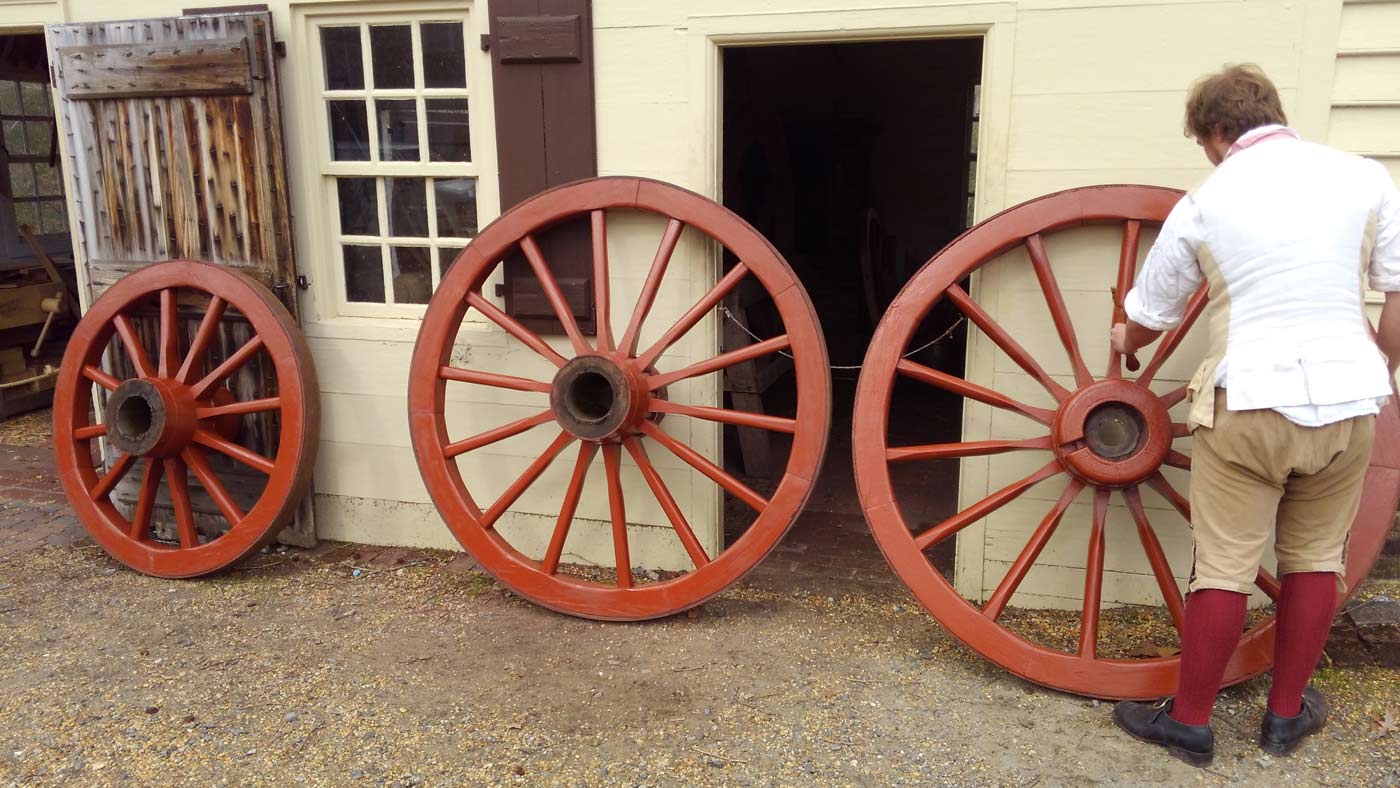
Wheelwrights inspect the wheels on an 18th-century carriage near the Governor's Palace in Colonial Williamsburg.
Wheelwright
Wheels must be round above all else
Made of wood and bound with iron, the wheels of the carriages, wagons, and riding chairs that navigated rugged colonial roads had to be strong and tight. But first and foremost, the wheels had to be round.
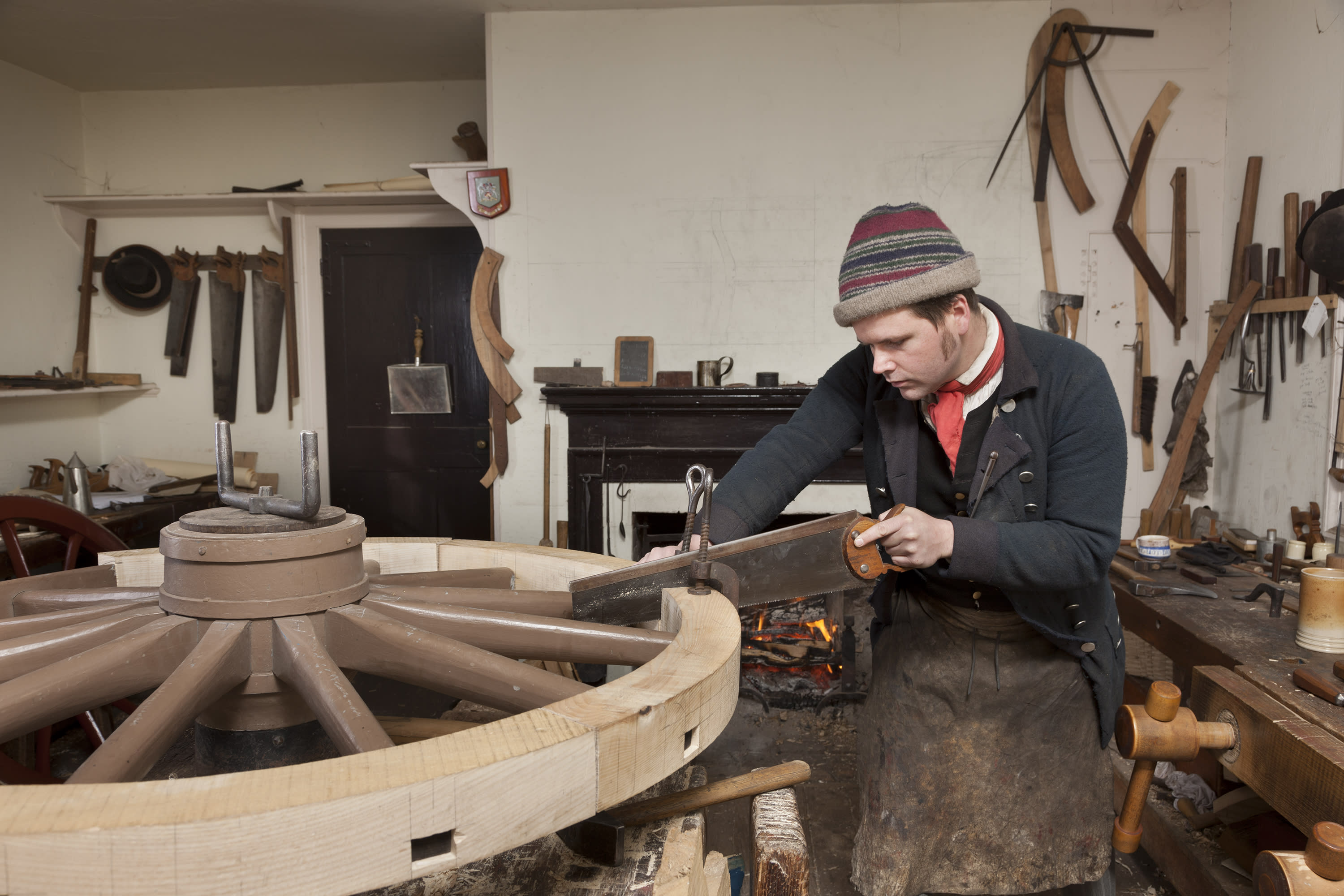
Tradesmen in the wheelwright shop use colonial techniques to create the wheels used on carriages in Colonial Williamsburg today.
Trade requires strength and precision
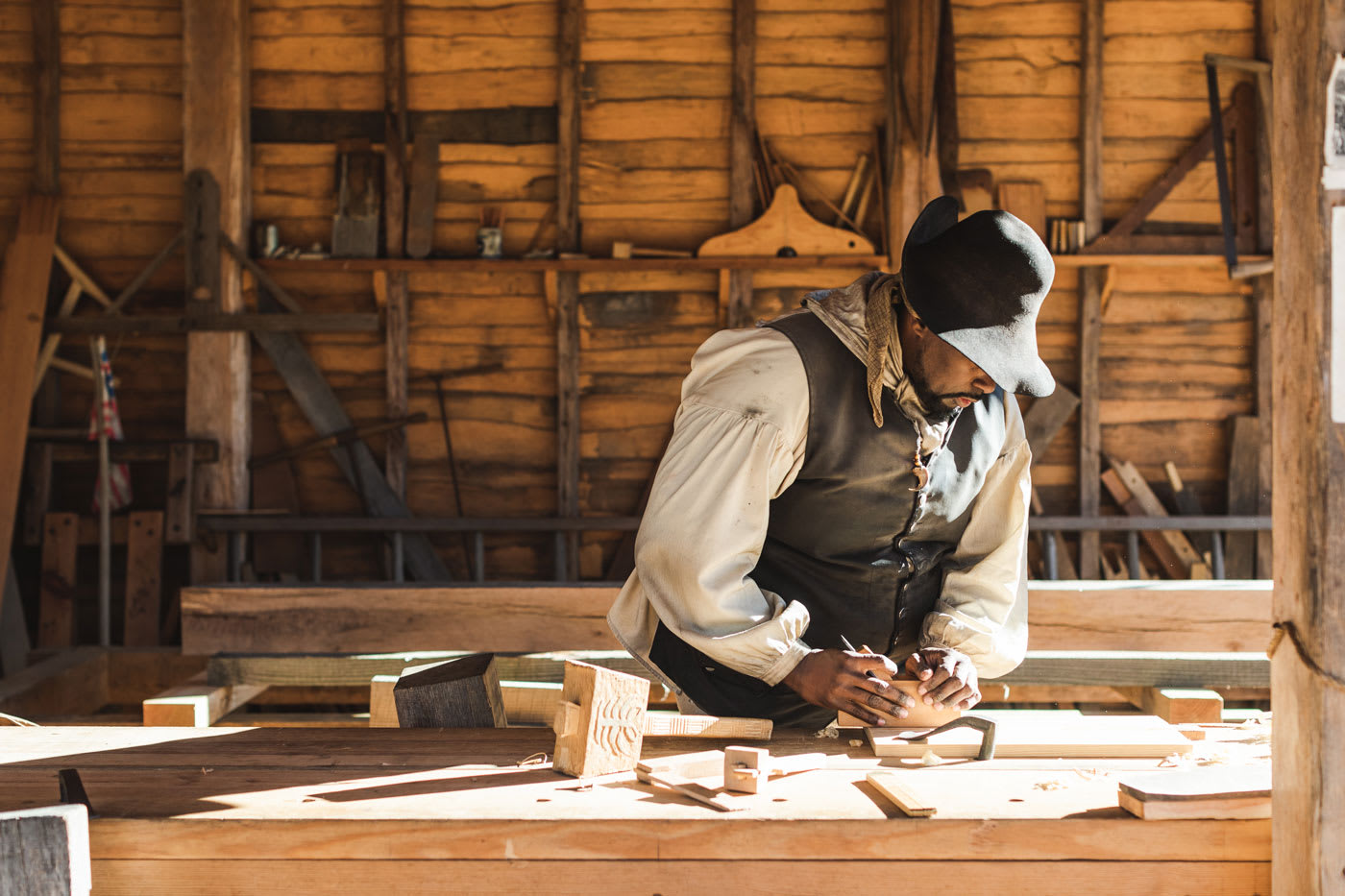
Producing wheels requires strength, ingenuity, and the talents of both a carpenter and a blacksmith. Precise measuring skills are mandatory.
Like their Williamsburg predecessors, the wheelwrights who practice the trade at the Governor's Palace today start with a hub fashioned on a lathe from properly aged wood such as elm. A tapered reamer opens the center to receive a metal bearing; The wheelwright uses a chisel to create rectangular spoke holes around the circumference of the wheel. Carved from woods like ash, the spokes radiate to meet a rim of mortised wooden arches, called "fellies," that join to form a perfect circle.
Colonial tire made of iron
The blacksmith supplies a big hoop of iron precisely matched to the distance around the fellies. The wheelwright heats the iron tire, which expands just enough to be coaxed on with a heavy hammer. He then douses the wheel with water, which causes the iron tire to shrink a bit, which in turn binds the assembly.
Multimedia and related links
-
Podcasts
- View descriptions
-
Colonial Weapons System
As important as the cannon is the vehicle to carry it: a two-wheeled cart that transports, supports, and stores the weapon and its accoutrements. Wheelwright John Boag has the task of construction. December 15, 2008
Audio podcast: Listen (mp3) | Transcript
Image enhanced: View (m4a) | Transcript
-
Carriages, Carts and Wagons
Conjuring a wheel from elm and iron is one big geometry problem for John Boag, Colonial Williamsburg wheelwright. September 3, 2007
Audio podcast: Listen (mp3) | Transcript
Image enhanced: View (m4a) | Transcript
-
75 Years of Costume Design
Colonial Williamsburg marks 75 years of costumed interpretation in 2009. Costume Design Center Director Brenda Rosseau describes the metamorphosis from 1934. November 2, 2009
Audio podcast: Listen (mp3) | Transcript
Image enhanced: View (m4a) | Transcript
Video podcast: Watch (mov) | Transcript
-
Ghosts Amongst Us
Centuries-old phantoms linger in Colonial Williamsburg's Historic Area. Hear a tale from the "Ghosts Amongst Us" evening tour. October 26, 2009
Audio podcast: Listen (mp3) | Transcript
Image enhanced: View (m4a) | Transcript
-
Bruton Parish Churchyard
Individuals of all classes rest in the peace of the Bruton Parish graveyard. Church guide Anne Conkling describes one of America's oldest cemeteries. October 19, 2009
Audio podcast: Listen (mp3) | Transcript
Image enhanced: View (m4a) | Transcript
-
Horses in Williamsburg
Horses lend their speed and strength to the American colonies. Head coachman Joyce Henry shares the horse's role in early Virginia. October 12, 2009
Audio podcast: Listen (mp3) | Transcript
Image enhanced: View (m4a) | Transcript
Video podcast: Watch (mov) | Transcript
- more...
- Quicktime 7 (free) is required to view the enhanced and video podcasts.
- Subscribe to our podcast RSS feeds:
Audio | Image enhanced | Video
-
Journal articles
-
Wheels and Riding Carts
The Wheelwright Trade
-
Peter Redstone Builds a Barton Portable
You really can fall in love with the sound of harpsichord
-
"With All the Grace of the Sex"
Women in Trades
-
Dendrochronology in Context
Williamsburgs Everard House
- more articles...