Page content
View related multimedia and linksSir John Randolph
- Born 1693
- Youngest of six sons
- Early student at the College of William & Mary
- Simple, ethical, kindhearted man
- Member of Virginia House of Burgesses
- Lifelong interest in Native American Indians
- Died 1737
- Buried at Wren Chapel at William & Mary
A man of quality
It was written of Sir John Randolph that "his Parts were bright and strong; his Learning extensive and useful." He was, it was said, "An Assertor of the just Rights and natural Liberties of Mankind; an Enemy of Oppression; a Support to the Distressed." He had, in short, "the Air of a man of quality."
The phrases are lifted from Randolph's obituary in the March 11, 1737 edition of Williamsburg's Virginia Gazette. Had they been written about another man, they might be discounted as the sort of overgenerous flattery that characterized the death notices of prominent men. But such things were said of Sir John Randolph while he lived, and modern biographers fill their columns with his praise.
According to these reports, Sir John was modest and sincere, a man of integrity and patience who had great concern for impartiality and the rule of law. He was tactful, warm, and good-humored. He was the only colonial-born Virginian to be distinguished with knighthood and the best-regarded lawyer in the colony. A legal scholar, he had an interest in literature and history and a remarkable library.
Early years
Born in 1693 to William and Mary Isham Randolph of Turkey Island in Charles City County, Va., Sir John was the youngest of six brothers who, with their two sisters, led Virginia's most powerful family into the 18th century.
An early student of the college of William & Mary, Randolph finished his studies in the fall of 1711 as "first scholar" and took up the study of the law. Governor Alexander Spotswood made him a deputy attorney general of Charles City, Prince George, and Henrico Counties the following year.
Appointed to Virginia’s House of Burgesses
Randolph prosecuted cases for the Crown until he followed his legal studies to London to be admitted to Grays Inn at the Inns of Court on May 17, 1715. He made short work of his courses, being called to the bar November 25, 1717, and leaving for Virginia the following spring. Spotswood appointed him clerk of the House of Burgesses as soon as he returned.
Randolph married Susannah Beverly, whose elder sister had married his eldest brother. Their first child, a boy named Beverley, was born about 1720, and their second son, Peyton, in 1721.
Early interest in American Indians
Randolph took leave of his young family in 1722 to act as secretary to the Virginia delegation that traveled to Albany, New York, for a meeting of Iroquois chiefs organized by Governor William Burnet of that state.
Property Owner
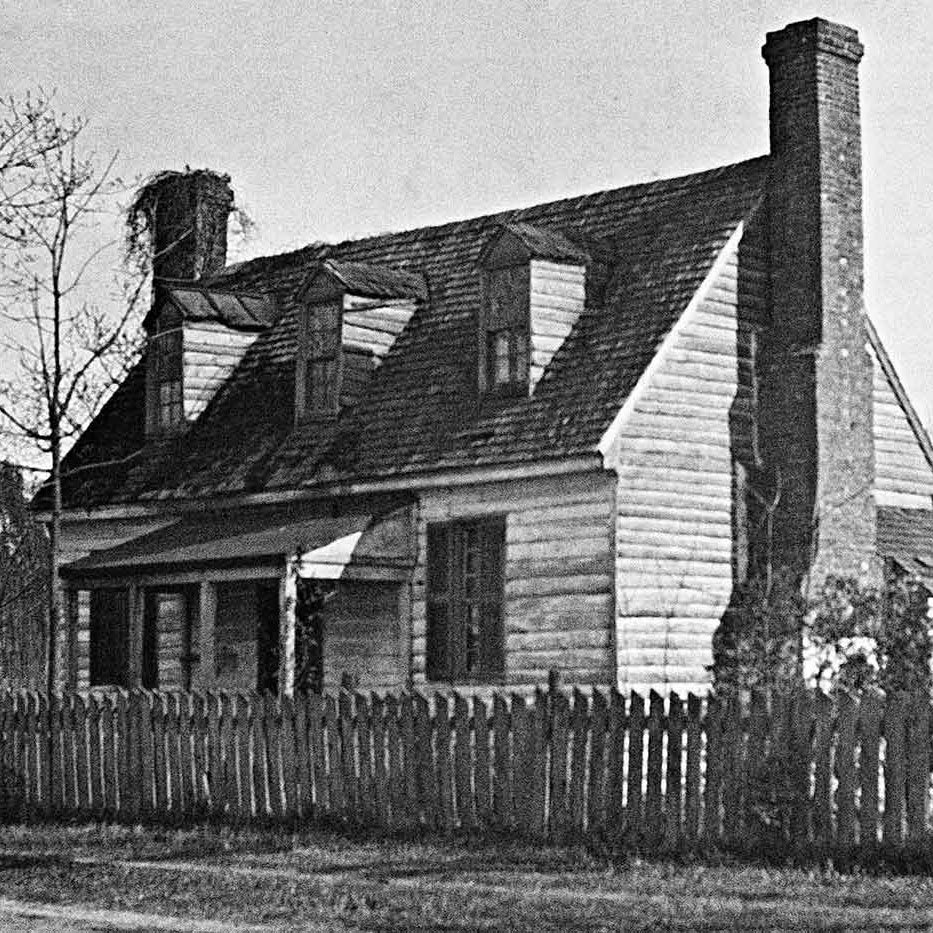
John Randolph was among the original aldermen of the newly incorporated town of Williamsburg. We do not know where the family first lived in Williamsburg, but in 1724, Randolph did acquire two wooden houses thirty-six feet apart on Market Square. Joining them with a center section, he fashioned what today is called the Peyton Randolph House.
His most valuable property was a plantation across the York River in Gloucester County, and at the end of his life he also owned other lots in Williamsburg, lots with a tobacco warehouse at College Creek, a 100-acre plantation at Archer's Hope Creek, land in Martin's Hundred near Carter's Grove, and land on the Chickahominy River.
Attorney General for Virginia Colony
In April 1726, the governor appointed Randolph the colony's acting attorney general and acting clerk of its Council. Perhaps the year after, Susannah gave birth to their son John. The date of birth of their only daughter, Mary, is unknown.
Prominent Attorney
Apart from his official duties, Randolph had a valuable private law practice. He represented prominent men, but accepted the cases of the less fortunate for "Fees he constantly remitted, when he thought the Paiment of them would be grievous to themselves or Families."
In 1728, John Randolph took the House of Burgesses for a client. The house sent Randolph to London as its special agent to secure repeal of a law that prohibited the export of tobacco leaf that had been removed from the stalk. The stems added to the bulk of shipments, and thus to the number of hogsheads the Crown might tax, but impaired the quality of the product and cheapened market prices.
In addition, Randolph represented the College of William and Mary in the transfer of its property from its trustees to its president and faculty. His service was memorialized in an illuminated and handsomely penned parchment.
Colonial Virginian Knighted
Randolph returned to Virginia to report success in both endeavors and was dispatched again to England in 1732 to try to persuade Parliament to adopt an excise on tobacco imported to England. The intent was to improve the economics of the trade, but in this he failed, despite enlisting the help of the prime minister, Sir Robert Walpole.
In any case, Randolph distinguished himself by his industry and skill and, perhaps because of them, was knighted. The date and the circumstances of the honor are not known, but he was listed on the rolls of the Imperial Society of the Knights Bachelor by September 1732.
Patron of Indian school library
Before returning to Virginia in the summer of 1733, Randolph asked the bishop of London and the archbishop of Canterbury for advice on books for the library of the Brafferton, the Indian school at the College of William and Mary, and he attempted to secure a long-promised donation of volumes.
Multiple civic responsibilities
On August 22, 1734, Sir John Randolph resigned the clerkship of the House of Burgesses. The next day, the college administration elected him its burgess, and on Saturday the burgesses elected him Speaker of the House. In September he became a justice of Gloucester County, and in October he became treasurer of the colony. When Norfolk was incorporated in 1736, it made Randolph its recorder. Although a deputy would perform the actual work of the office, the city marked his swearing in with an elaborate celebration.
Despite the accumulation of wealth, honors, and offices – perhaps because of it –Randolph did not escape criticism or controversy. Spotswood, now a private citizen embittered by political battles of the past, attacked Randolph in the public prints, describing him as "a fawning creature . . . whose Pride and Spell has made him turn against his Benefactor, who first promoted him in the World." Randolph answered the assault in the Virginia Gazette with an angry rejoinder.
An ethical man and a simple Christian
John Randolph preferred simplicity in religion, which offended the dogmatism of the established clergy. In some quarters he was regarded as a deist, a heretic, and a schismatic. These charges he answered in his will, writing a long profession of Christian faith based on the unembellished precepts of the Bible.
He also recorded in his will that he had earned his estate honestly, "tho' by a profession much exposed to temptations of deceit and extortion."
Randolph died on March 7, 1737, and "was (according to his own Directions) carried from his House to the Place of Interment, by Six honest, industrious, poor-House-keepers of Breton Parish " who divided £20 for their services. The place of interment was the chapel of the Wren Building at the College of William & Mary.
Fire gutted the Wren in 1859 and the burial vaults were disturbed. A physician who examined the contents of Sir John Randolph's tomb discovered the bones of two men. The identity of the second is a mystery.
For further reading:
- College of William & Mary
- Market Square
- Lady Susannah Beverley Randolph
- Peyton Randolph
- Peyton Randolph House
- Brafferton
- Bruton Parish
- Wren Building
- John "The Tory" Randolph
Multimedia and related links
-
Slideshows
- more...
-
Podcasts
- View descriptions
-
An Actor in the Revolutionary City
Melanie Collins answers the question, "Are you hot in those clothes?" and many more as she talks about the spark she finds each day as an actor-interpreter in Revolutionary City. September 4, 2006
Audio podcast: Listen (mp3) | Transcript
Image enhanced: View (m4a) | Transcript
-
A Loyal Subject
Loyal subjects of the king walked among Williamsburg's revolutionaries. Colonial Williamsburg's Jack Flintom interprets John Randolph's allegiance to King George III. July 23, 2007
Audio podcast: Listen (mp3) | Transcript
Image enhanced: View (m4a) | Transcript
-
Carolyn Wilson on Betty Randolph and Independence
In the pursuit of American independence, Betty Randolph played the role of lady and wife, enabling husband Peyton to fight for freedom. June 21, 2005
Audio podcast: Listen (mp3) | Transcript
Image enhanced: View (m4a) | Transcript
-
Love and Revolution
Divergent views on politics and religion fuel a feud between two prominent Williamsburg families. Museum educator Anne Willis tells the story of their children's unlikely marriage. June 9, 2008
Audio podcast: Listen (mp3) | Transcript
Image enhanced: View (m4a) | Transcript
-
Carolyn Wilson on Interpreting an American Lady
Carolyn Wilson talks about her passion for what it means to be an American citizen and her love for interpreting Betty Randolph in Colonial Williamsburg's Historic Area. August 15, 2005
Audio podcast: Listen (mp3) | Transcript
Image enhanced: View (m4a) | Transcript
-
Zooarchaeology
Zooarchaeologist Joanne Bowen decodes 400-year-old leftovers. June 8, 2009
Audio podcast: Listen (mp3) | Transcript
Image enhanced: View (m4a) | Transcript
Video podcast: Watch (mov) | Transcript
- more...
- Quicktime 7 (free) is required to view the enhanced and video podcasts.
- Subscribe to our podcast RSS feeds:
Audio | Image enhanced | Video
-
Games & Interactive
-
Interactive
-
Word of the Day

Impress your friends with your command of the queen's English with this daily feature.
-
Games
-
Daily jigsaw
Piece together scenes from the Historic Area.
-
Activities
-
A Day in the Life
Online activities from the video series
- more...
-
Downloads
-
Wallpapers
-
Thomas Jefferson
-
Bruton Parish Church
- more...
-
Audio
-
Thoughts on War
A collection of thoughts from colonial interpreters on war. Visit this feature.
- more audio...
-
Journal articles
-
To Boldly Go
Captain James Cook and the Search for the Northwest Passage
-
The Truth About Betsy Ross
-
A Man of Firmness
Justice John Blair and the Letter of the Law
-
About Faces
- more articles...