Page content
July 8, 2008
Summer journal explores meaning of essential freedoms to different residents, free and enslaved, in 18th-century Williamsburg
When the Founding Fathers signed the Declaration of Independence, they promised residents of the 13 colonies “life, liberty and the pursuit of happiness.” In the summer issue of Colonial Williamsburg, Jack Lynch, associate professor of English at Rutgers University, explores the type of government the framers created.
In “An Accidental Republic,” Lynch notes that the “form of republican government” met with resistance from some new Americans. “The Founders, after all, were doers, not thinkers, and they established their form of government more or less by chance.”
Jan. 1, 2008, was the bicentennial of the American law “to prohibit the importation of slaves into any port or place within the jurisdiction of the United States.” Rex Ellis, Colonial Williamsburg’s vice president for the Historic Area, recognizes this important milestone in his article, “The Abolition of the Slave Trade.”
“The slave trade was global, insidious, addicting, and in the minds of most colonialists, indispensable,” he writes. “The transatlantic slave trade began with Portugal in 1444 and continued 364 years. Great Britain entered the business about 1713. Soon after Europeans settled North America in the seventeenth century, they imported and enslaved Africans to work on sugar, tobacco, and rice plantations. In the ensuing 300 years, conservative figures suggest that between 15 million and 20 million Africans were exported from Africa in the trade.”
Slavery ended in the United States after the Civil War and the adoption of the Thirteenth Amendment.
A special feature of the Summer 2008 edition of Colonial Williamsburg is the 2007 Annual Report and includes several highlights such as the 400th anniversary of the settlement of Jamestown, the visit of Her Majesty Queen Elizabeth II of Great Britain, the World Forum on the Future of Democracy, the dedication of the new Abby Aldrich Rockefeller Folk Art Museum, the Dialogues in Democracy project, the completed restoration of the Williamsburg Lodge and the opening of The Spa of Colonial Williamsburg.
Elsewhere in the issue:
These articles and articles from previous issues are online at www.colonialwilliamsburg.org/foundation/journal/feature.cfm. The Web site offers features not included in the journal, including “Then and Now.” Found at http://www.colonialwilliamsburg.org/foundation/thenandnow/, the online column compares archival photos from the Foundation’s collections with current scenes.
Colonial Williamsburg can be purchased at Everything Williamsburg™ and Williamsburg Booksellers® at the Foundation’s Visitor Center. Complimentary copies of the printed magazine can be obtained and subscriptions ordered at http://history.org/Foundation/journal/. For more information, call 888-CWF-1776.
The journal is published four times a year and is a benefit to donors who contribute $35 annually or more.
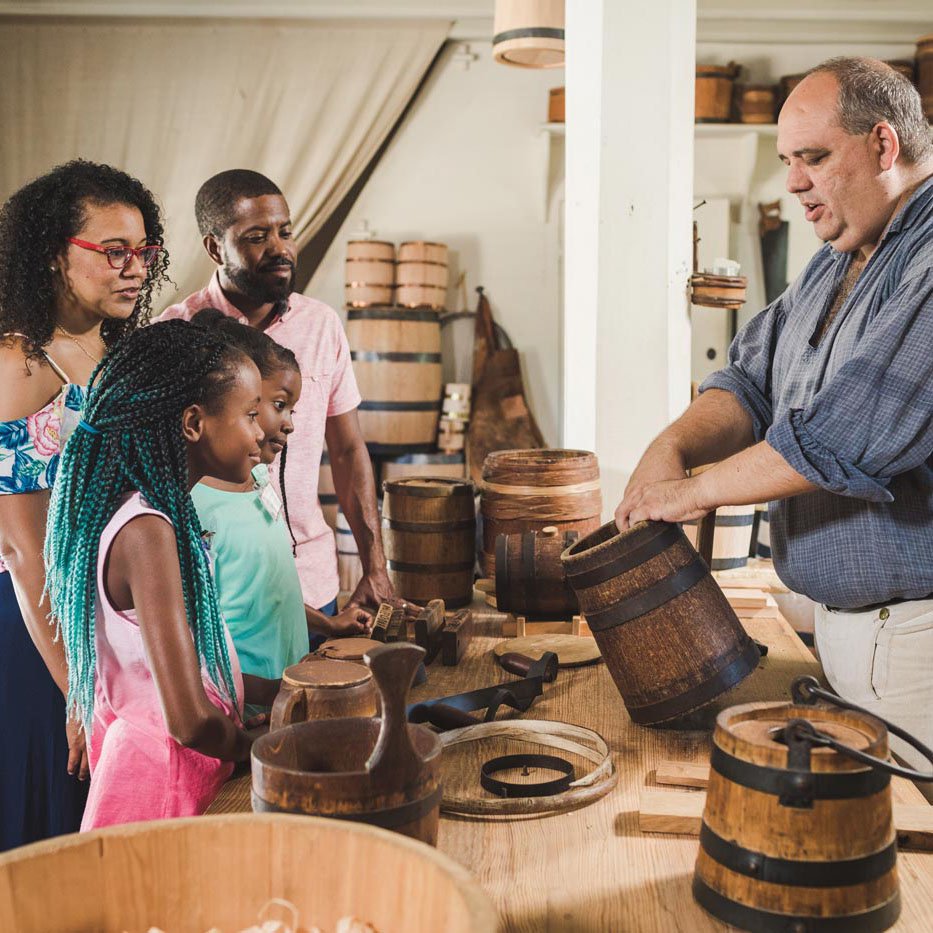
Established in 1926, the Colonial Williamsburg Foundation is the not-for-profit educational institution that preserves and operates the restored 18th-century Revolutionary capital of Virginia as a town-sized living history museum, telling the inspirational stories of our nation’s founding men and women. Within the restored and reconstructed buildings, historic interpreters, attired as colonial men and women from slaves to shopkeepers to soldiers, relate stories of colonial Virginia society and culture – stories of our journey to become Americans – while historic trades people research, demonstrate and preserve the 18th-century world of work and industry. As Colonial Williamsburg interprets life in the time of the American Revolution for its guests, it also invites them to interact with history. “Revolutionary City®,” a dramatic live street theater presentation, is a 2008 Rand McNally Best-of-the-Road™ Editor’s Pick. Williamsburg is located in Virginia’s Tidewater region, 20 minutes from Newport News, within an hour’s drive of Richmond and Norfolk, and 150 miles south of Washington, D.C., off Interstate 64. For more information about Colonial Williamsburg, call 1-800-HISTORY or visit Colonial Williamsburg’s Web site at www.history.org.
Media Contact:
Penna Rogers
(757) 220-7121