|
Gardening
: Research
: Trees on the Duke of Gloucester Street in the 18th Century

Visitors often ask Colonial
Williamsburg interpreters and support staff some variation on the following
questions: "Were there street trees planted on the Duke of Gloucester
Street in eighteenth century Williamsburg? If not, when did they
first appear there, and when were the trees that are here now first
planted?" This paper was written to provide some answers to these
questions for those who are interested in the macro-landscape and environmental
history of Williamsburg.
The documentation we have
available suggests there were probably very few, if any, trees planted
on the Duke of Gloucester Street in the eighteenth century.; Despite
all of the Colonial Williamsburg Foundation's early goals and considerable
efforts for visual authenticity in the Historic Area, the eighteenth-century
city of Williamsburg and its surrounding area looked very different
from today's recreated townscape. Archaeological evidence
is also conclusive about the fact that even the topography in several
places was very different then from what it is today.
At least seven surviving
accounts by eighteenth-century visitors contain specific remarks about
the sandy, dusty streets that existed here at that time. One account,
by J. F. D. Smyth, dating from 1770, is particularly revealing:
"The street deep with sand, (not being paved) makes a singular appearance
to an European; and is very disagreeable to walk in, especially in summer,
when the rays of the sun are intensely hot, and not a little increased
by the reflection of the white sand, wherein every step is almost above
the shoe, and where there is no shade or shelter to walk under, unless
you carry an umbrella (emphasis added). The first reference the
author has found that first establishes when trees were growing along
the main street dates from eighty years later, in 1848.
We have found at least eight
accounts by travelers who expressly mention the ability to see the city
from a great distance as one approached it from the east and west, and
of its being situated upon an "open plain." The French Desandrouins's
military map, showing Williamsburg and its environs in 1782, graphically
attests to this openness of the landscape surrounding the city.
Ebenezer Hazard's 1777 account of his climb into the cupola on the roof
of the College is also quite revealing. He wrote that from this vantage
point he could see the "beautiful Prospect of the City and the adjacent
Country; James River may be seen from it, as may York River in a clear
Day." Due to the growth of so many trees in the area in this century,
the author can personally attest to the fact that no such long, open
vistas of this type can be seen from the same location today.
Together, all of these sources
suggest the appearance of a colonial city that was vastly different
from the one we know today. This evidence, however, does not indicate
that there were no trees at all within the city. We have a few
old trees that we think could date from the late eighteenth and early
nineteenth centuries. If our dating methods are correct, these
unique specimens are also good indicators that at least some shade trees
had to have been growing within the city limits at that time.
But the most common trees to be found here during the colonial period
were probably the smaller fruit trees that were typically grown in back
lots and larger orchards at the town's perimeter.
If we could compare the
colonial city to today's recreated "Historic Area' we would probably
find the genuine article much too stark and rough looking to have much
visual appeal for today's visitors. Yet, travelers in the eighteenth
century probably regarded Williamsburg in its setting of open fields
as quite an "oasis" within a peninsula that was still largely rural
in character. Instead of today's ubiquitous trees and lush vegetation
within and at the town's perimeter, we would have had largely unimpeded
and expansive views in every direction out into an open countryside
of cultivated fields, fences, and orchards. All of the high, cultivable
land would have long been cleared for agricultural use. The largest
remaining trees, then, would have probably been confined to the many
ravines that fall away from the highest land within the city limits.
With no industry and very
little commerce in Williamsburg throughout the nineteenth century, any
changes to the landscape and visual character of the region were minimal
during that period. Farming continued on the lands surrounding
the city much as it had been before. That this condition continued
at least until the mid-nineteenth century is well documented in John
Graham's surviving panoramic drawing of the city (circa 1859-1860) which
shows the same open character of the landscape as formerly seen from
south of the city center, in the area of today's Marshall-Wythe School
of Law building. (This dramatic panoramic drawing is now on view in
the Public Hospital exhibit.)
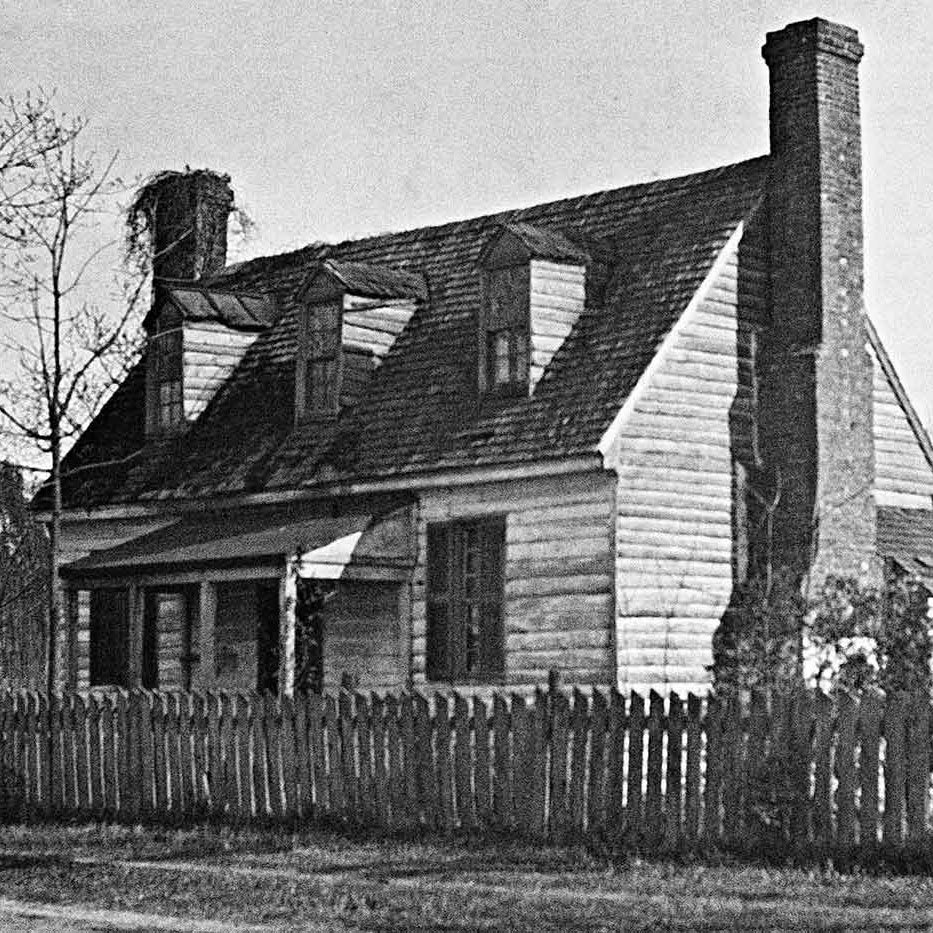
Surviving late nineteenth-
and early twentieth-century photographs of the area also attest to the
fact that this open, rural character around Williamsburg still remained
largely unchanged even after the turn of this century. While many
old photos of Duke of Gloucester Street show some shade trees growing
along the sides of the street, there appears to be little regularity
in their placement. This fact could be an indication that prior
to the beginning of the Restoration (in 1927), the planting of any trees
along the street might have been due to the efforts of private individuals
rather than from any systematically planned municipal initiatives.
After about 1917 or 1918,
however, most of the farming operations being conducted on the acreage
immediately around the old town limits quickly began to disappear as
suburban development began to spread out from the old center of the
town. As land began to be taken out of cultivation, the regeneration
of natural vegetation quickly began to occur on those small land parcels
that were not immediately developed. With the passing of just
a quarter of a century or so, what had once been a vast agricultural
area that spanned virtually the entire area between the James and York
Rivers quickly became re-forested to an extent not seen since the mid-seventeenth
century. In any event, the rapid growth and development that concurrently
began to change the visual character of the area seems to have first
started with the military presence and population buildup caused by
the onset of World War I and World War II. This population growth
in the greater Williamsburg area has continued virtually unabated since
that time.
As a direct result of that
initial growth, the first Colonial Williamsburg landscape designers
were almost forced to create an essentially closed, insulated historic
district with all the necessary fencing and landscape planting to screen
out views of surrounding modern buildings, cars, roads, and other visual
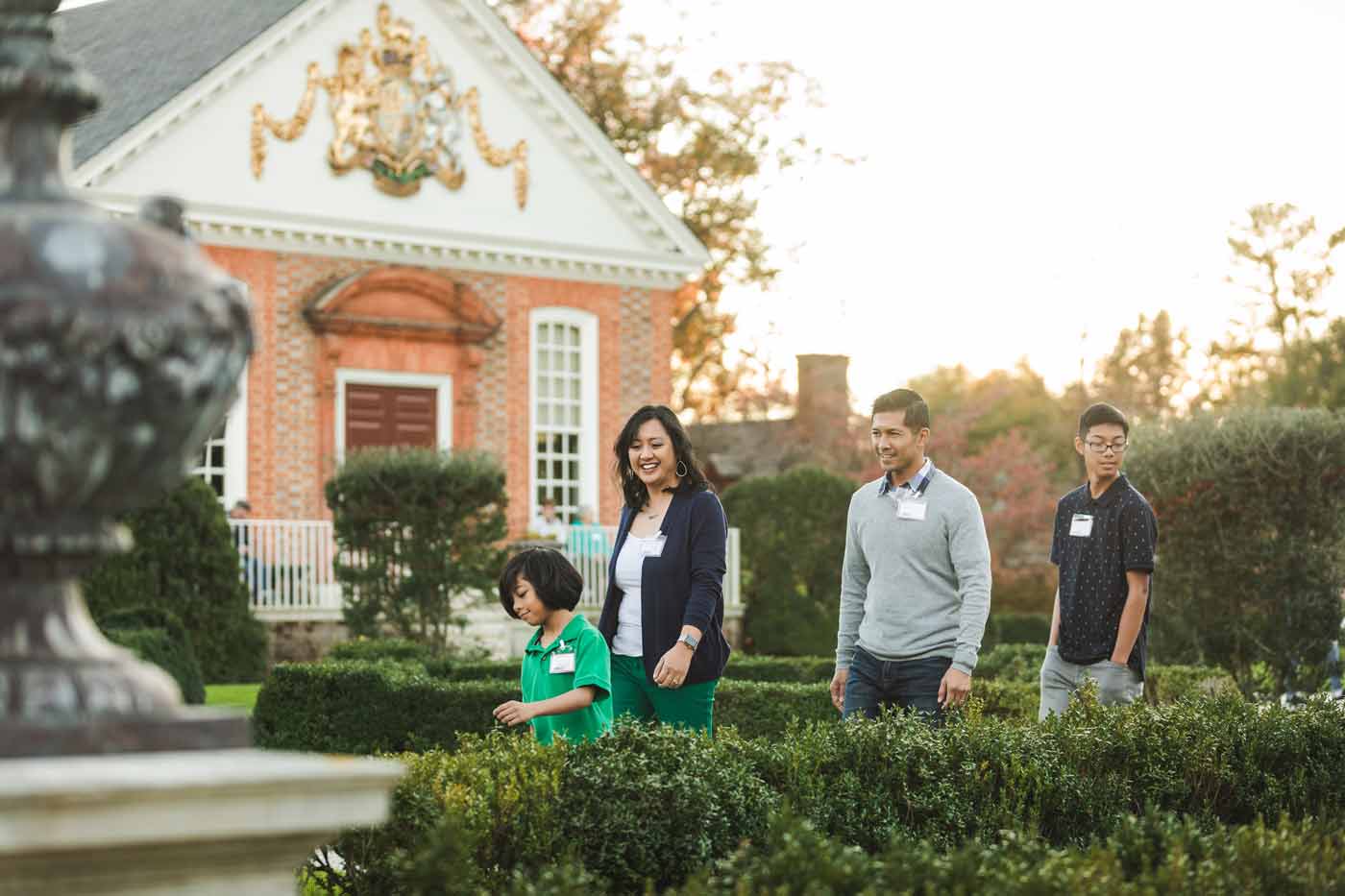
intrusions. Also, in the mid-1930s new deciduous trees were planted
with regularity along Duke of Gloucester Street to augment the few sporadically
placed existing trees. The functional reason for this large scale
effort was to provide much needed shade in the summer for the comfort
of both visitors and Colonial Williamsburg employees. A fairly
large number of these now mature street trees still survive to grace
the Historic Area setting of today.
So, for all of the tireless
efforts on the part of generations of Colonial Williamsburg employees
to achieve at least a plausible degree of visual authenticity within
the boundaries of the restored colonial city, there is really no practical
way for us to turn back the clock today so as to be able to also faithfully
re-create the now lost open, rural landscape that once surrounded eighteenth-century
Williamsburg. The founders of Colonial Williamsburg were only
capable of going but so far afield and achieving but so much, given
the constraints that modern development had placed on their ability
to "extend" the Historic Area's boundaries beyond where they were first
established, and where they are essentially still located today.
Aesthetic concerns over
the visual appeal and inviting character to be seen inside the designated
"Historic Area" inevitably had the greatest influence on the decision
to systematically plant the streets with more shade trees. After
the social traumas brought about by the Indus-trial Revolution, mass
immigration from Europe, a world war, and the Great Depres-sion, early
twentieth-century Americans collectively adopted a very idealistic and
nostal-gic view of their shared colonial past. This mindset or
aesthetic, which historians today have come to call "Colonial Revivalism,"
was largely the force that was ultimately responsible for the general
appearance of this restored colonial city of Williamsburg.
Despite all of the surviving
eighteenth-century documentary evidence that suggested what the town
originally must have looked like, our predecessors at Colonial Williamsburg
thought that an idyllic, tree shaded town would be much more appealing
and marketable to potential visitors than the stark historical reality
of the eighteenth-century city so succinctly (if somewhat uncharitably)
described by a 1777 visitor as "a small, regular, sandy, dusty, wooden,
unpaved city." After sixty years as America's premier outdoor
living history museum, their wisdom in taking a less than ultra-realistic
approach today seems well founded and blessed by very good sense.

|  |