Page content
Teacher Community

Browse the Teacher Gazette archives at our new Teacher Community website.
Membership is free. Join today!
TRAVERSING THE 18TH-CENTURY LANDSCAPE
Think
about trips you took with your family when you were a child. Do you remember
gliding down the highway as Dad glared in the rearview mirror and threatened
to "turn this car around" if you and your siblings didn't behave?
And who can forget Mom's admonishment to "try, even if you don't feel like
you have to go." That timeless image is undoubtedly a familiar one for
modern students. Can you (or your students) imagine life without turnpikes and
toll booths? For eighteenth-century inhabitants of southeastern Virginia, the
mix of rural farm and plantation lands, small towns and bustling metropolises,
were connected by a complex network of roads, which linked together small towns
and hamlets like York, Williamsburg, Hampton, Richmond, Urbanna, and Fredericksburg.
Peppered along these roads were innumerable smaller communities or neighborhoods.
At crossroads, warehouses, ordinaries, courthouses, and ferries, Virginians
gathered for the seasonal rhythms of vibrant and active farming communities.
However, these eighteenth-century roads were nothing in comparison to the multi-lane
highways surrounded by mega-cities we traverse today.
Given
the prevalence of waterways cutting across the Virginia landscape, the eighteenth-century
traveler (and your modern-minded students) might assume water was the easiest,
most direct method of travel within the colony. Actually, individuals did not
commonly journey by water until the mid-nineteenth century. Most ships and boats
engaged in commerce and the transportation of goods, and great plantation estates
were oriented to the river for commercial advantage. But travel by individuals
from one destination to the next generally involved overland routes. Overland
was the most direct and convenient path for travel. For instance, between 1768
and 1774 George Washington traveled to Williamsburg sixteen times, and each
time used an overland route. Navigating the matrix of roads and lanes, though
well known to locals, perplexed strangers. Travelers, no doubt, frequently requested
directions from locals they encountered along the way. Though horses tended
to be a sign of wealth, even individuals with modest incomes occasionally traveled
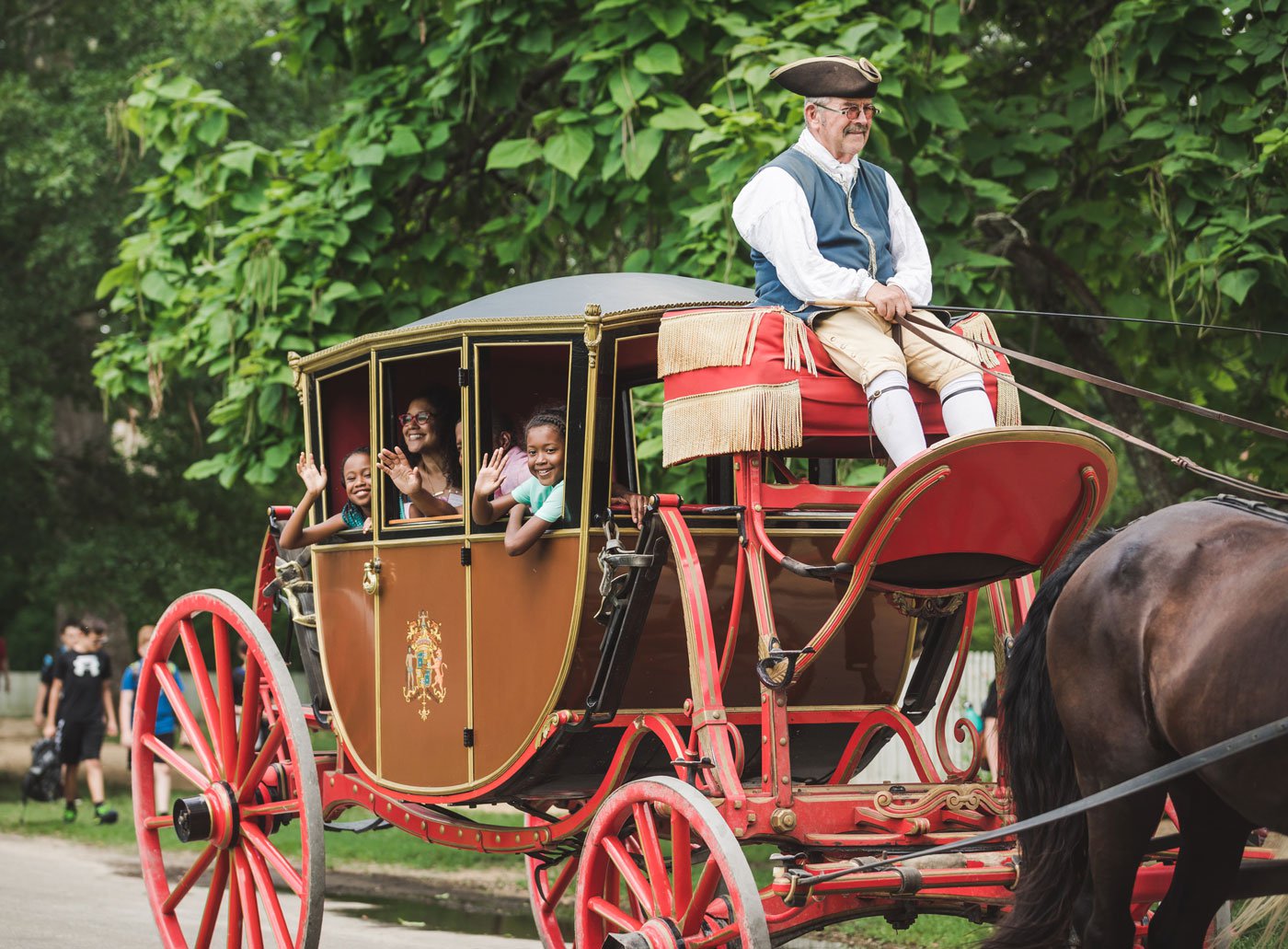
on horseback. Affluent men and women navigated the land passage in coaches or
riding chairs. The poor and enslaved, who made up the majority of Virginia's
eighteenth-century populace, journeyed on foot.
A network of roads crisscrossed tidewater Virginia, and was connected by fords,
bridges, and ferries crossing the waterways. Virginians limited bridge construction
to small spans, and fords only traversed shallow water. Ferries dotted the riverfront
and transported carts, wagons, livestock, and travelers on foot, on horseback,
or in carriages. As a means of transport, however, ferries were less than reliable.
On occasion, crossing by ferry was actually dangerous. Sudden storms and accidents
damaged property and injured passengers or their horses. Ferry schedules were
erratic since ferrymen commonly operated their service along with another trade
(a small plantation, tavern, or store, for example). Consequently, travelers
seldom found the ferryman ready. Passengers often waited while someone fetched
the ferryman from his other work, or they watched while the ferry meandered
back toward them after transporting a previous load.
The choice to undertake a journey in eighteenth-century Virginia required much
planning and patience, but most of all, a readiness to deal with the unexpected.
Issues such as deeply rutted roads, unsavory accommodations, and the whims of
Virginia weather all conspired to make travel an experience worthy of retelling.
Join us for this month's Electronic Fieldtrip titled "Crossroads"
and relive one such journey with your students!