|

The Shipping Merchant's Office
A.C. Hauck, probably Rotterdam, 1783
The Colonial Williamsburg Foundation
This watercolor painting shows a Dutch merchant in his office at Rotterdam. As part of a large transatlantic economic system, colonists depended on shipping merchants to accurately record loans, debts, and credits. During the war, Dutch shipping ports like Rotterdam established trade routes to supply wartime goods and arms to revolutionaries. The depth and importance of this trade is evident from the large numbers of surviving Dutch goods and arms, like this painting, in collections.

The Next Electronic Field Trip
is The Global Economy
March 14, 2013

Teaching News
Bones of King Richard III Discovered
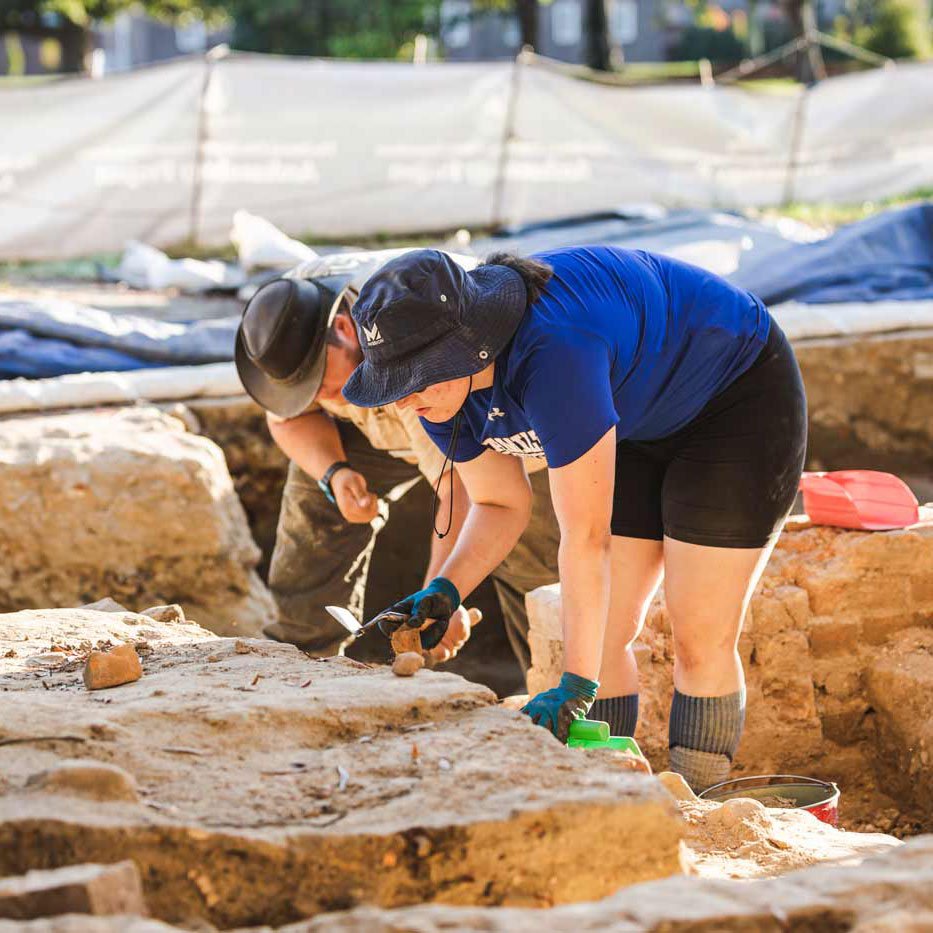
When experts at the University of Leicester in England confirmed this February that the bones found a Leicester church parking lot were those of King Richard III, historians, scientists, and scholars were excited. So much can be learned about this English king from his bones! This discovery can be fascinating for your students as well, and is a great way to introduce them to archeaology and historical inquiry. Below are some articles about the find and a variety of teaching ideas based on the discovery. As you share these with your students, ask them to think about: What new things did historians learn about Richard III from his bones? (Similarly, how did we learn about Richard III before we had his bones?)
What methods did scientists and historians use to determine the bones were Richard III?
New podcasts posted every Monday!
This month's vodcast: creating a gown in a day
The Idea of America
A digital American history program that inspires and prepares high school students for active citizenship, developed by Colonial Williamsburg and distributed by Pearson Education.
**Learn more in America: The Pocket Guide, a quick yet comprehensive look at our revolutionary framework for understanding and teaching American history.**
|
Contents
Colonists usually used credit for purchases rather than cash, which was scarce. The credit could not be transferred from store to store or colony to colony as it can today. Merchants recorded their transactions in waste books and their customers' credit in ledgers. In this lesson, students will compare the eighteenth-century system of credit to modern-day gift cards. They will take on the role of colonial merchants and record customer purchases in ledger and waste book pages.
Colonial Williamsburg offers a variety of quality American history instructional materials, including:
- Buying Respectability Lesson Unit
- The Coins of Colonial America Book
- Ann's Story Book, Gr. 46
Check out our specials, including 50% off lesson units!

Quotation of the Month
"All the perplexities, confusion and distress in America arise not from defects in their Constitution or Confederation, nor from want of honor or virtue, so much as downright ignorance of the nature of coin, credit, and circulation."
— Letter to Thomas Jefferson, 23 August 1787. From The Works of John Adams, Second President of the United States. Charles Francis Adams, ed. (Cambridge University Press, 2011).

Colonial Williamsburg for Teachers

21st Century Award
for Best Practices in Distance Learning, preK–12
United States Distance Learning Association, 2010

Distinguished Achievement Award Finalist 2011
Association of Educational Publishers
|