Page content
Appendix B: Summary of a Teacher Institute Week
Begun in 1990, the Colonial Williamsburg Teacher Institute in Early American History is designed for upper elementary, middle school, and high school teachers. Each intensive, week-long session brings twenty-three teachers, a mentor teacher who has previously attended, and a curriculum specialist to Williamsburg, the colonial capital of Virginia. Colonial Williamsburg educators provide an interdisciplinary and interactive approach to the teaching of social studies with an emphasis on using primary documents, reenactments of 18th-century events, and exchanges with character interpreters and historians. In addition to the wealth of information the teachers receive, there is an emphasis on teaching strategies designed to help students gain critical thinking skills. A brief outline of a typical week follows:
Day 1: The participants begin with an overview of the week's activities and an orientation tour of the Historic Area of Colonial Williamsburg. They are assigned the identities of 18th-century residents or visitors to Williamsburg whom they will research all week and upon whom they will make periodic reports to the group. They receive the first of many primary documents and discuss tidewater Virginia geography and the reasons colonists settled in this area.
Day 2: The teachers visit Jamestown, the 1607 site of Virginia's first capital, where they see a re-created Powhatan village, an English fort, and replicas of sailing vessels. At each site teachers are involved in hands-on activities and interact with interpreters. At the end of the day the peer teacher presents a lesson plan and the teachers discuss ways they can incorporate the information they have learned into their own classroom teaching.
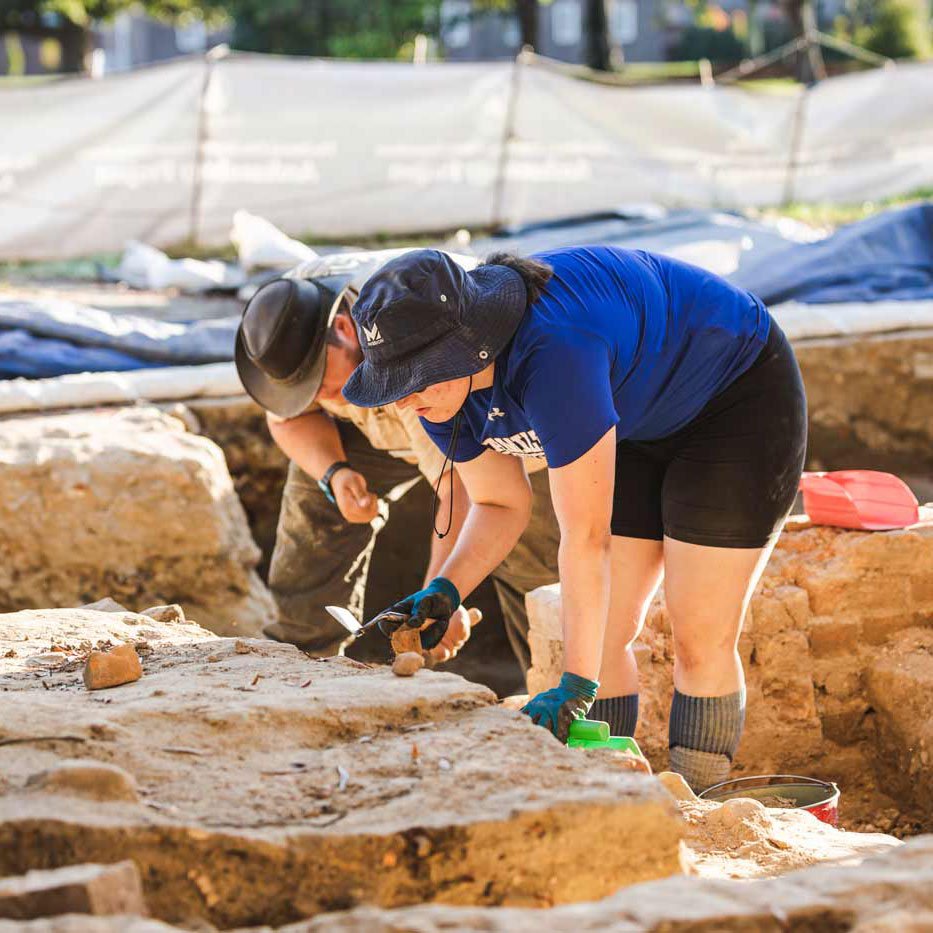
Day 3: The third day focuses on archaeology and the analysis of artifacts at various sites in the Historic Area. The teachers become archaeologists and discuss what the artifacts reveal at each site. Later they are introduced to family life through written documents such as diary entries and journals, and they also learn about the games and leisure activities of both the gentry and the middling sort. Character interpreters discuss issues with them, and participants witness and discuss interactions between a mistress and her slave.
Day 4: Economic issues are the substance of the fourth day. Tobacco, Virginia's cash crop, dominated the colony's economy in the eighteenth century, and its sale led to profound changes in the society and greater consumer interest in new goods. The teachers learn about the workings of the monetary system by examining period price lists and inventories, handling different currencies, and figuring out how to pay for various items. The teachers are introduced to colonial clothing, even trying on garments, and learn how different styles of dress reflect status.
Day 5: The group tours the government buildings, including the Governor's Palace, the Courthouse, the Public Gaol, the Wren Building at the College of William and Mary, Bruton Parish Church, and homes and meeting places of political leaders. Participants trace the effects of laws and political structure on the local, county, and colonial levels and participate in a court trial.
Day 6: The teachers spend the day at Carter's Grove plantation, focusing on the experiences of the African residents of colonial Virginia. They interact with character interpreters at the slave quarter and learn about African-American culture by participating in African stories, games, and music making. They discuss life in Africa, the trans-Atlantic slave ship conditions, and issues slaves faced in Virginia.
Day 7: The last full day of programming begins at the Capitol, where the participants hear Patrick Henry, Thomas Jefferson, and other burgesses discussing the Virginia Resolution for Independence. The teachers may speak as the characters they represent, if so inclined, and all cast their votes. In the afternoon they travel to Redoubts 9 and 10 at Yorktown, the site of the last decisive battle of the Revolutionary War, where Yorktown staff lead the discussion.
Day 8: The Teacher Institute wraps up with a discussion of how the participants intend to use the teaching strategies and techniques, primary source documents, artifacts, and lesson plans they've gained during the past week. The teachers also share insights they acquired in their assumed roles as Williamsburg residents. Colonial Williamsburg staff members explain the various ways in which the participants can continue to use Colonial Williamsburg as a resource: accessing information available on-line at this Web site, participating with their classrooms in Colonial Williamsburg's series of Electronic Field Trips, borrowing materials from the Colonial Williamsburg library, and sharing experiences through the Colonial Williamsburg Teacher Institute's newsletter, "The Williamsburg Connection".