Archaeology on Mulberry Row
A bird's-eye photo of an excavation of "Building o," a dwelling for enslaved people, along Mulberry Row at Monticello in 1981 and 1982
Historical Period
Skills and Conceptscontributing partner

Archaeology is a key part of the historical process. The photograph shows how an archaeologist plans and manipulates the environment to recover artifacts. In this image of a 1981-1982 excavation at Monticello, archaeologists are shown from above uncovering a dwelling for enslaved people at Thomas Jefferson’s home. The building may also have had industrial uses in the 1790s.
Creator:
The Thomas Jefferson Foundation, Department of Archaeology
Date Created:
c. 1981-1982
Point of Origin:
Monticello
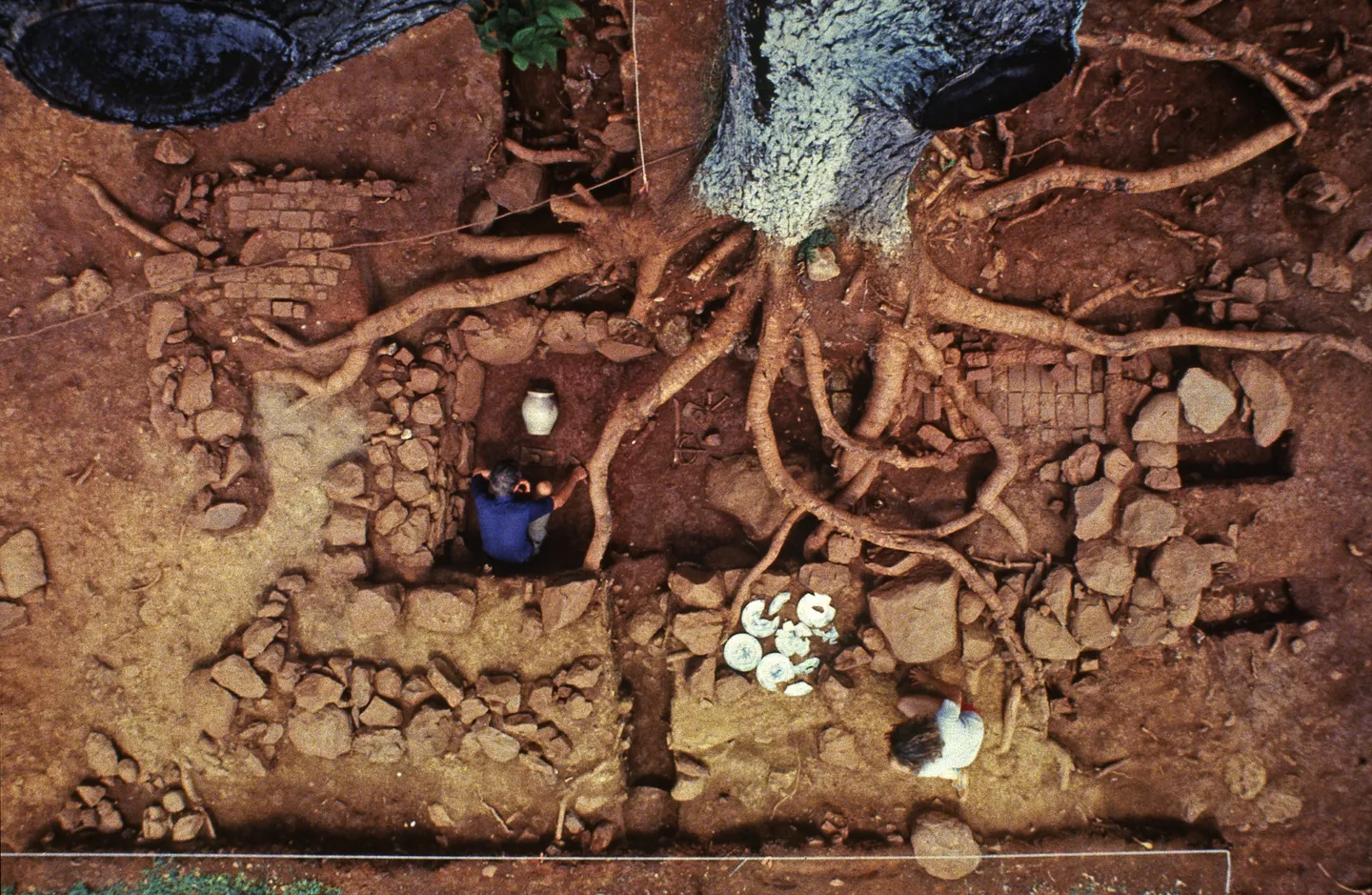
Archaeology is a key part of the historical process. The photograph shows how an archaeologist plans and manipulates the environment to recover artifacts. In this image of a 1981-1982 excavation at Monticello, archaeologists are shown from above uncovering a dwelling for enslaved people at Thomas Jefferson’s home. The building may also have had industrial uses in the 1790s.
Creator:
The Thomas Jefferson Foundation, Department of Archaeology
Date Created:
c. 1981-1982
Point of Origin:
Monticello
Export Slides & Handouts
This primary source is ready-to-go as a presentation for classroom facilitation with questions and vocabulary via Google.
Archaeology on Mulberry Row
Viewing:
Analysis Questions
Foster inquiry and understanding with these source-specific questions, designed to be accessible even for those with limited background knowledge.
say hello to the source
-
1.
What do you notice about this picture?
-
2.
What questions do you have about this photograph?
make observations
-
3.
What do the people in this photograph appear to be doing?
-
4.
What do you notice about the holes in the ground?
-
5.
What do you notice about the point of view of the photograph?
interpret what you see
-
6.
The people in the photograph are called archaeologists. What do you understand about the job of an archaeologist based on what you see in the photograph?
-
7.
How are the archaeologists in the photograph interacting with the environment?
-
8.
Archaeologists excavate (dig up) artifacts from the ground in order to understand more about life in the past. What artifacts from the past does it look like the archaeologists in this picture have found?
-
9.
What information about the past do you think the archaeologists might learn from the pieces of pottery that they’re looking at?
use it as evidence
-
10.
Why would evidence of the past be found underground?
Vocabulary
Use these related vocabulary terms to build students’ understanding and support more meaningful discussions and learning outcomes in your classroom.
Related Educational Videos(1)
Found in This Collection, 1 items
There’s even more for Beta Users
Get Access to Everything
More Primary Sources In:
Skills and Concepts
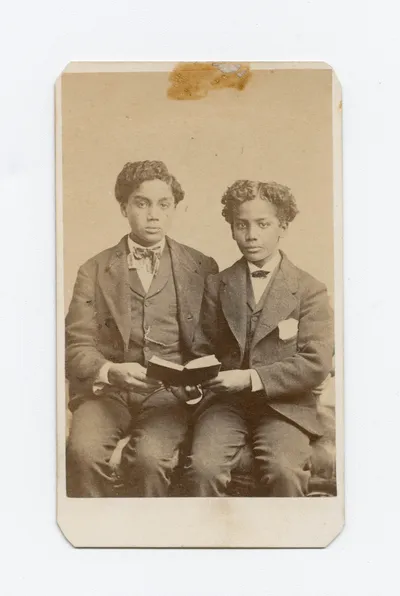
Unidentified Group Portrait of Two Boys
Bicycle Song
Bertha Louise Cogswell Drawing Book
American Flag Waving at the Capitol
Miss Liberty with Liberty Bell
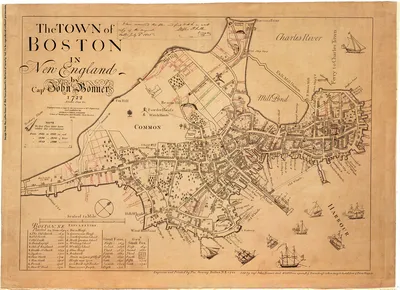
The Town of Boston in New England by Capt. John Bonner, 1722
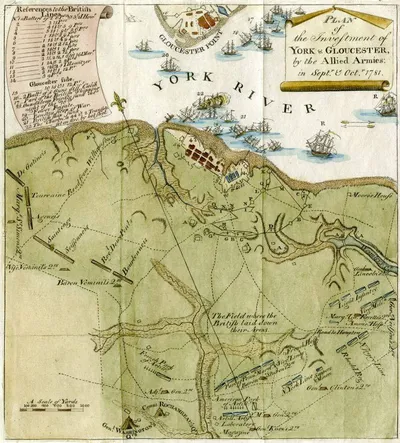
Plan of the Investment of York and Gloucester (Ramsay Edition)
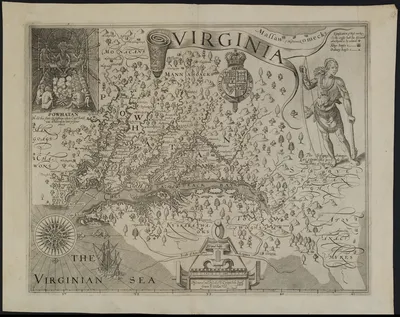
John Smith's Map of Virginia