British Surrender at Yorktown, 1781
A 1974 painting by Italian immigrant Oscar De Mejo invites students to consider how we remember and memorialize pivotal moments in history
Historical Period
The American Revolution and A New Nationcontributing partner

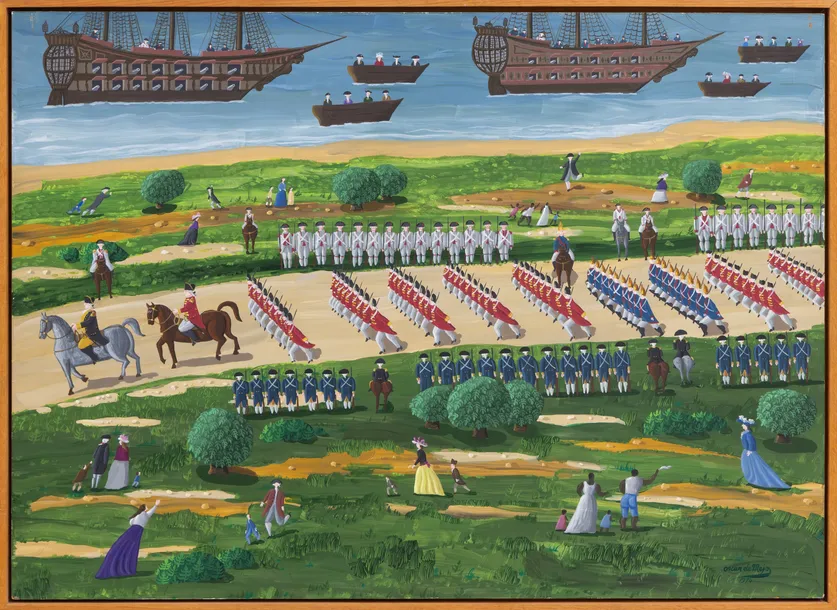
British Surrender at Yorktown, 1781 by Oscar De Mejo is a vibrant and stylized depiction of the British surrender to American and French forces, marking the beginning of the end of the Revolutionary War. Completed in 1974, the painting offers an opportunity to explore how history is remembered and interpreted and how our identity impacts how we see the past. Much of De Mejo’s work romanticizes the American Revolution. De Mejo’s signature colorful, surrealist, and naïve art style lightens the formality of the historical moment, using bright colors and exaggerated figures like General George Washington and Lord Cornwallis. While the painting captures the significance of the event, it offers a celebratory and imaginative interpretation, blending history with a whimsical artistic approach.
Creator:
Oscar De Mejo
Date Created:
1974
Materials and Measurements:
Acrylic on board, 27" H x 37 1/4" W x 1 1/2" D
Point of Origin:
New York
Object Identifier #:
YG86.3.12
Citation Label:
De Mejo, Oscar. British Surrender at Yorktown, 1781. 1974. Acrylic on board. Jamestown Yorktown Foundation.
Donor Credit Label:
Gift of Mrs. Paul Foley
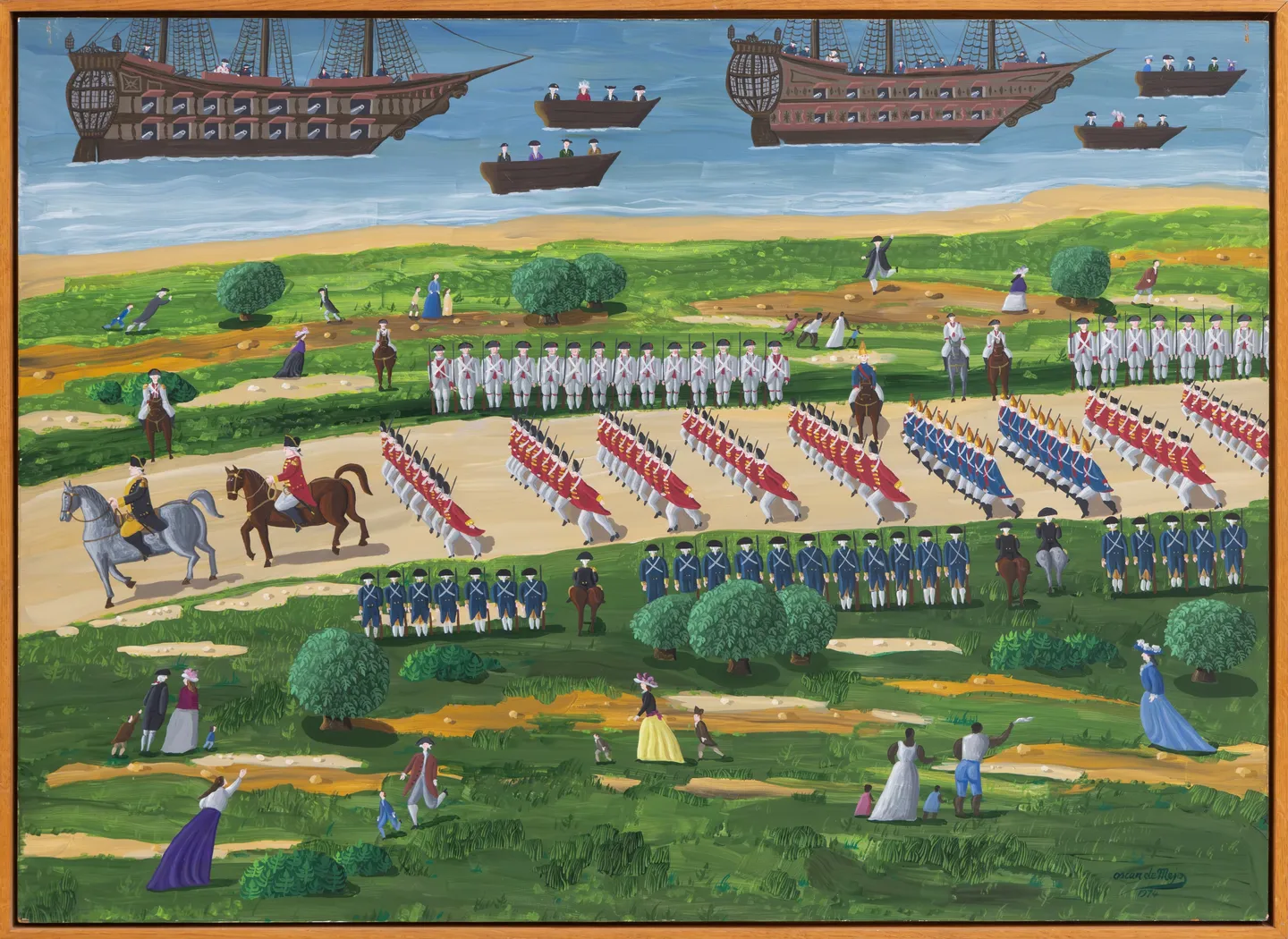
British Surrender at Yorktown, 1781 by Oscar De Mejo is a vibrant and stylized depiction of the British surrender to American and French forces, marking the beginning of the end of the Revolutionary War. Completed in 1974, the painting offers an opportunity to explore how history is remembered and interpreted and how our identity impacts how we see the past. Much of De Mejo’s work romanticizes the American Revolution. De Mejo’s signature colorful, surrealist, and naïve art style lightens the formality of the historical moment, using bright colors and exaggerated figures like General George Washington and Lord Cornwallis. While the painting captures the significance of the event, it offers a celebratory and imaginative interpretation, blending history with a whimsical artistic approach.
Creator:
Oscar De Mejo
Date Created:
1974
Materials and Measurements:
Acrylic on board, 27" H x 37 1/4" W x 1 1/2" D
Point of Origin:
New York
Object Identifier #:
YG86.3.12
Citation Label:
De Mejo, Oscar. British Surrender at Yorktown, 1781. 1974. Acrylic on board. Jamestown Yorktown Foundation.
Donor Credit Label:
Gift of Mrs. Paul Foley
Export Slides & Handouts
This primary source is ready-to-go as a presentation for classroom facilitation with questions and vocabulary via Google.
Export Slides & Handouts
This primary source is ready-to-go as a presentation for classroom facilitation with questions and vocabulary via Google.
British Surrender at Yorktown, 1781
Viewing:
Analysis Questions
Foster inquiry and understanding with these source-specific questions, designed to be accessible even for those with limited background knowledge.
say hello to the source
-
1.
What do you see in the painting?
make observations
-
2.
Who do you think the people in the painting are?
-
3.
What do you notice about the people watching the marching soldiers?
-
4.
What are some details you notice when you look closely at the boats in the painting?
-
5.
What do you notice about the people’s clothes?
interpret what you see
-
6.
This painting is called “British Surrender at Yorktown.” It shows the end of the American Revolutionary War. Why do you think the artist chose to paint this moment?
-
7.
How does this painting make you feel about the event? What details in the painting make you feel that way?
use it as evidence
-
8.
Though this painting shows a scene from American history in 1781, the artist, Oscar De Mejo, was an Italian immigrant who came to America. How might the artist’s life or background have affected how he painted this scene?
-
9.
Why do you think the artist included so many different people in his painting?
-
10.
Can you think of a time when people today celebrate or remember a big event in history, like the one shown in the painting?
say hello to the source
-
1.
What stands out to you about this painting? What’s happening in the image?
-
2.
What do you wonder about this painting?
make observations
-
3.
What appears to be happening on the water?
-
4.
What appears to be happening on the green spaces of the painting?
-
5.
What is happening on the road?
-
6.
What different groups of people do you see in this painting?
-
7.
What choices did the artist make that help direct the viewer’s attention to what is happening on the road?
interpret what you see
-
8.
The title of this painting is “British Surrender at Yorktown, 1781”. How does this painting connect with what you already know about the Battle of Yorktown and the end of the American Revolution?
-
9.
What emotions do you think the artist wanted to convey through this painting?
-
10.
Notice the people of color in the painting. How has the artist chosen to depict them? How is this treatment different from the way the white people in the painting are depicted? Why might this be?
use it as evidence
-
11.
The artist who painted this work, Oscar De Mejo, was born on August 22, 1911 in Trieste, Friuli-Venezia Giulia, Italy but emigrated to the United States in 1947. He did this painting in 1974. Based on what you know about the painting, its creator, and the event, how reliable is this painting as a historical source? In what ways is it reliable? In what ways do you find it unreliable? Why?
-
12.
Why do you think De Mejo chose to paint this moment of the American Revolution?
-
13.
What does this painting suggest about the way history is remembered and retold through art?
Vocabulary
Use these related vocabulary terms to build students’ understanding and support more meaningful discussions and learning outcomes in your classroom.
Related Educational Videos(1)
Found in These Collections, 2 items

There’s even more for Beta Users
Get Access to Everything
More Primary Sources In:
The American Revolution and A New Nation
Landing of General Lafayette
Prospect Hill. Bunker's Hill.
Teapot
Washington and His Generals at Yorktown
Bushnell Submarine Turtle
Paul Revere Deposition of the Midnight Ride, 1775
A Plan of Boston, and its Environs Shewing the True Situation of His Majesty's Army
A List of the Names of the Provincials who were Killed and Wounded in the late Engagement with His Majesty's Troops at Concord, &c.